Author: Simone

  • California Coast Line – San Diego to San Francisco

    California Coast Line – San Diego to San Francisco

    Driving the California Coast in a convertible!  It’s the California dream, right?  I’m lucky enough to live in the LA area and own a little convertible Miata. So, here is my list of my favorite places to stop while driving along the coast.  This article is meant to be a sampler of places to visit. Based on your likes, you may want to dive deeper into a particular city so I’ve included a lot of links. Have fun and make your own memory driving the California Coastline. 

    Going north to south, these are my suggested stops.

    • San Francisco
    • Monterey
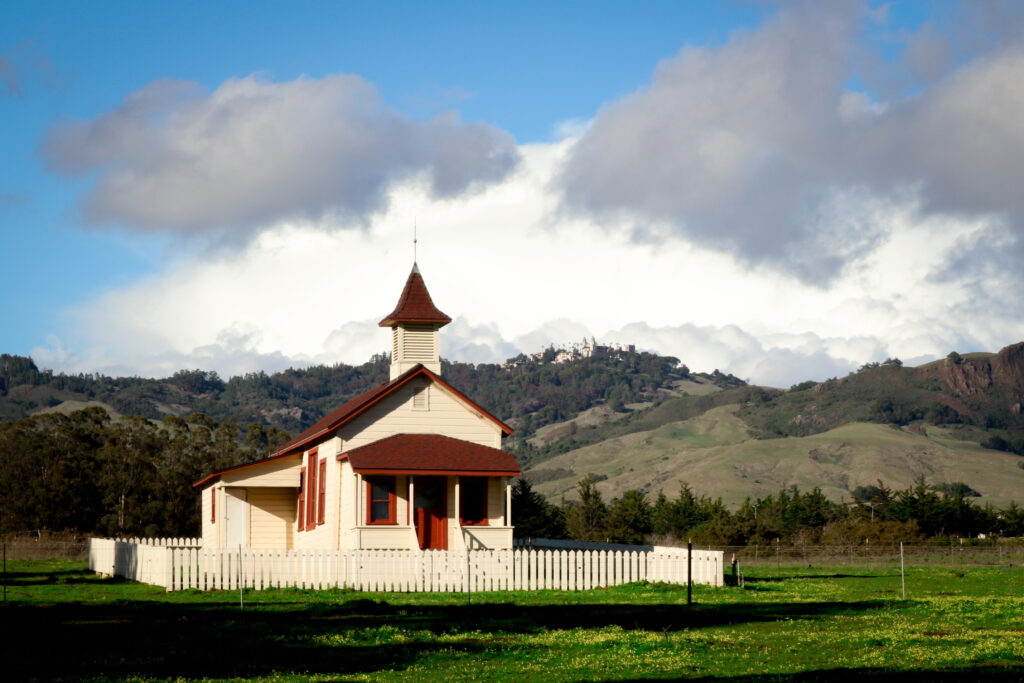
    • San Simon
    • Morro Bay
    • Pismo
    • Santa Maria/Lompoc
    • Solvang
    • Santa Barbara
    • Ventura
    • Malibu
    • Santa Monica/Venice
    • Long Beach
    • Huntington Beach
    • Laguna
    • San Diego

    San Francisco: The City by the Bay

    San Francisco has so many places to see, you have to prioritize your choices.  I love this City and visit often but still haven’t seen it all. Here are some of the highlights.

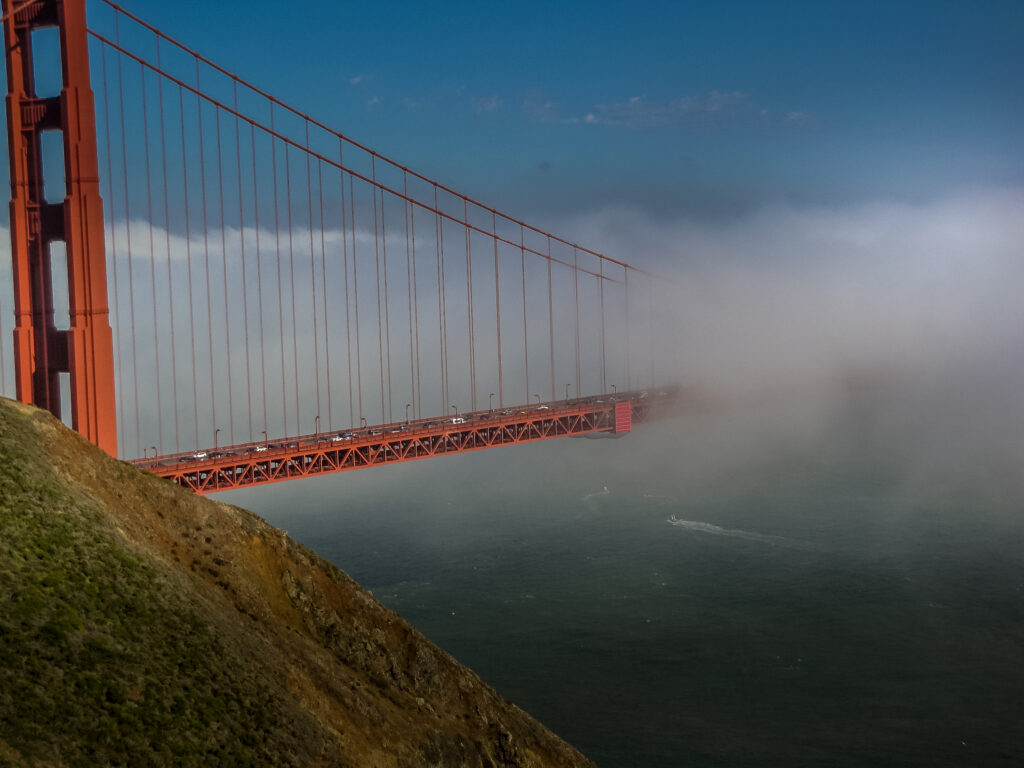
    Walking across the Golden Gate Bridge. You can get a view like nowhere else by walking across the bridge.  Often this walk is chilly as the natural breezes and the fog can blow off the Pacific Ocean so you might want to see if you need a jacket before you set off.

    From the Sausalito, or northern side of the bridge, you can look back at the City skyline and watch the sail boats. The walk is loud and noisy with all of the cars racing by but pedestrians have their own protected path so it’s safe and easy to leave all of that behind to enjoy the view.

    Afterward, relax in Chrissy Field, take a nap, another selfie with the bridge behind you or watch people flying kites.  The Painted Lady Homes are also near here. At this end of the Bay is the Walt Disney Family Museum with hours upon hours of sight-seeing memorabilia collected by Walt and his daughter who has a home here.  The Ghiradelli Chocolate store is right up the hill if you’re hankering for something sweet and close by is the end of the cable car track so you can literally watch the workers turn the cable cars turn around. 

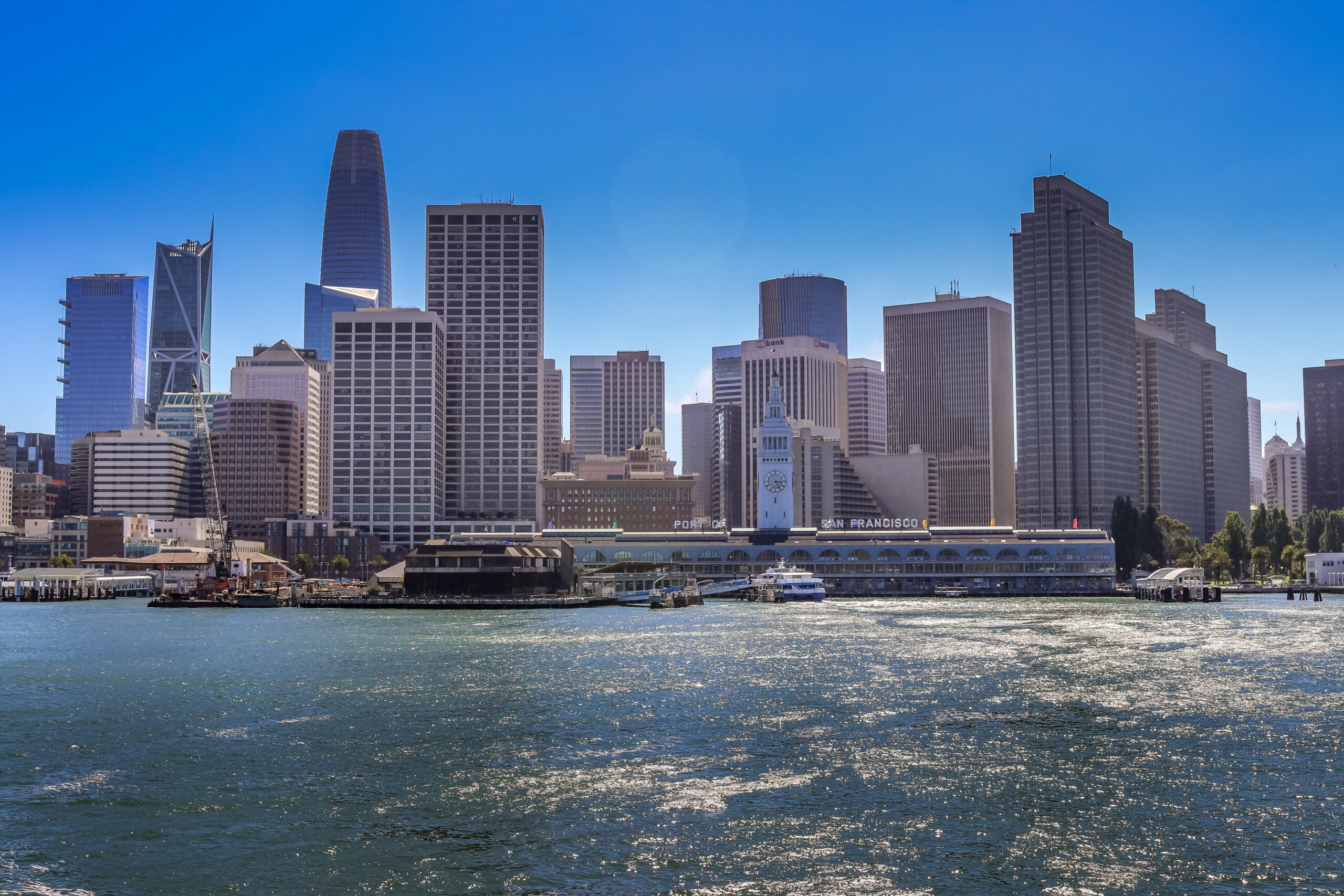
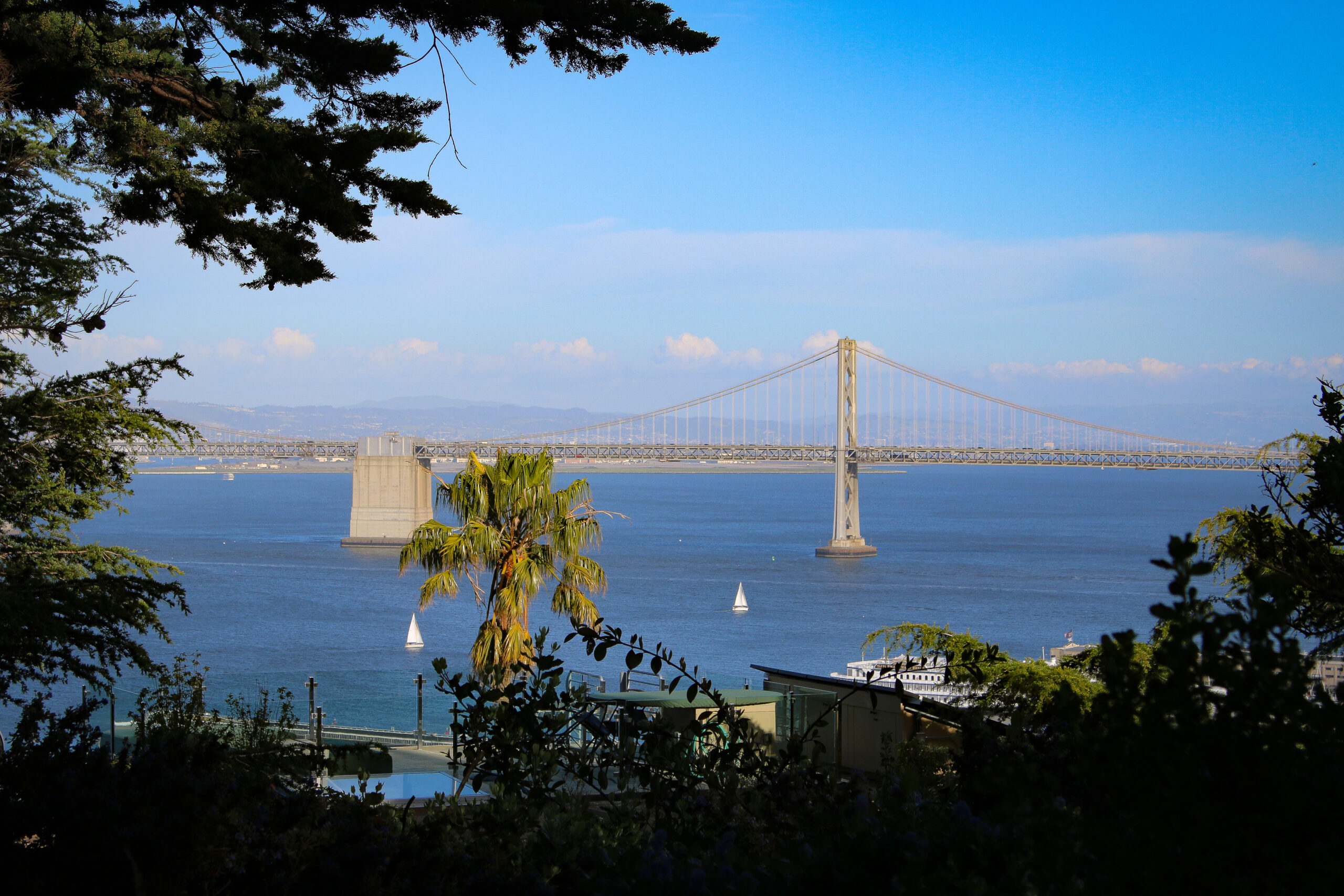
    Walking along the bay from Chrissy Field, you pass Fisherman’s Warf, Pier 39 and can walk down along the Embarcadero.  If you go out on the piers, you can see and hear the seals barking, smell the fisherman’s catches, eat clam chowder in a bread bowl at one of the many restaurants and visit the Ferry Building filled with small shops and gourmet foods. If your feet are exhausted from all this walking, you can always hop a cable cars that travels parallel to the Bay. From the east end, you can see the Bay Bridge, which is my favorite at night when they turn on the LEDs, fish float alongside the bridge in lights.

    Another option is to take a tour on boat under the Golden Gate or visit Alcatraz Island, the notorious prison that claims it was impossible to escape or spend the day at the California Academy of Sciences.  They have more than 20 exhibits daily and you can spend hours here.

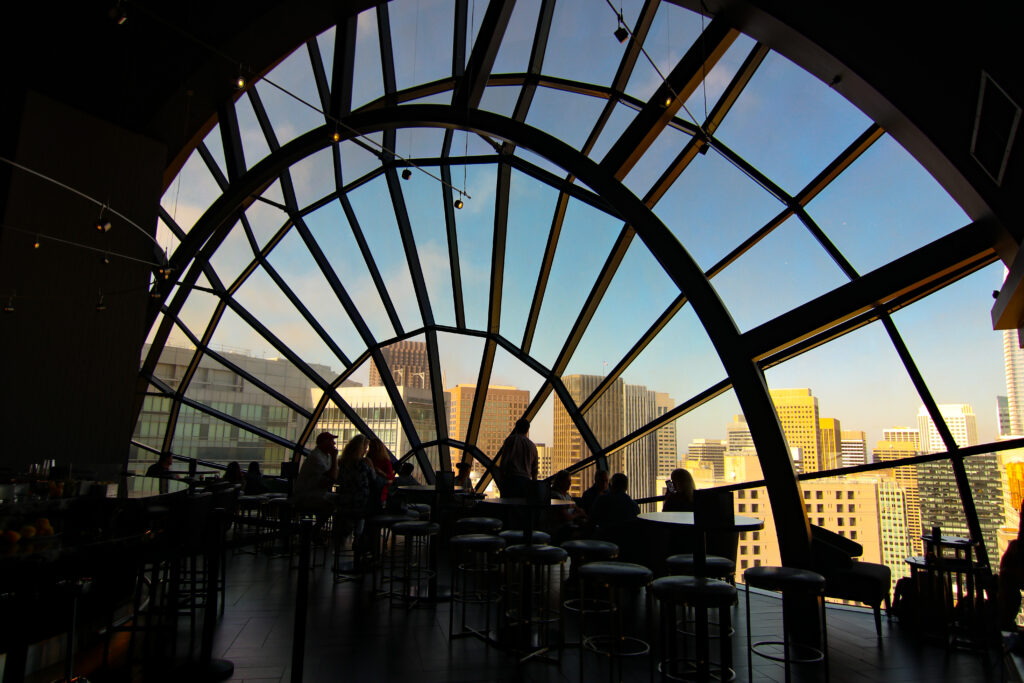
    If you’re really up for a hike, walk up hill to Lombard Street, the curviest street around or to Coit Tower for an unbelievable view.  Want the view without the walk, I’d suggest a drink at The View Lounge at the Marriott. -Make sure you get there when it first opens for the best seat.

    Monterey: Cannery Row

    One of Monterey’s claim to fames is John Steinbeck who wrote many novels here including Cannery Row. Many of the canneries are now restaurants and shops that you can browse through.  Monterey is also known for its world-renown aquarium.   The Monterey Bay Aquarium is huge and the best that I’ve been in.  You can touch a starfish, poke a sea anemone and see humongous fishes swimming all around you.  One of my favorite things to watch here are the jellyfish that slowly glide through the water.  Monterey is also along the whale migration route and in the spring, you can go out on a boat whale watching.  On our trip, we saw a few whales but what was more fun for me was the hundreds of dolphins that followed our boat, riding along our bow.  One must do is the 17-mile drive in Monterey.  Pebble Beach is here and the curvy road goes along some of the most beautiful coastline in the world.

    Big Sur: Pfeiffer Big Sur State Park

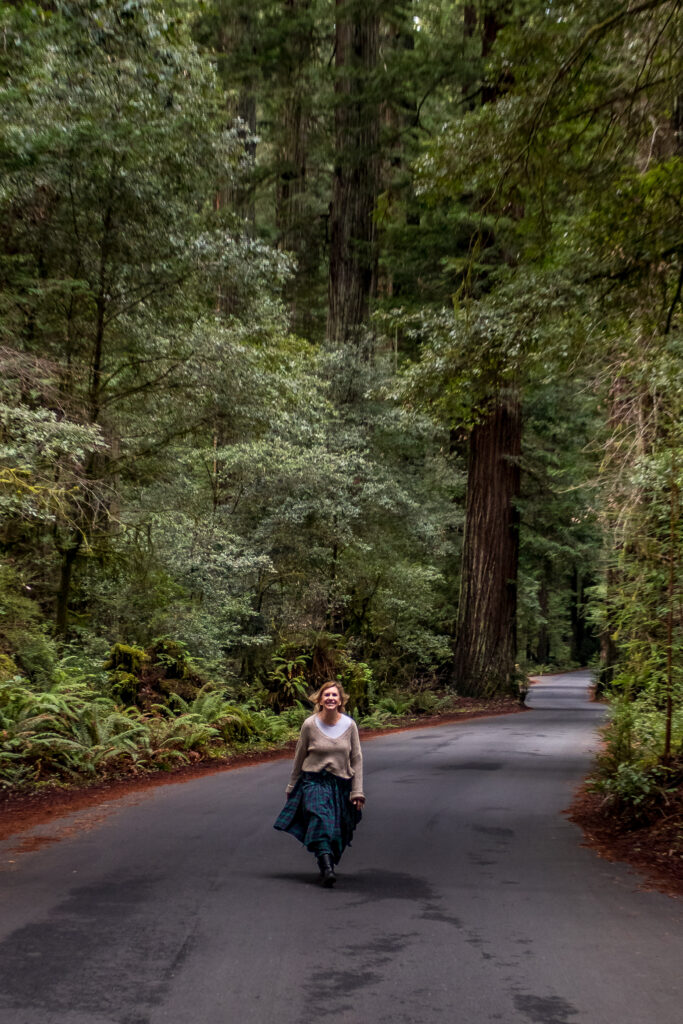
    If you haven’t had your fill of hiking yet, stop in Big Sur for a walk within the State Park.  There are huge Redwood trees and plenty of hikes to choose from.

    San Simeon: Home of Hearst Castle

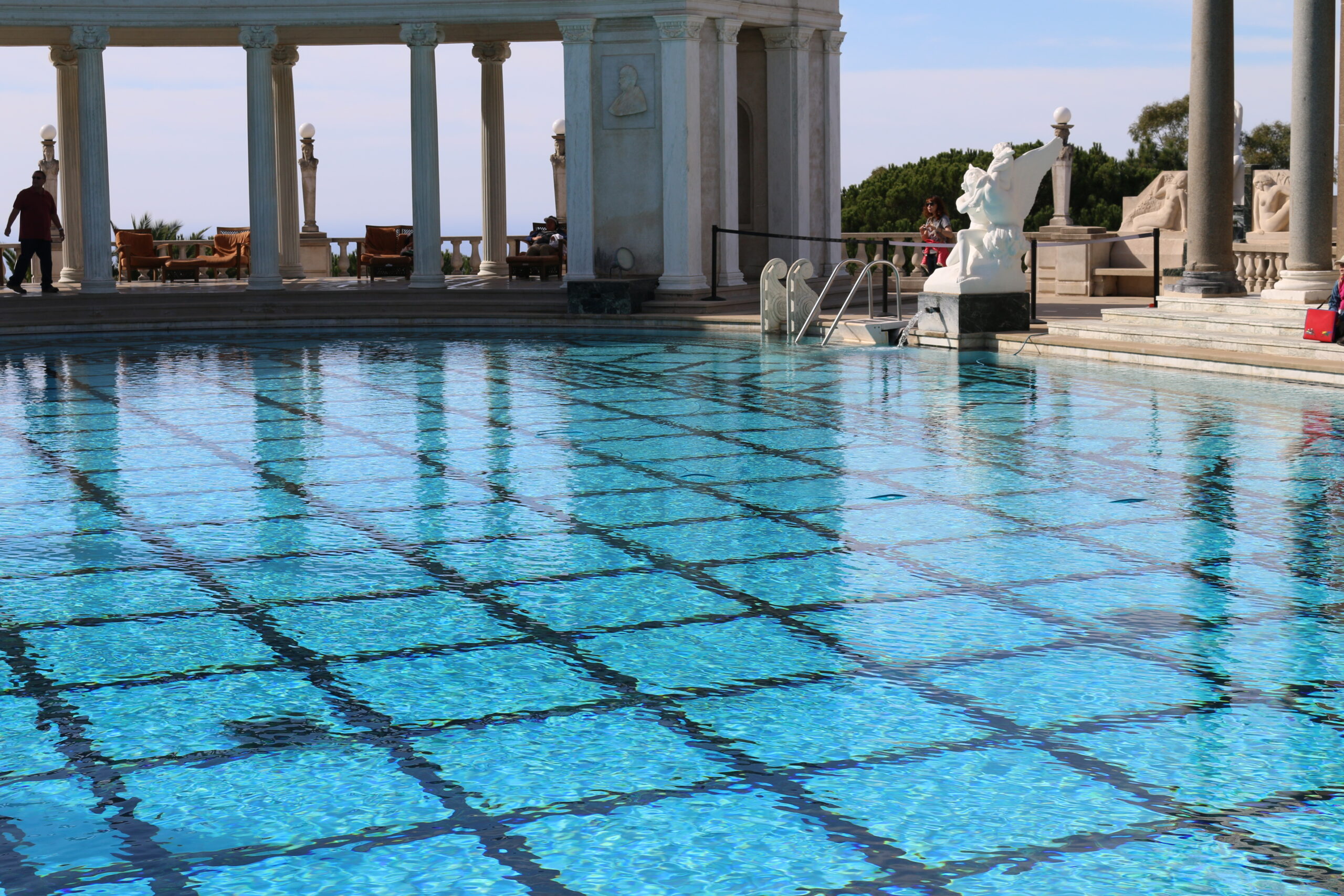
    William Randolph Hearst was a newspaper and media mogul who control much of the newspaper messaging during the late 1800s/early 1900s, relying on sensationalism and crude exaggeration, he was either loved or hated by his readers. Yes, Patti Hearst is his granddaughter.  With his millions of dollars and an inheritance, William Randolph creating Hearst Ranch, a spread that included 250,000 acres and building Hearst Castle designed by architect Julia Morgan, By 1947, included 165 rooms and 123 acres of gardens, terraces, pools and walkways and was still considered unfinished.  You a take a variety of tours. 

    I also recommending stopping at Hearst Ranch Winery on your way out or beforehand.  It sits on the westside of Highway 1 next to the beach and has some really good wines.  This is one of my “must stops” for wine lovers along the way.

    Morro Bay: The Big Rock

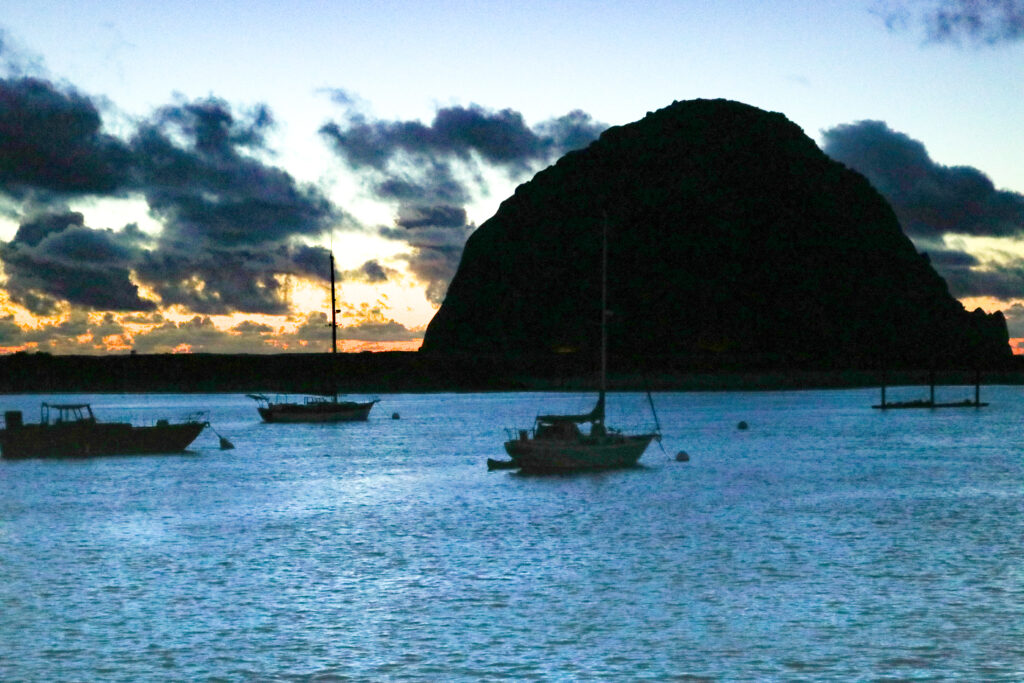
    Morro Bay is the epidemy of a smaller beach town and I love it.  Looking out to the bay is Morro Rock, a huge bolder that springs up out of the water and gives the town its name.  Along, the water are small shops and places to eat.  This town has a lazy layback feel and you can sit and watch the sea otters, seals and birds play in the bay for hours, especially in the morning before it gets busy.  If you’re more energetic, walk the rock!

    Pismo: Drive on the Beach

    Pismo Beach is another small beach town and is super popular with sports enthusiast.  This is the only area in California where you actually drive on the beach, so its worth spending some time here.   There are about 3,500 acres of sand dunes at the Oceano Dunes SVRA/Pismo State Park that also offers camping.   As you cruise the sand, there will be plenty of people watching with See-Doos jumping the waves, dune buggies and quads racing around and kites flying high.  You can also dig up the famous Pismo Clams but make sure you have a license.

    Santa Maria/Lompoc: Wineries

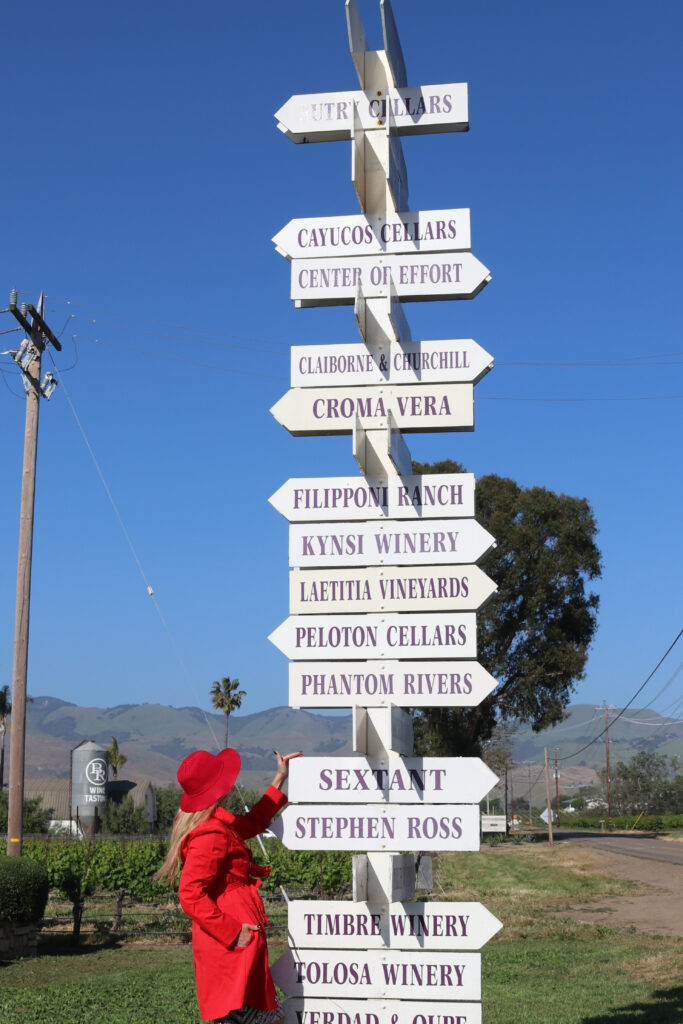
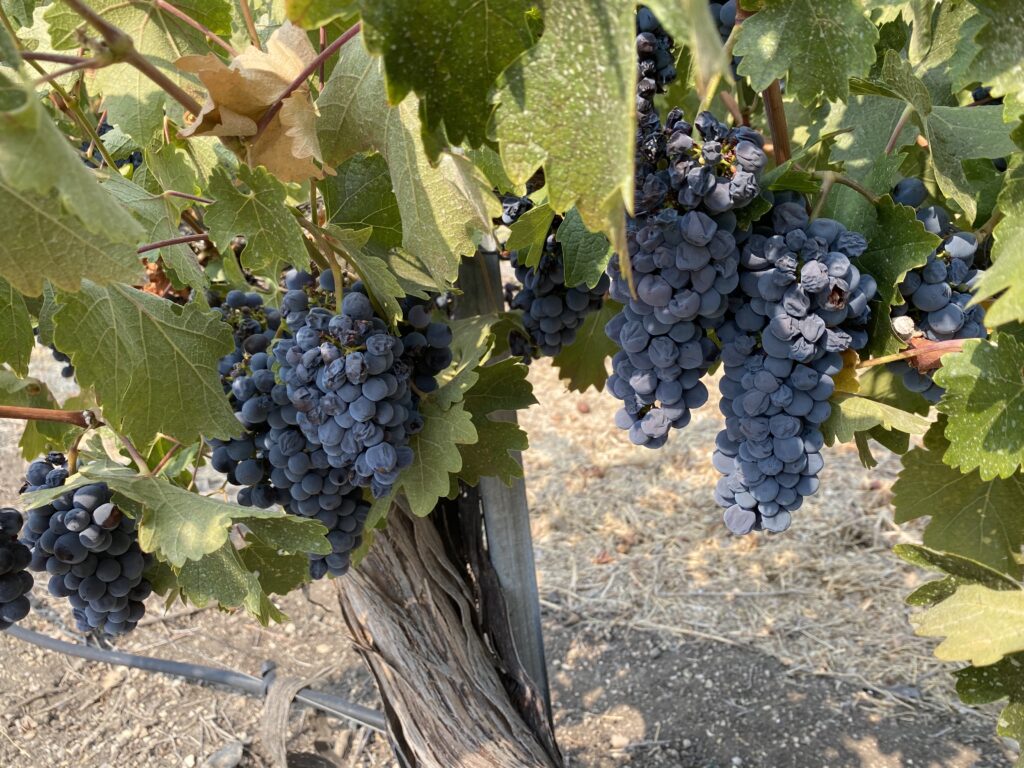
    When you get to Santa Maria/Lompoc area, the highway cuts inland and I suggest you go a little further to go wine tasting in this area.  The Edna Valley and San Luis Obispo wine regions are world renown for their many award-winning wineries and tasting rooms.  Some of my favorites are listed in this blog post.

    Solvang: Get your Danish On

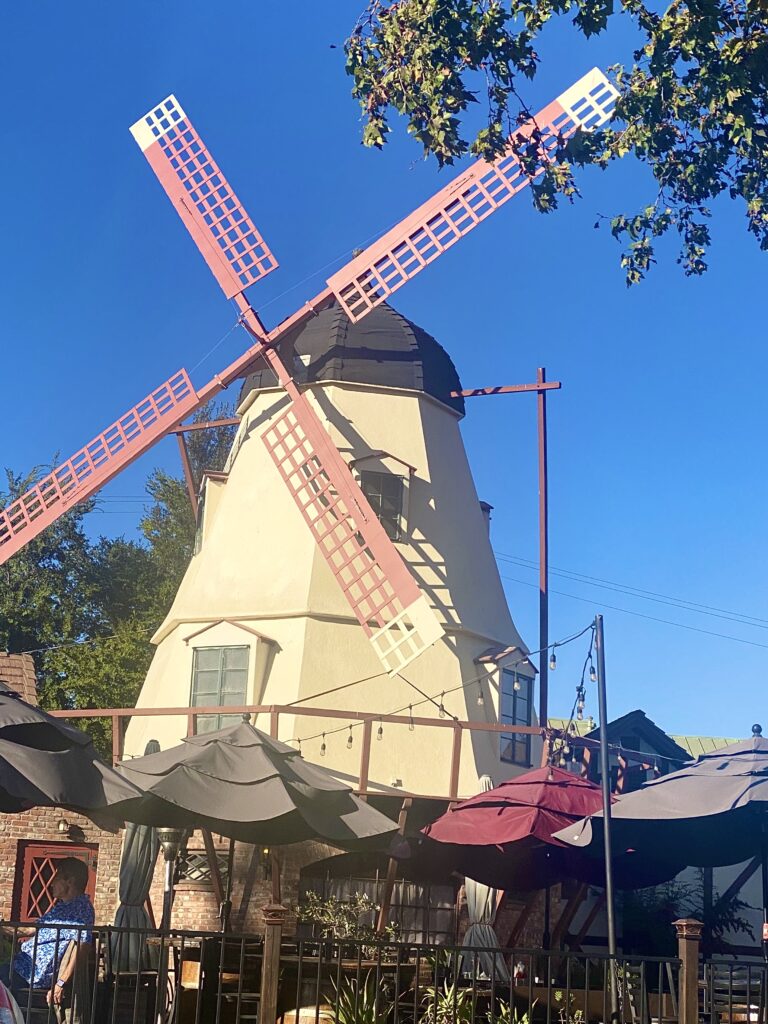
    Solvang is next.  It’s a Danish town with windmills and cute Danish cottages that host shops and restaurants.  If you can’t make it to some of the local wineries, Solvang also has lots of tasting rooms so you can sample many of the local wineries at once.

    Santa Barbara: Highend Eating and Shopping

    Santa Barbara is a mission style town along the beach.  This town is expensive to live in and reflects a more sophisticated lifestyle. The downtown offers many gourmet eateries that you can sit outside and enjoy the dependably wonderful weather. Or attend an array of events offered each weekend.  Santa Barbara also has some really good farmer’s markets for you to enjoy. If your camping and can get reservations at Gaviota, Emma Wood (no tent camping) or Carpenteria, book it now, as they fill up fast and are right on the water. Santa Barbara is hosts one of the California Missions that were built up and down California to provide housing and sanctuary for the Catholic priests of the Franciscan order.  There are 21 missions and Santa Barbara’s mission is called the Old Mission San Barbara and offers tours.

    Malibu: Home of the Rich and Mega Rich

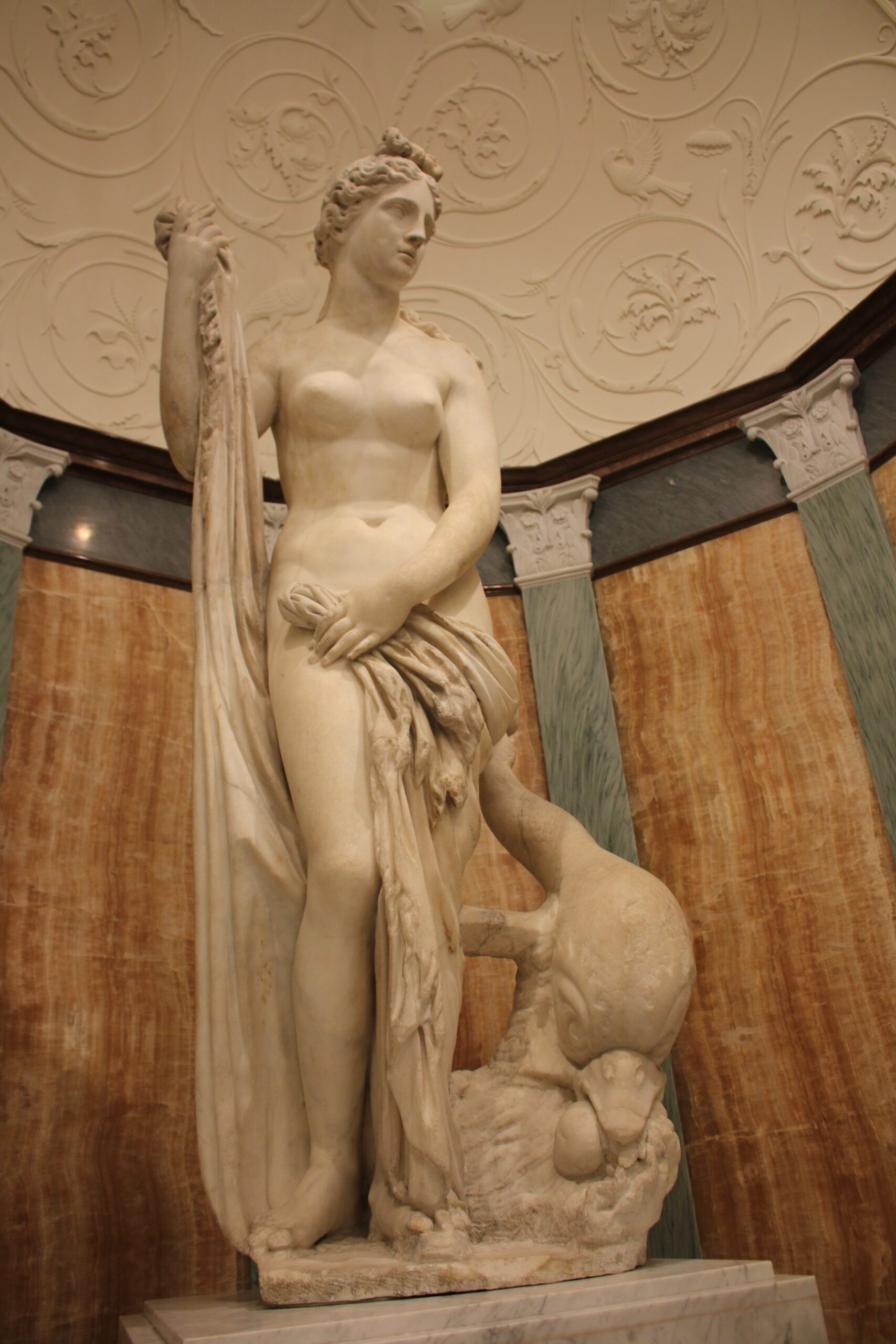
    Malibu goes on forever with some of the most beautiful ocean front property around.  Much of it is fronted with homes so you can’t see the beach as you drive along it but get out of the car and walk though one of the public access areas to the water, (look for the little signs) you get to not only view the Pacific to the west can see some huge homes to the right.  Malibu is also home to the Getty Villa. Paul Getty, an oil magnate, built the Getty Villa adjacent to his home to house his art collection.  Today it acts as an educational center and museum dedicated to the study of the arts and cultures of ancient Greece, Rome, and Etruria.  The tickets are free but you need to order them early and pay for parking. There are many events held at the Getty include Greek plays in the outdoor auditorium.  You can spend an entire morning or afternoon roaming the gardens and art collections.

    If you have time to go inland, visit Malibu State Park and go hiking in the hills.  There is a vast array of trails to choose from.

    Santa Monica: Home to the Famous Pier and Ferris Wheel

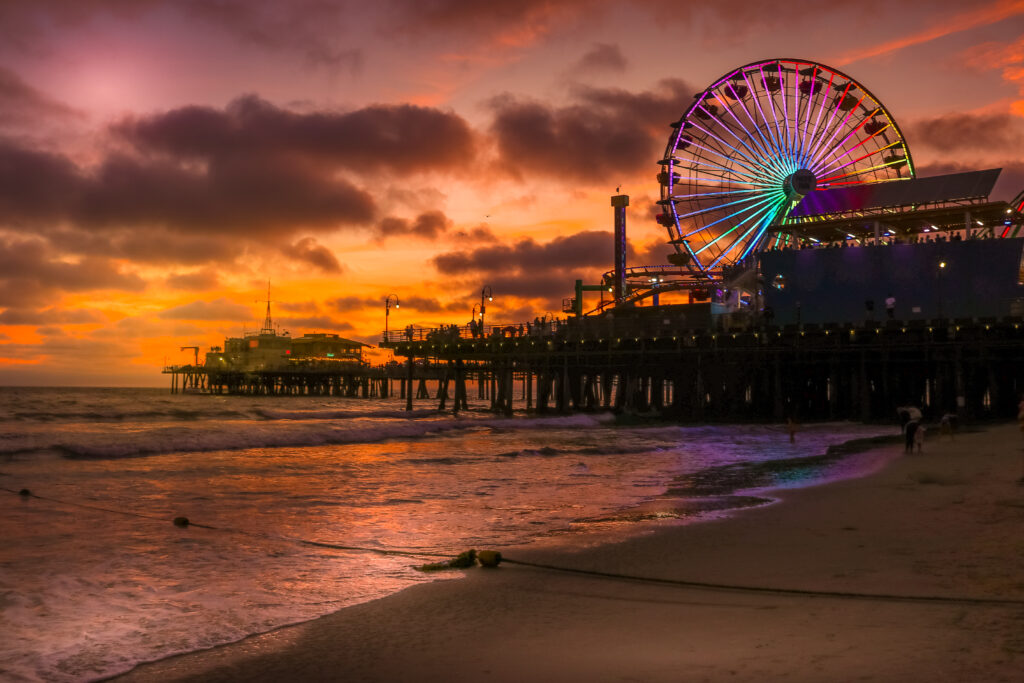
    Santa Monica is known for the Santa Monica Pier and Pacific Park.  Located right on Pacific Coast Highway (the 101) freeway, a walk along the pier, especially at sunset is fun. There are shops along the pier and the famous Ferris wheel in Pacific Park (This is the one you often see in Hollywood movies) along with a small rollercoaster and midway.  At the end of the Pier are fishermen and the Marisol (Mexican) restaurant. Get there early if you want a table at sunset. If you travel eastward from the Pier, there are a large amount of national and local chain restaurants and shopping at Third Street Promenade

    Venice Beach: Street Performers, Musclemen & Women

    Venice Beach is just south of Santa Monica and it resembles your eclectic, hippy black sheep brother-in-law.  It’s a fun area with street performers, small shops and the home of Muscle Beach although Santa Monica also claims their own Muscle Beach too. Many years ago, when I was here, there were a ton of people smoking marijuana.  This was before it was legal in California and it was rampant. There are plenty of homeless here too, although I’ve heard the have been cleaning up the area and removing encampments. You may want to think twice before bringing your kids here.

    Long Beach, Ports, an Aquarium and the Queen Mary

    Long Beach is home to the RMS Queen Mary and Long Beach Aquarium. The Port of Los Angeles is comprised of the Port of LA and the Port of Long Beach.  It’s one of the world’s busiest seaports for international trade in North America and the number one container port in the U.S. with 9.5M containers handled in 2018.  Within Long Beach is also the RMS Queen Mary.  It now acts as a hotel, museum and restaurant.  It needs some maintenance but if you are into haunted old ships, this is the place for you.  The ship was delivered in 1936 and sailed until 1967.  I know many friends who have stayed here and absolutely believe its haunted although I didn’t didn’t see or hear anything when I spent the night many years ago.  Long Beach is also host the Aquarium of the Pacific and has lots of restaurants to choose from in its Downtown and at Shoreline Village.

    Huntington Beach: The Place the Locals Hangout

    Huntington Beach is one of the few beaches that have fire pits on the sand.  You have to get here early to grab one but the smell of a campfire mixed with the smell of sea air is one of my fondest memories as a kid. 

    Laguna Beach: Arts and Shopping

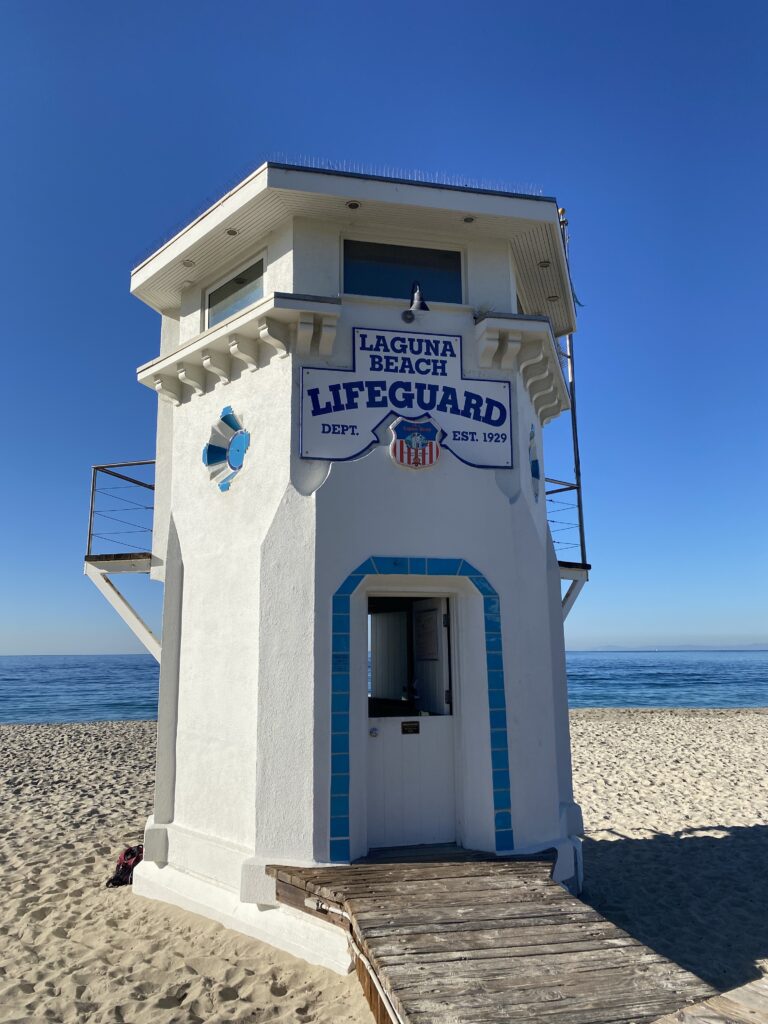
    Along Highway 101 or commonly known as PCH (Pacific Coast Highway) is the arts district of Laguna Beach.  The many galleries display a wide variety of art along with shopping and yummy restaurants.  The Pageant of the Masters (July-September), an outdoor show where real people recreate works of art along with the annual Sawdust Festival, an arts and crafts fair, is held here from June to August. 

    San Diego: Sea World, Old Town and Gas Lamp     

    San Diego is a huge city with many things to see and do.  During the last 30 years, the Gas Lamp district has undergone a renaissance and now has a large amount of stores and restaurants.  On Friday and Saturday nights, the streets are filled with people partying, slipping into the bars to hear music or just dancing along the sidewalks.  There are plenty of pedi-cars to take you from place to place but negotiate the price before you hop in.   In the Gas Lamp is also PetCo Stadium, home to the San Diego Padres Baseball Team. Also in San Diego’s Mission Bay is Sea World, the USS Midway Museum and in Old Town, you can visit 36 historical sites and museums, shops and restaurants. If you want a really nice night or Sunday Brunch, head on over to the Hotel Del Coronado. Its beautiful but pricey.

    That’s it San Francisco to San Diego or vice-a-versa.  Once you’ve finished this trip, try San Francisco to Seattle.  Its just as cool.  Promise…

    Link to the Map.

  • Norway – Stunningly Beautiful

    Norway – Stunningly Beautiful

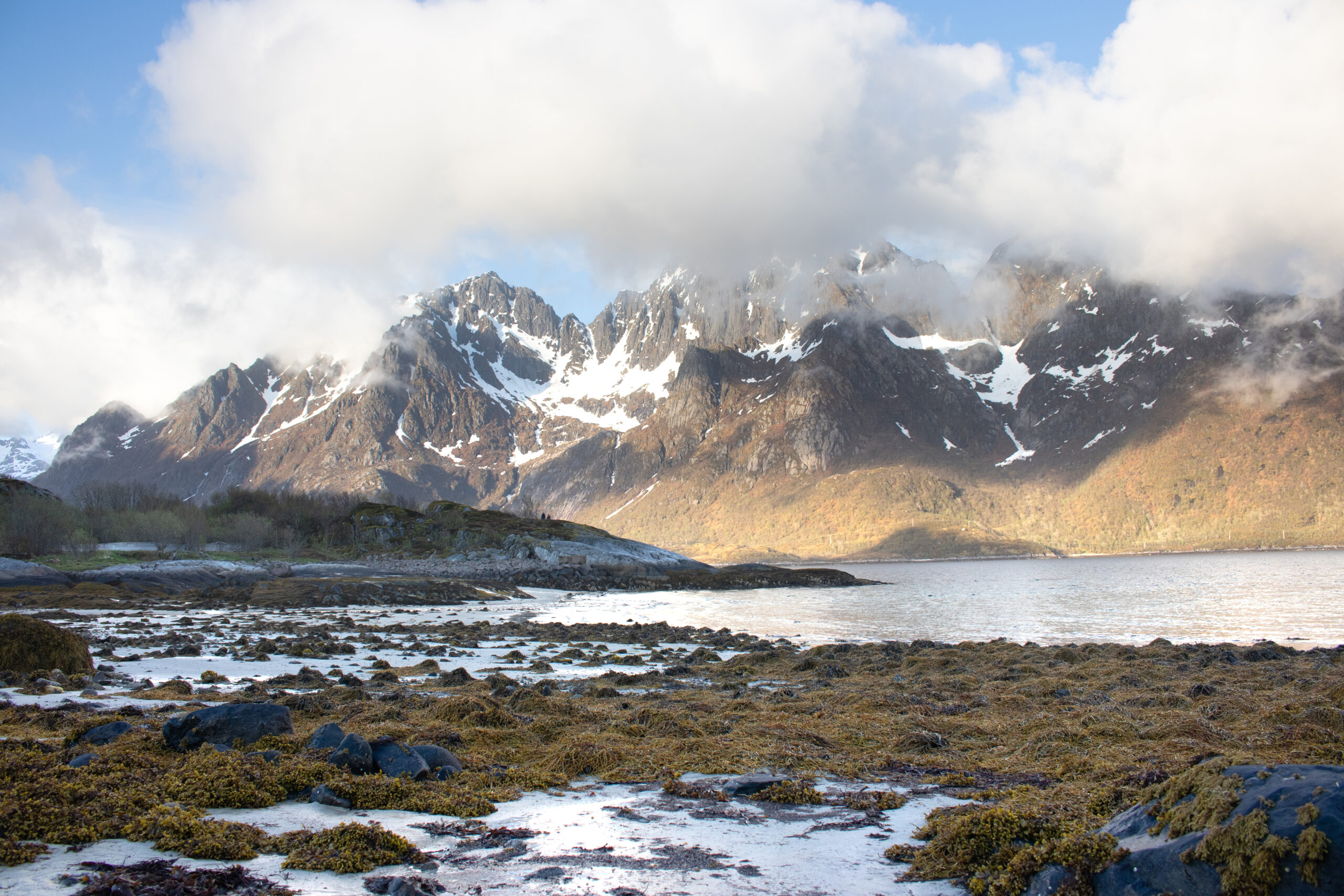
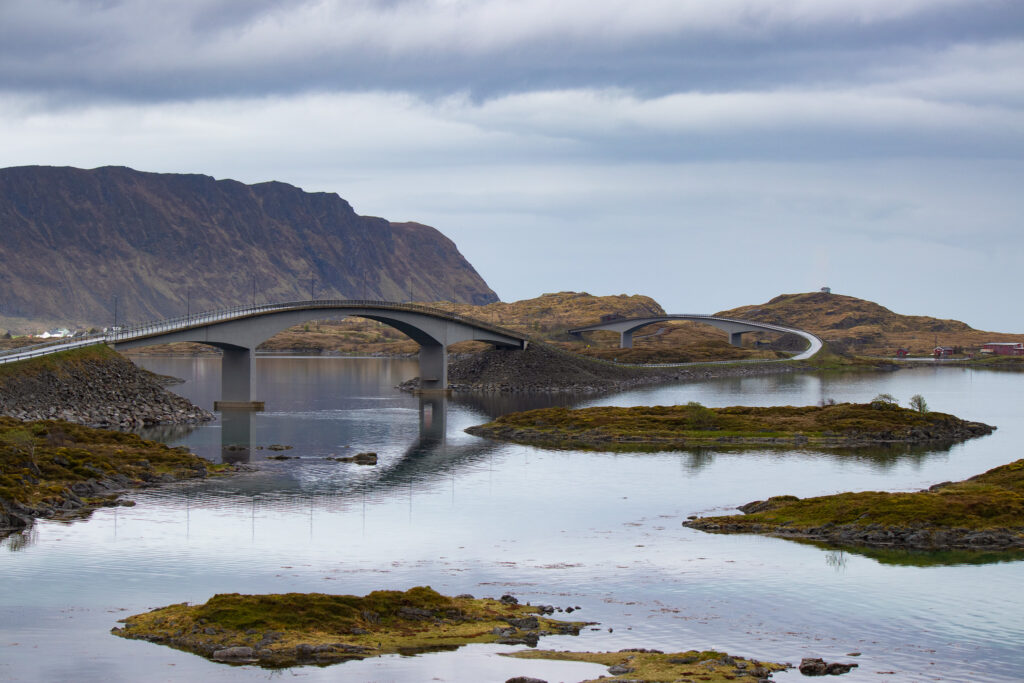
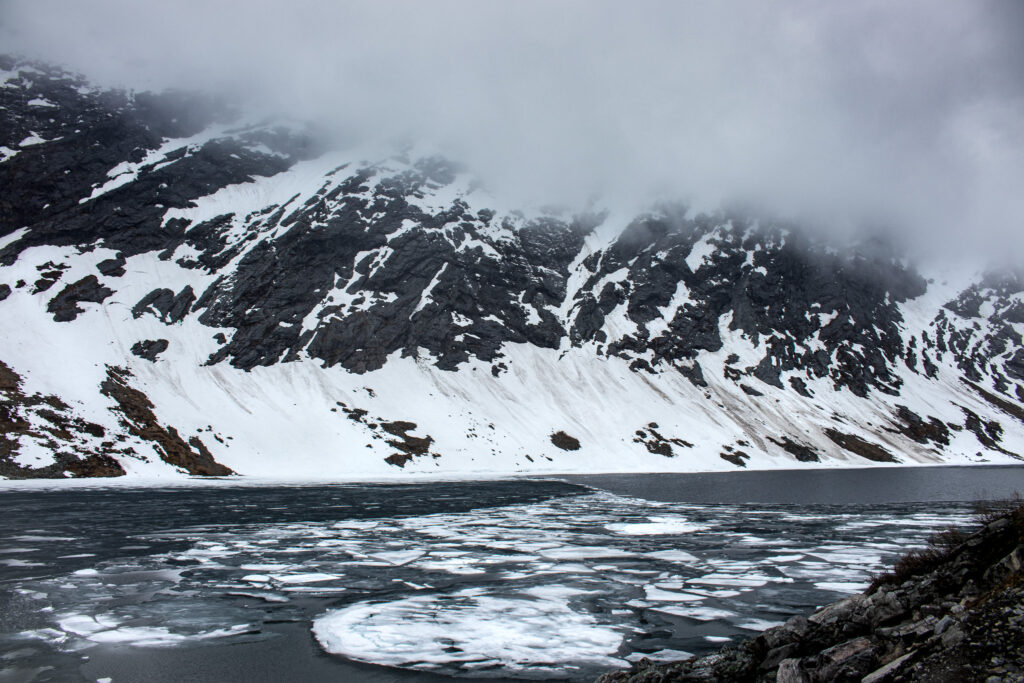
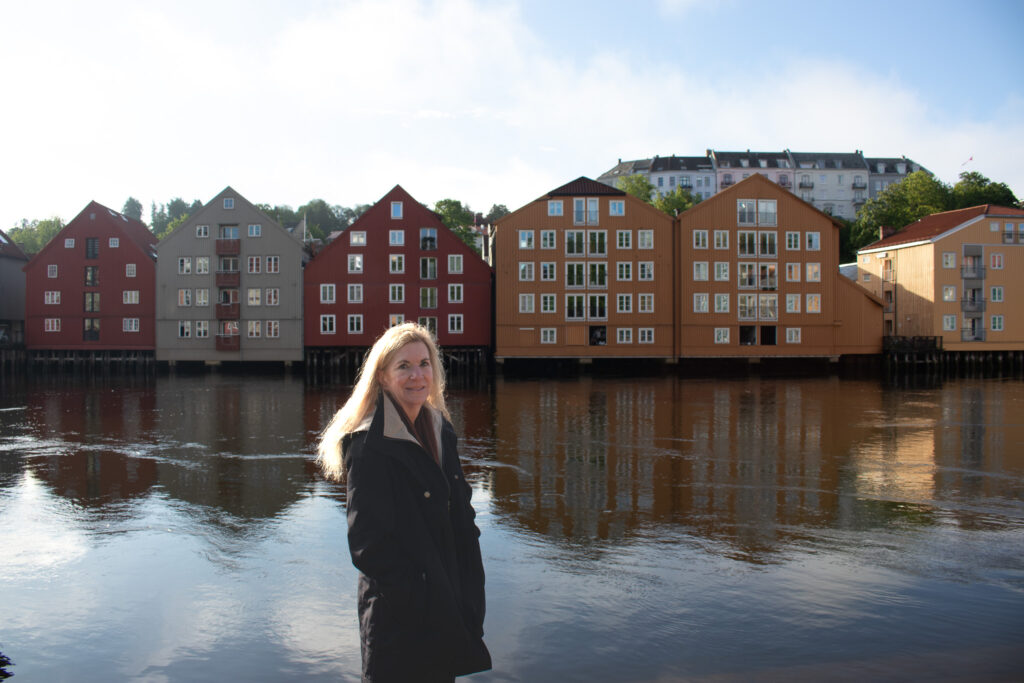
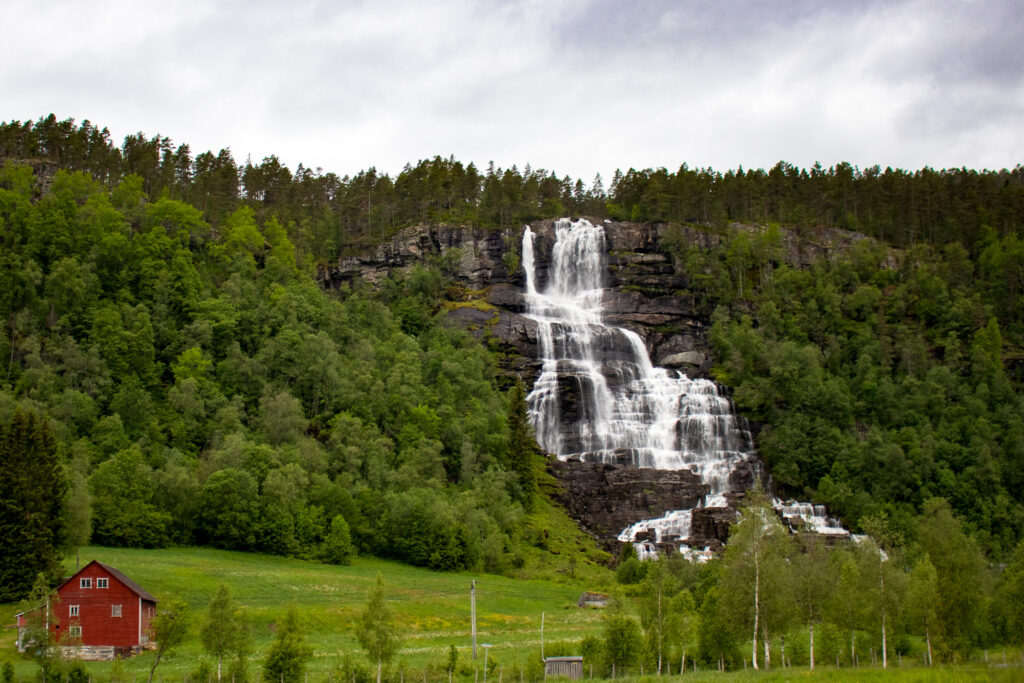
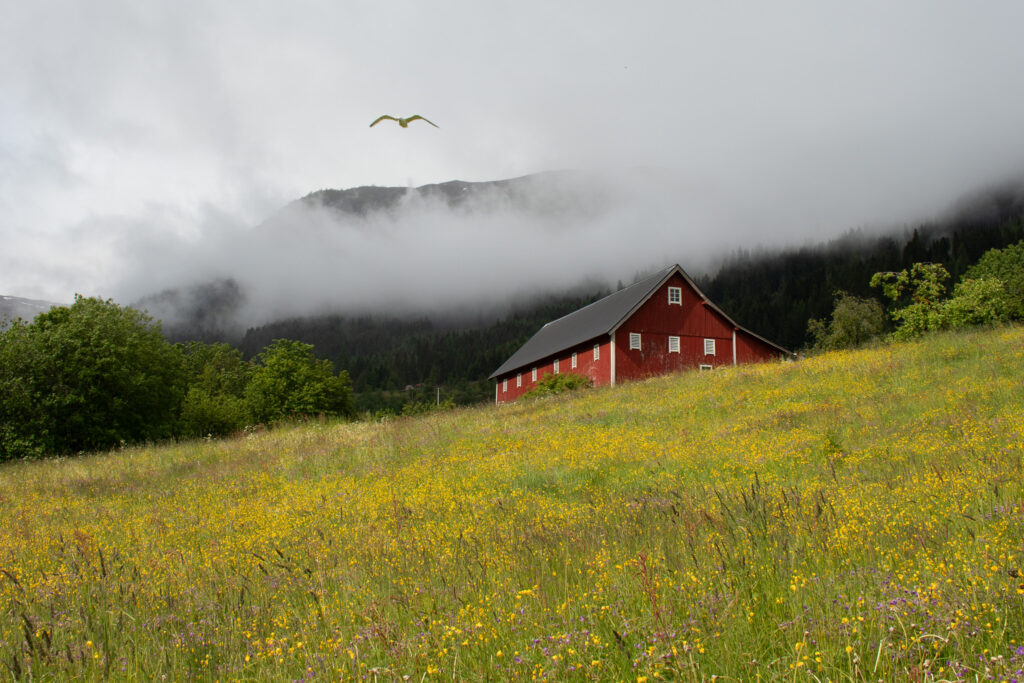
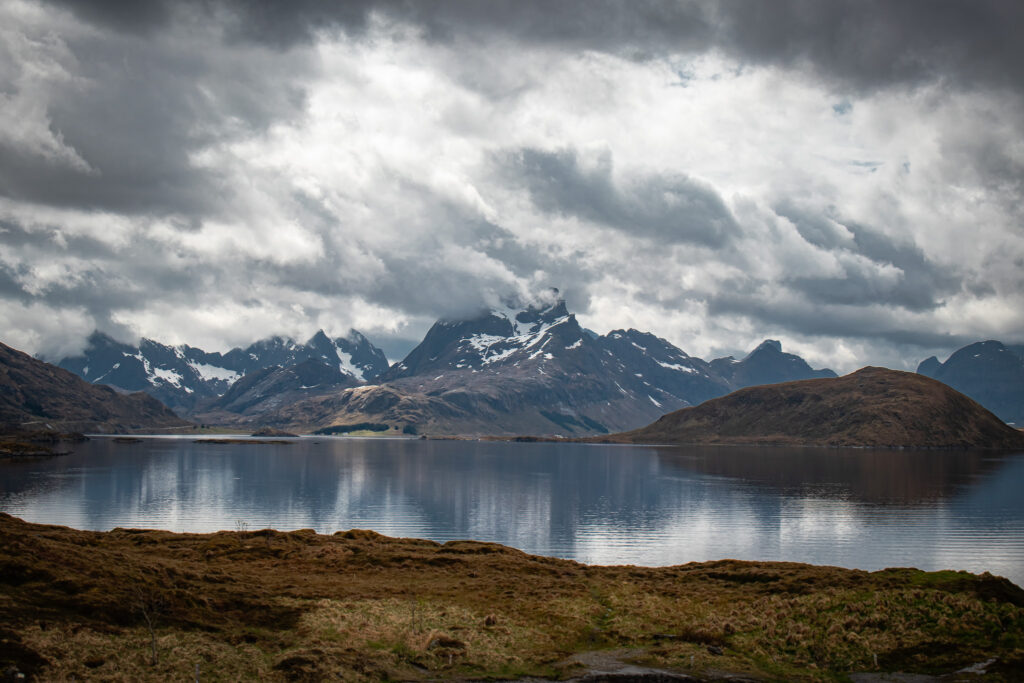
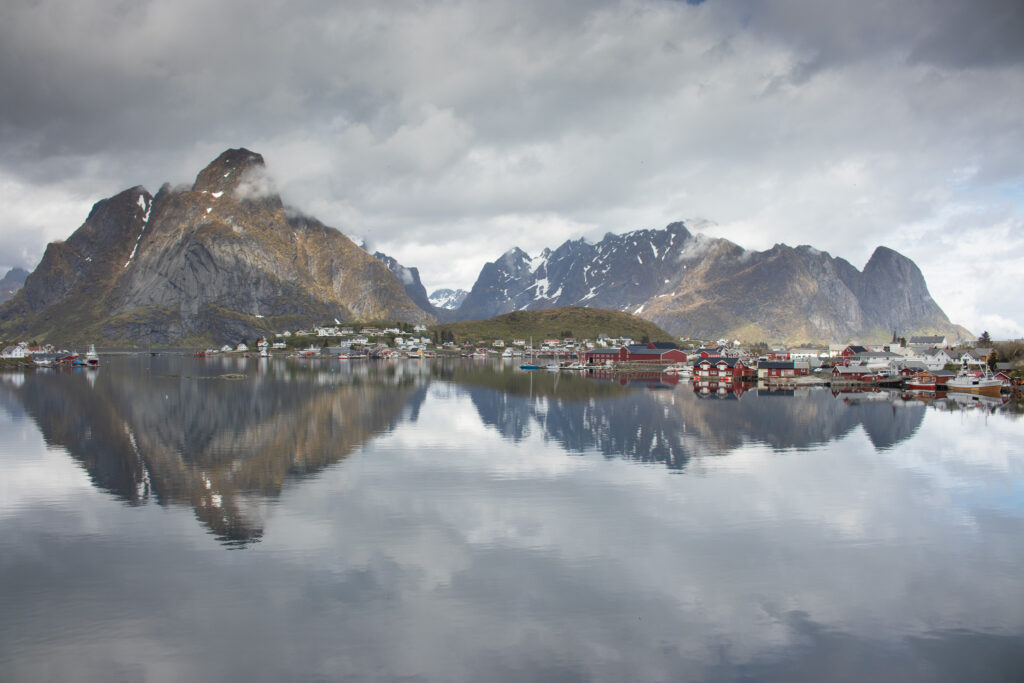
    The greatest reason to visit Norway is beautifully simple: it’s breathtaking. Everywhere you turn, nature feels larger than life — dramatic, raw, and impossibly stunning

    Instead of creating a traditional travel guide packed with checklists of what to see, where to eat, and how to plan every hour, I wanted this trip to feel different.

    This is more of a personal journal — part reflection, part visual story — shaped by moments, impressions, and quiet pauses. It’s not just about destinations; it’s about what it felt like to stand there. To breathe that air. To watch the light change across a fjord. My hope is that through these glimpses, you’ll feel inspired to imagine your own version of Norway — and decide for yourself what calls to you most.

    Of course, I’ll still share favorite stops, helpful maps, practical tips, and a few lessons I learned along the way. I’ll even include the books I read and films I watched beforehand — the ones that quietly set the tone for the journey.

    Before I left, I kept hearing the same question:
    Two whole weeks in Norway? What will you do for that long?

    My answer was simple: I want to travel deeper.

    I wanted the freedom to pull over at a waterfall just because it caught my eye. To linger without watching the clock. To sit in stillness and let the landscape speak. I didn’t want to rush from highlight to highlight or measure the trip in checkmarks.

    I wanted to experience Norway — slowly, fully, and on my own terms.

    Oslo to Lofoten

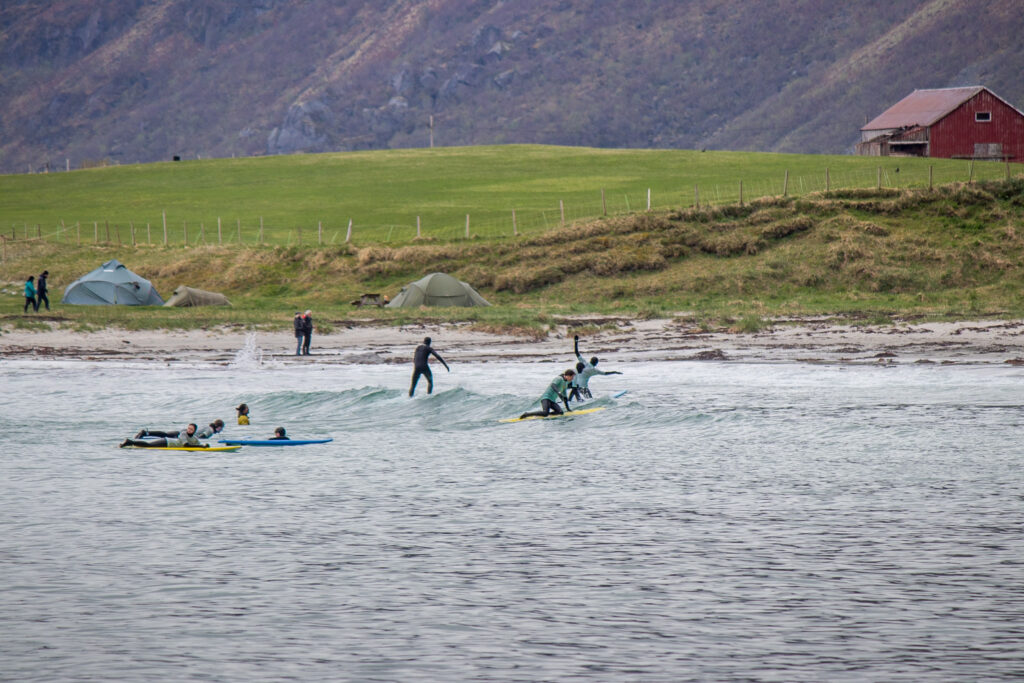
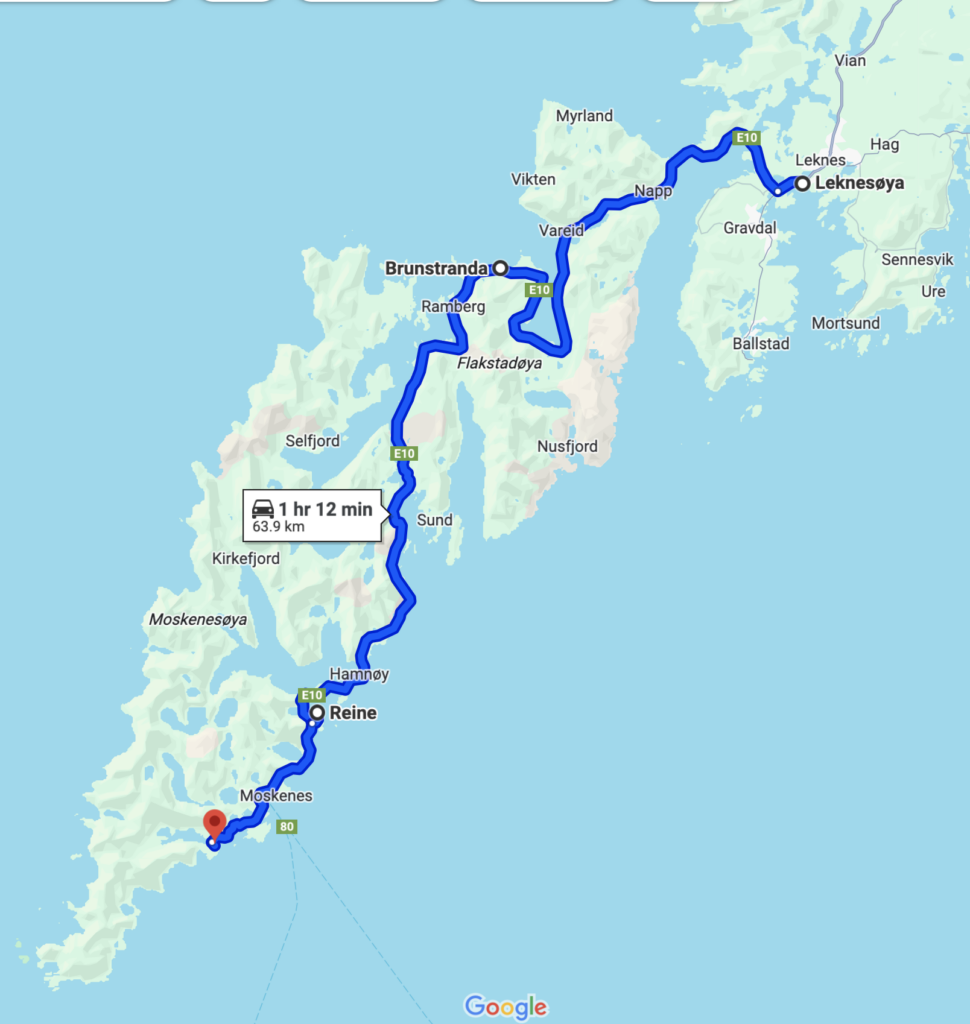
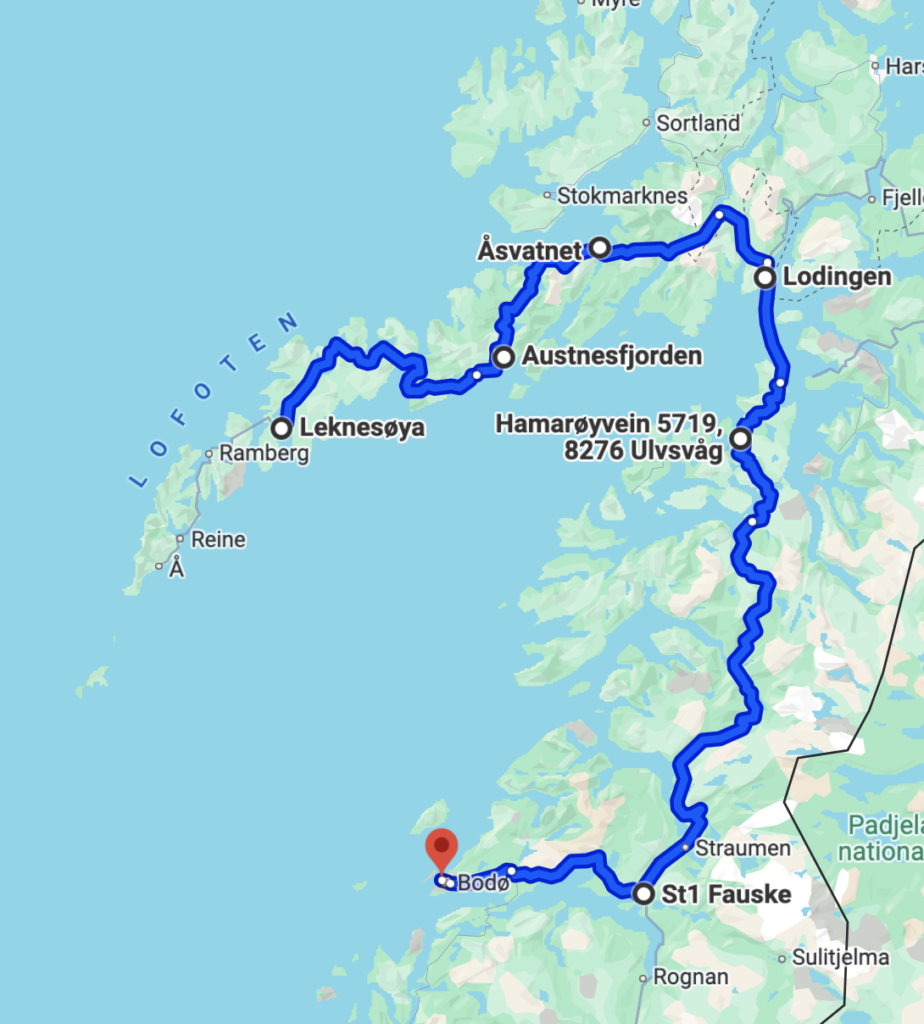
    We flew into Oslo, then caught a connecting flight north to Bodø (pronounced Boo-duh). From there, we rented a car, took the three-hour ferry to Moskenes, and then drove about another hour to Leknes. There are places to stay closer to the ferry, but I intentionally chose to be farther from the cruise ship stops.

    Lofoten is compact enough to choose one home base and explore from there. One day we drove west. Another day we explored east. On our final day, we made the full loop—east and then all the way back west—returning to Bodø. (You can see our exact stays in the itinerary.)

    From Lofoten to Trondheim

    After immersing ourselves in the wild beauty of Lofoten, which was my favorite part of the trip, we continued south toward Bergen, beginning the next chapter of our journey. We flew out, picked up another rental car, and set off once again—ready to experience a new side of Norway’s vast and varied landscape

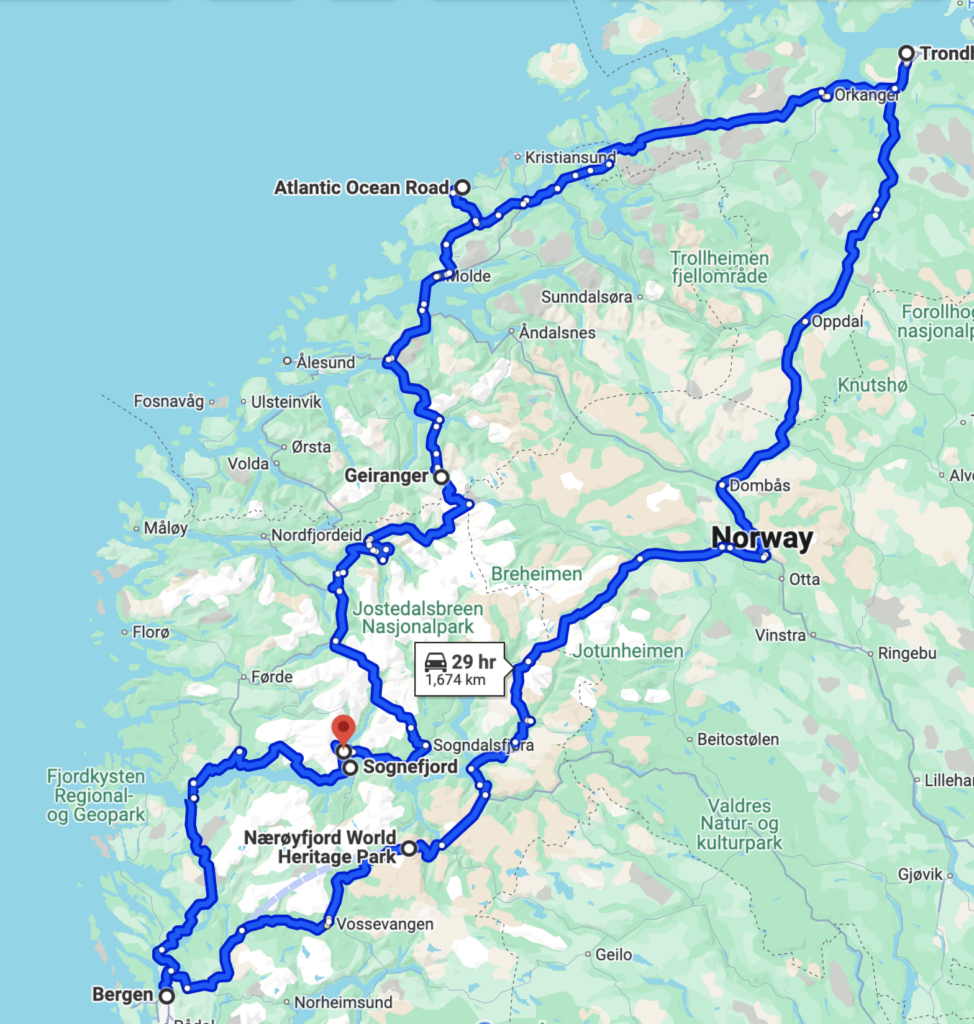
    Our route took us north to Trondheim before looping back along a more southerly road. I tried to keep each day’s drive between three and four hours—just enough structure to make progress, but flexible enough to allow for scenic pull-offs, quiet villages, and those irresistible “let’s see where this goes” moments. One return stretch stretched to six and a half hours, but it never felt long. The views made sure of that. One highlight was the Fram Railroad, a one and a half hour train ride through tunnels, canyons and along ridges to see little town below and waterfalls.  I would highly recommend this. (If you are going south on the train, try to sit on the right side of the train in the front seats where the window goes down. You’ll thank me later. )

    This part of the trip revealed a different rhythm—sweeping fjords, towering mountains, storybook towns, and small surprises we never could have planned for. It wasn’t simply about covering distance. It was about witnessing the landscape transform mile by mile, discovering the overlooked places, and appreciating the beauty found in the spaces between destinations.

    Oslo

    We then took the train back to Oslo, where we spent three days exploring the city. Oslo offers an impressive range of museums, scenic boat rides along the fjord, and plenty of spots for souvenir shopping. I highly recommend the museums listed in the itinerary below.

    Below you’ll find photos and links to the highlights from our time there.

    Itinerary
    ThursdayDepartTravel Time
    FridayArrive Oslo
    LodgingClarion Hotel Oslo Airport
    SaturdayFly from Oslo to Bodo
    FlightSAS
    LodgingComfort Hotel Bodo
    Rental Car – Bodo
    SundayBodo to Lofton via Ferry
    Ferry to Moskenes
    LodgingScandic Leknes Lofoten
    MondayLofoten (Leknes)
    Drive North
    MealSolsiden Brygge
    TuesdayLofoten (Leknes)
    Drive to A
    MealLunch – Maren Anna
    WednesdayLofoten (Lekns) to Bode7.5 hours
    Turn in Car
    LodgingQuality Hotel Ramsalt
    ThursdayBode to Bergan3.5 hours
    FlightSAS
    Pick Up Car
    Bergan to Songnefjord3.5 hours
    Lodging

    Balestrand Hotell Kong Beles veg 41, Balestrand, 6898

    FridaySongnefjord to Geiranger4.5 hours
    LodgingHavila Hotel Geiranger
    AttractionSeven Sisters Waterfall
    AttractionGeiranger Skywalk
    SaturdayGeiranger to Atlantic Ocean3.5 hours
    Scandic Select-Greiranger
    SundayAtlantic to Trondheim4 hours
    LodgingQuality Hotel Augustin
    Monday

    Trondheim to Nærøyfjord World Heritage Park

    6.5 hours
    Fjord Cruise Nærøyfjord
    Hotel Aurlandsfjord
    TuesdayNærøyfjord World Heritage Park to Bergan3.5 hours
    LodgingHotel Oleana
    AttractionFlam Railroad
    WednesdayBergan to Oslo
    LodgingClarion Hotel The Hub
    Munch Museum
    ThursdayOslo
    AttractionHistorical Museum
    FridayOslo
    The Fram Museum
    Kon Tiki Museum
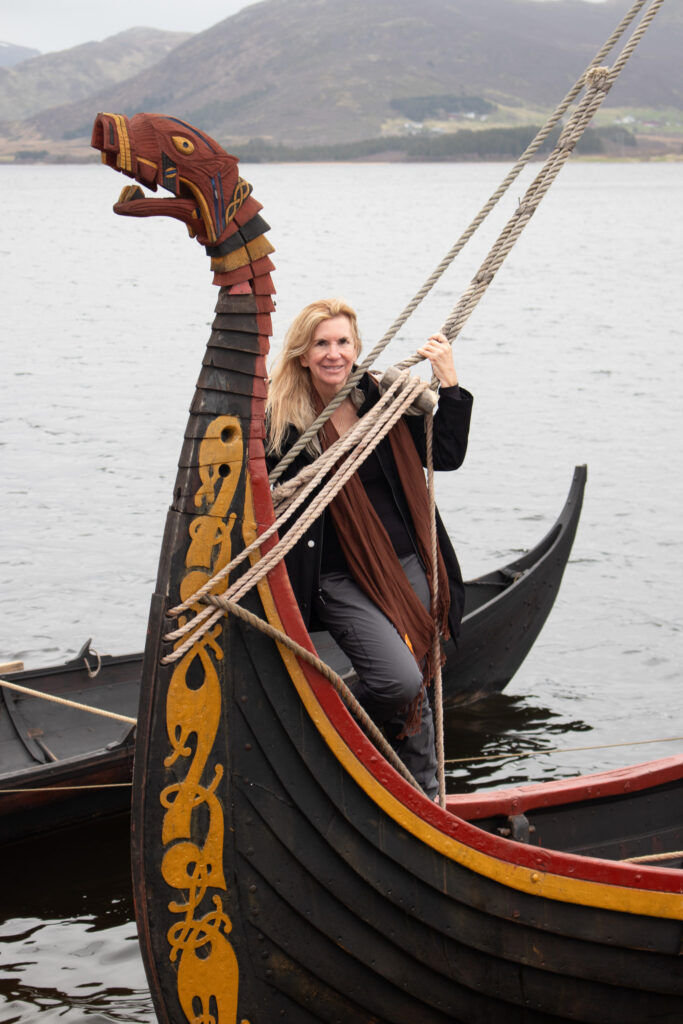
    Viking Planet Museum
    Sail boat shrimp cruise
    SaturdayOslo to home

    Good to Know

    Food is expensive. We never paid less than $100 for dinner, and most evenings averaged around $150 for two people with one drink each.

    Hotel breakfasts are generous. Every place we stayed included a substantial breakfast—take advantage of it.

    Bring a small, foldable cooler. Stop at a grocery store for snacks and supplies. Even convenience stores are pricey.

    Public transportation in Lofoten is limited. We saw plenty of bus stops but very few buses. Renting a car is essential.

    Consider a small motorhome. They’re popular here, and there are many scenic roadside pull-offs and RV parks for overnight stays. We’ll likely do this next time.

    Fast food is rare. High wages mean you won’t see many chains. We only noticed them in Oslo and Bergen.

    Driving details. Norwegians drive on the right side of the road. Many rentals are electric. We requested gas-powered and ended up with a diesel first, then a hybrid.

    Ferries are part of the road system. They operate like floating rest stops and are common throughout Norway. You drive your car onto the ferry, park, step out to use the restroom or grab a snack, then return to your vehicle before docking and driving off. Be mindful of ferry schedules—unless you’re fully embracing vacation mode and letting go of the clock.

    Bodø sits just above the Arctic Circle. In summer, the sun barely sets (midnight sun). In winter, it barely rises (polar night).

    Your circadian rhythm may struggle. Not all hotels have blackout curtains, so pack a sleep mask if you’re visiting in summer.

    VAT is 25%. Taxes are already included in displayed prices. For retail purchases, you can request VAT refund paperwork at the store and reclaim the tax at the airport VAT office—just be sure to ask for the proper form and keep your receipts.

    Inspiration

    Once upon a time, the water flowed.

    She said,
    “I am powerful. I cool the heat and nourish the trees and wild grasses. I bring life to the world.
    Where I flow, birds will sing, and fish will swim.
    People will settle along my edges, and I will feed their souls.”

    The mountains replied,
    “I will join you. I will carve vast valleys for you to wander through.
    I will surround you, forming deep lakes where you can rest when weary.
    I will cradle the snow, which will melt slowly into magnificent waterfalls—
    each one adding to your journey, your rhythm, your life.”

    The clouds, listening, were moved.
    They said,
    “We will play our part.
    We’ll wrap you in soft mist, cloaking the mountains in mystery.
    We’ll lay low along your shores, weaving fog like silk across the surface.
    And when you need joy, we’ll chase the sunlight and dance in your reflection.
    We’ll make you smile.”

    The water replied,
    “I am grateful to you both.
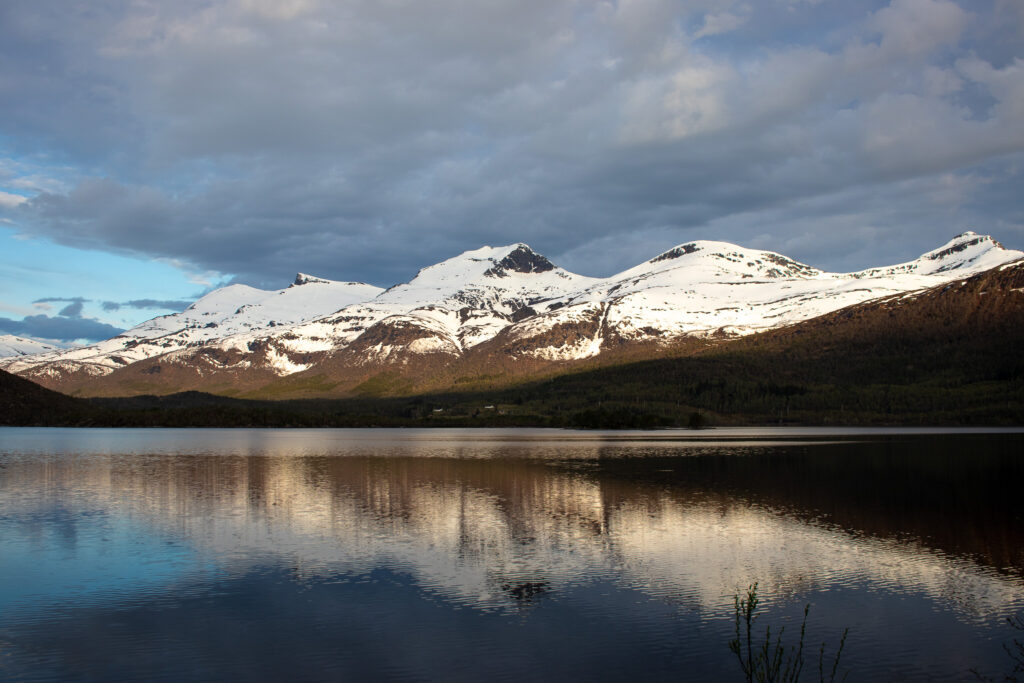
    In my stillness, I will mirror your beauty.
    Your shapes and colors will forever live within me.”

    This is the Lofoten Islands.

    Inspiration

    My Heart Aches
    It’s a real, physical pain—centered in my chest like a quiet weight.
    We just left Lofoten, and already I miss it profoundly.

    I want to turn the car around and go back. I want to stay until I’ve seen it so many times I no longer react with wonder. Stay until the magic wears off. Until I stop saying “Wow” every time we round a corner and see another waterfall spilling from the sky, tumbling down a towering mountain into a azure blue fjord so clear it feels imagined.

    Lofoten is Mother Nature showing off. Boldly. Effortlessly. Unapologetically.

    I want to remain until the snow-dusted peaks and desolate ridges—dotted with brown grasses and black rock—become ordinary. -Expected.  Here I want to walk in the rain, smile into the wind, and wake up each morning surrounded by its rugged beauty.

    Only when I stop seeing the wonder—then I’ll go.

    That’s what I tell myself.
    But it’s not real.
    It’s time to leave.
    And I’m not ready.

    Resources
    Books

    The Sea Wolves, A History of the Vikings Lars Brownworth

    The Kingdom of Ice Hampton Sides:  This book talks about a journey of the USS Jeannette. The tie to Norway is that the ship the Fram followed a similar path.  The Fram is located in The Fram Museum in Oslo. 

    Movies

    The Last Kingdom

  • San Pancho, Mexico Travel Guide: Things to Do, Where to Stay, and Why You’ll Love This Hidden Riviera Nayarit Gem

    San Pancho, Mexico Travel Guide: Things to Do, Where to Stay, and Why You’ll Love This Hidden Riviera Nayarit Gem

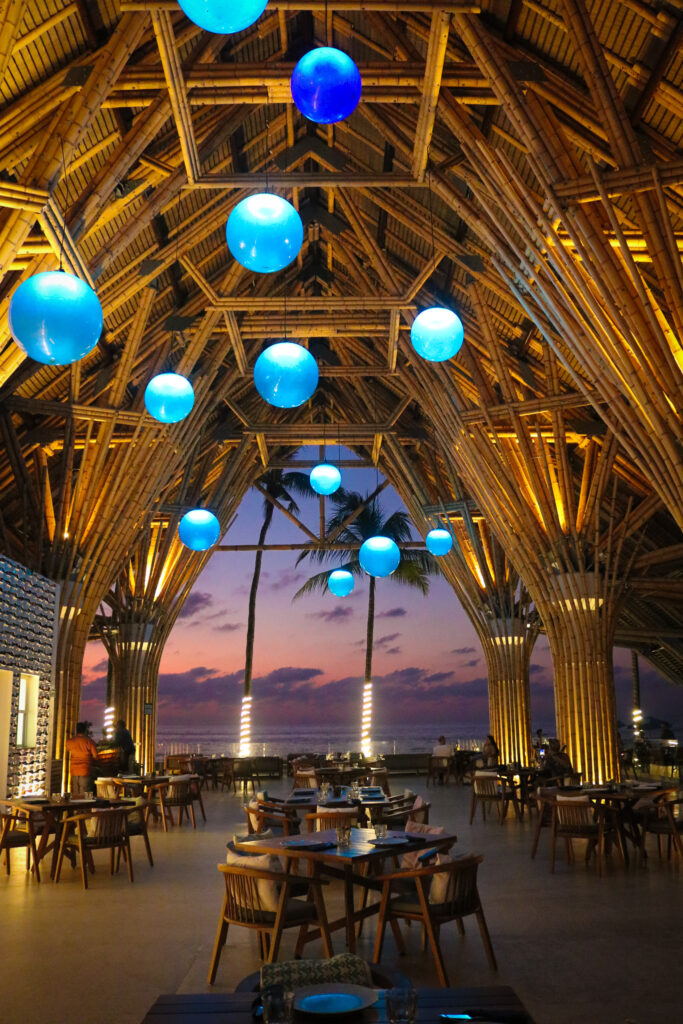
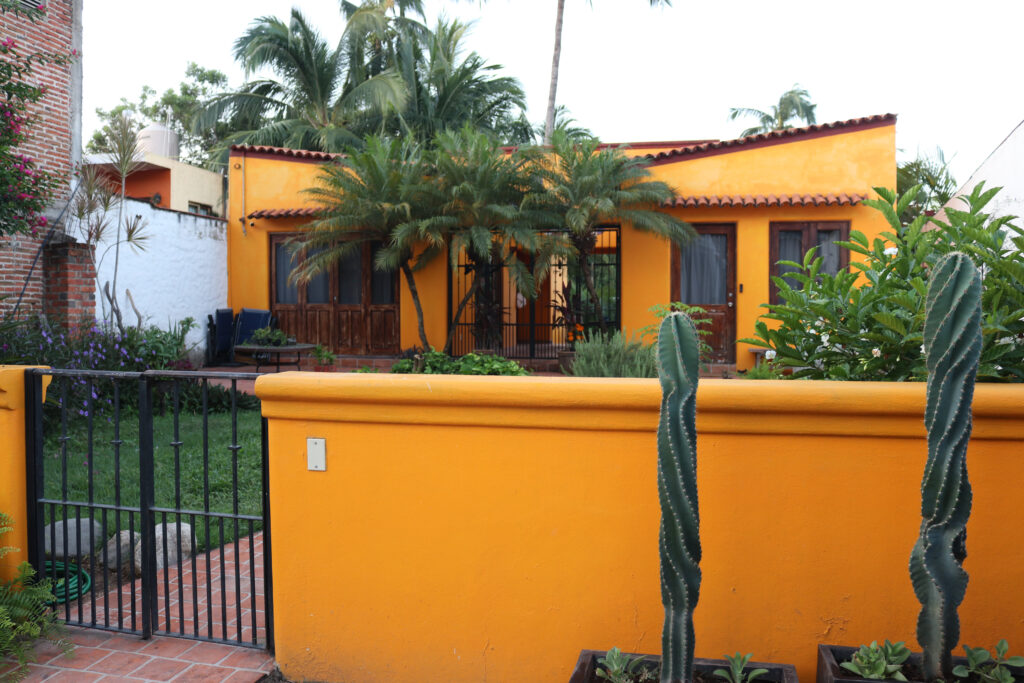
    Tucked along Mexico’s stunning Pacific coast, San Pancho—also known as San Francisco—is a hidden gem in the Riviera Nayarit that offers a perfect blend of laid-back beach vibes, vibrant culture, and natural beauty. Just an hour from Puerto Vallarta and a short drive from Sayulita, this charming coastal town is known for its lush tropical greenery, colorful architecture, and welcoming local community.

    What truly sets San Pancho apart isn’t just its scenic beaches or jungle surroundings—it’s the genuine warmth of its people. Visitors are often greeted with a friendly “mucho gusto,” creating an inviting atmosphere that makes you feel at home almost instantly. With a population of just a few thousand, life moves at a slower pace here, making it an ideal destination for travelers seeking relaxation, authentic Mexican culture, and a break from the crowds. Whether you’re exploring boutique hotels, enjoying fresh coastal cuisine, or unwinding on the beach, San Pancho delivers a unique and memorable travel experience.

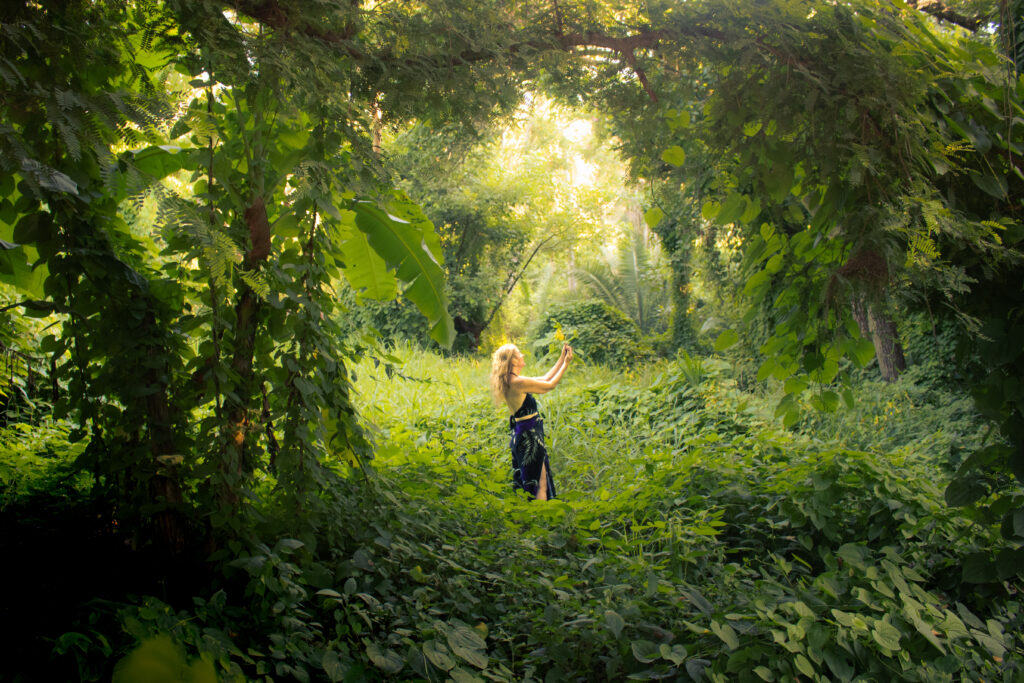
    With only three to four thousand people, time slows down here.  In the morning, it takes time for people to come alive and in the middle of the day, the heat and moisture forces you to become unhurried.  I spent many of my days clad in my swimming suit and coverlet, wandering through the shops, laying on the beach and walking through the jungle.  Every afternoon, I found myself back in my room or by the pool to cool down and take an afternoon siesta to be followed by a marvelous dinner each night.

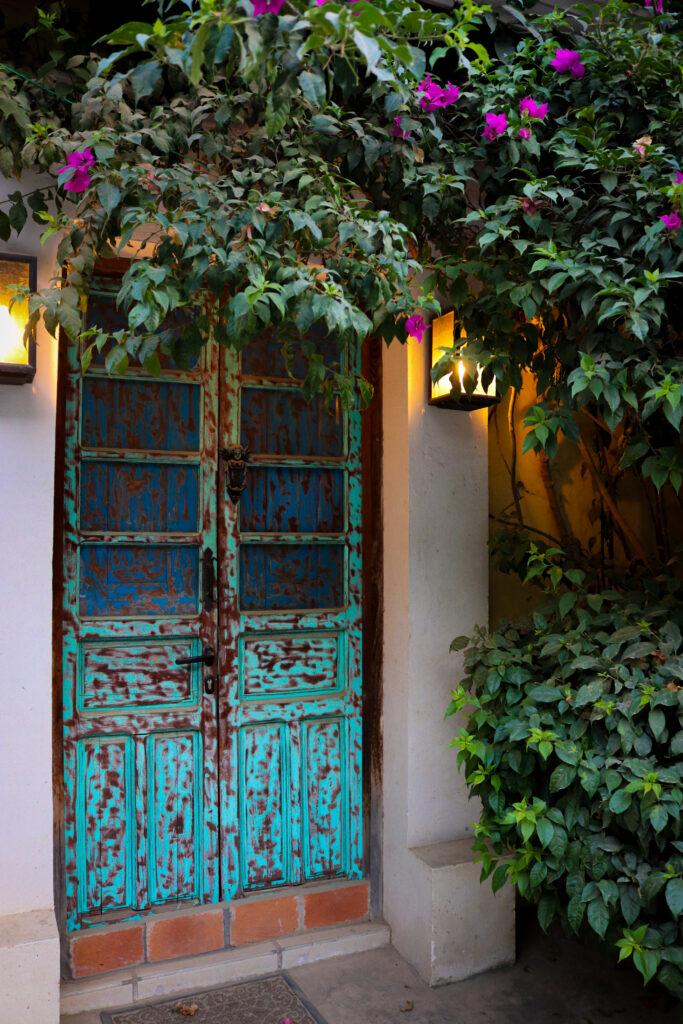
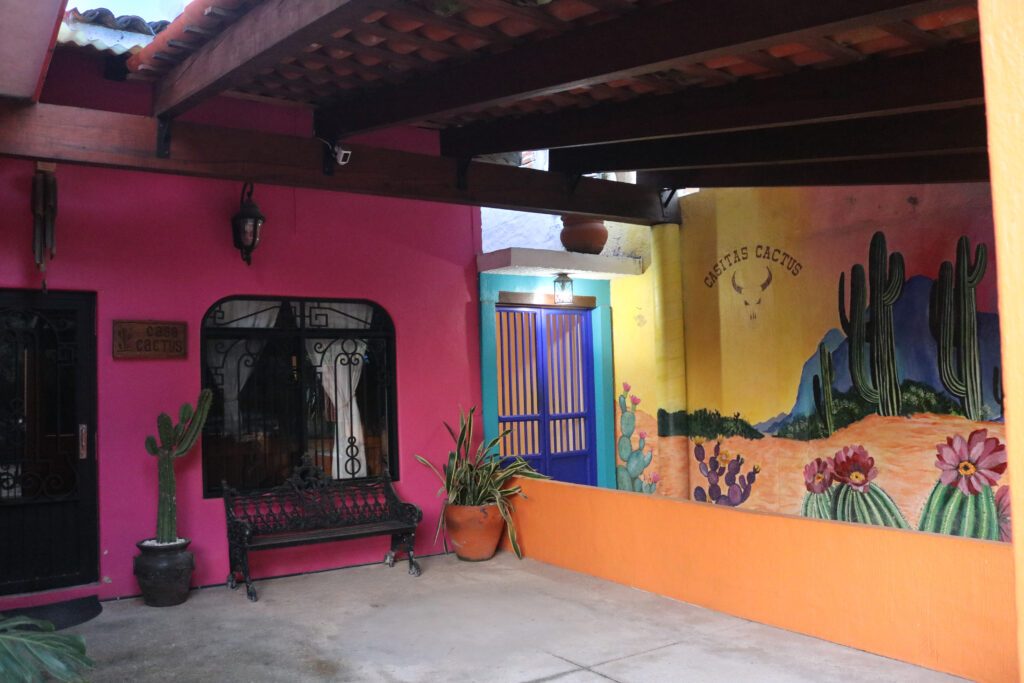
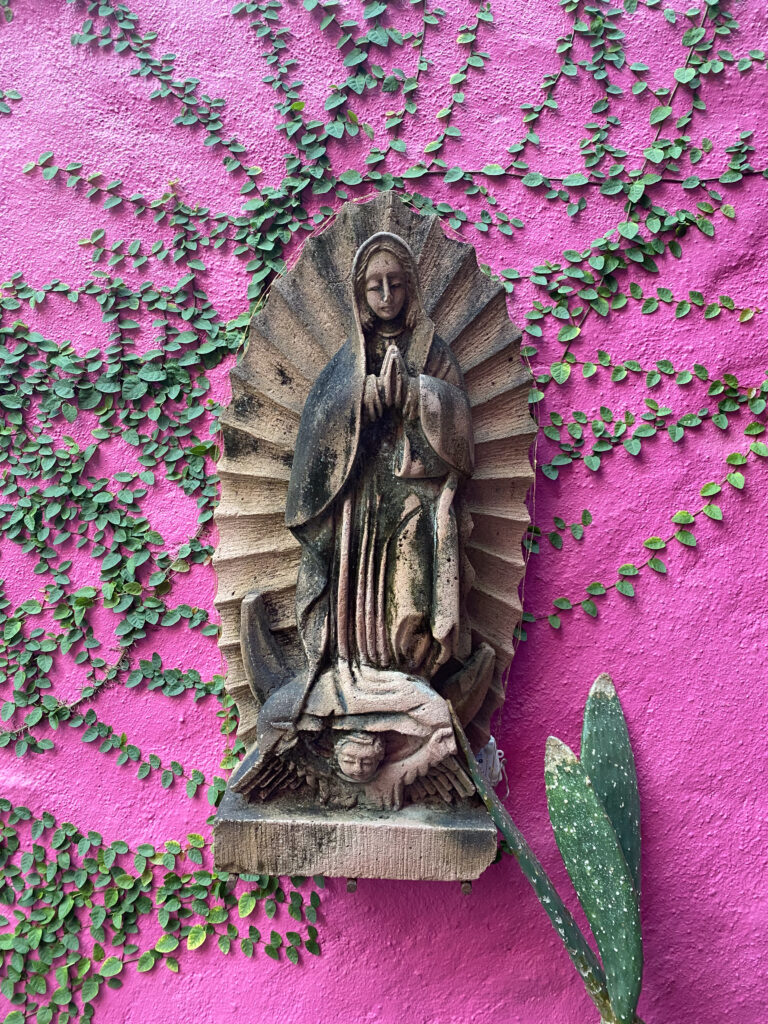
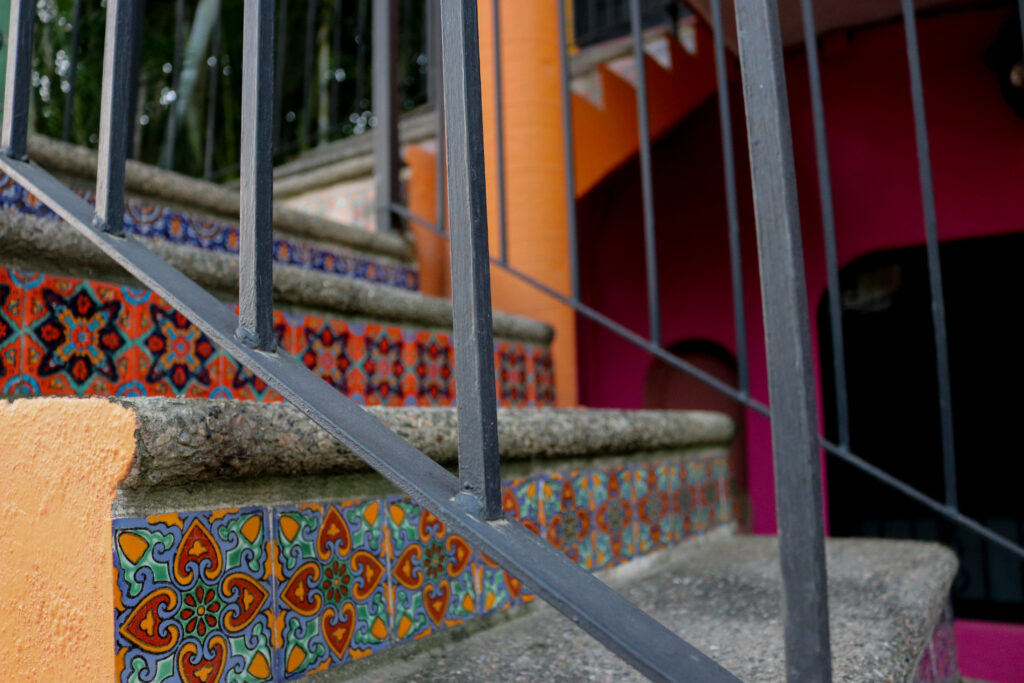
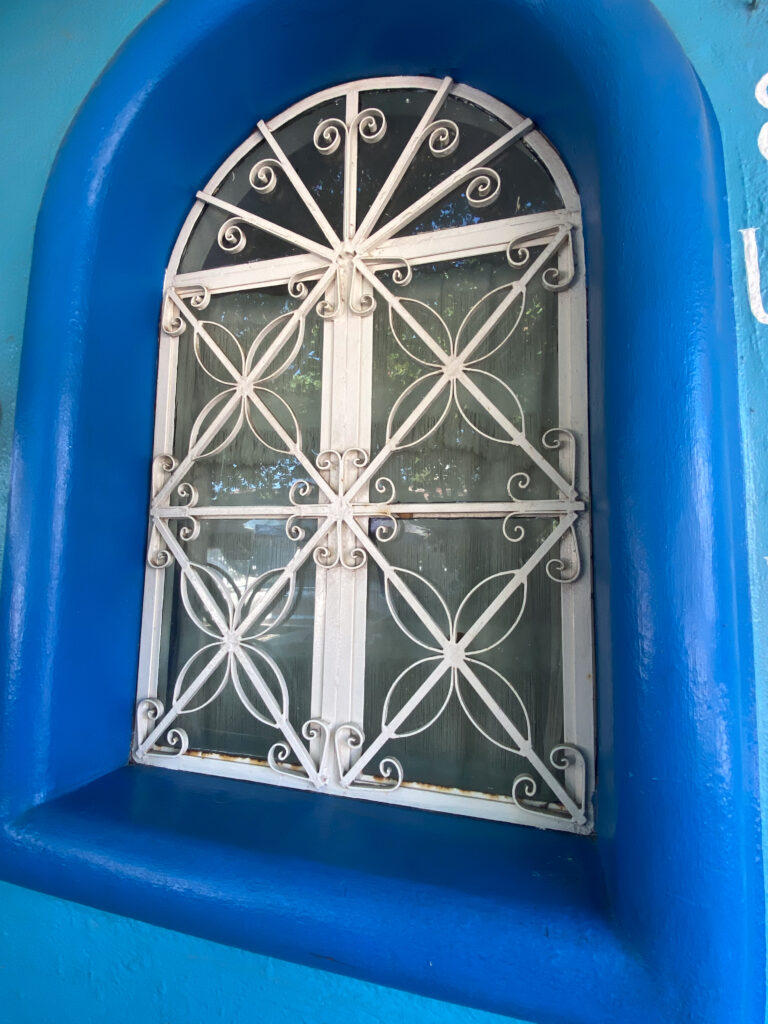
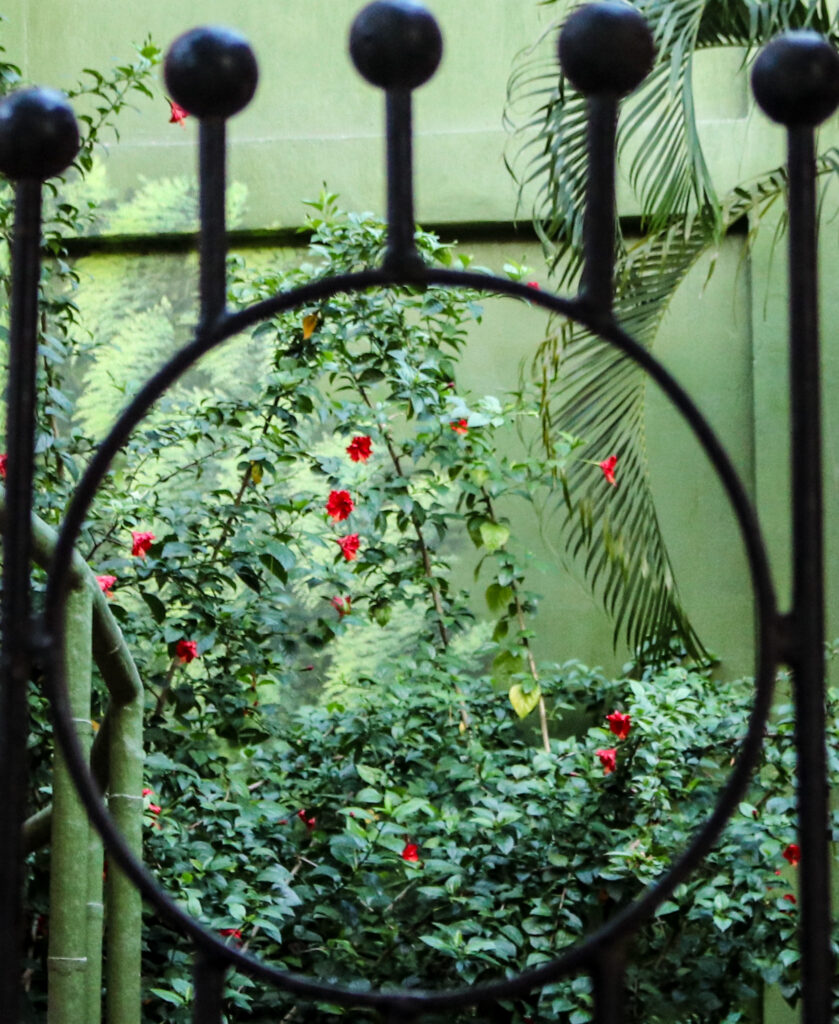
    San Pancho is also called San Francisco de Azapan after Don Francisco Cortes de Buenaventura named it Azapan in 1524. The buildings are a blend of old and upgraded, providing vibrant colors.  The interiors often contain beautiful courtyards with tropical plants, banana trees, coconut palms, hibiscus, ginger and bougainvillea. 

    There is one major resort located here, the Tierra Tropical Beach Club.  We ate here one night and the food was fantastic along with the view but don’t discount the small hotel offerings as there are a number of small places that are pretty, less expensive and just a short walk from the water.  I stayed at Hotel San Pancho.  My room was large, offered a pool and a breakfast of fruit, juice, coffee, bread and homemade jam along with a different Mexican entrée each morning.  It was just right for the lay back atmosphere I was looking for.

    The first thing you should. Really know about San Pancho is the time.  They are on Pacific Standard time while Puerta Vallarta is on Mountain Standard time.  Initially, this cause me a lot of confusion as when I was here, we were still on Daylight Savings time. This means it an hour earlier but my phone was still pinging of a cell tower in Mountain Time.  Okay if you’re by yourself but not good if your meeting someone.  Eventually, you just get use to San Pancho time which is on its own timeframe all together.  None of the travel blogs  I read before going mentioned this.

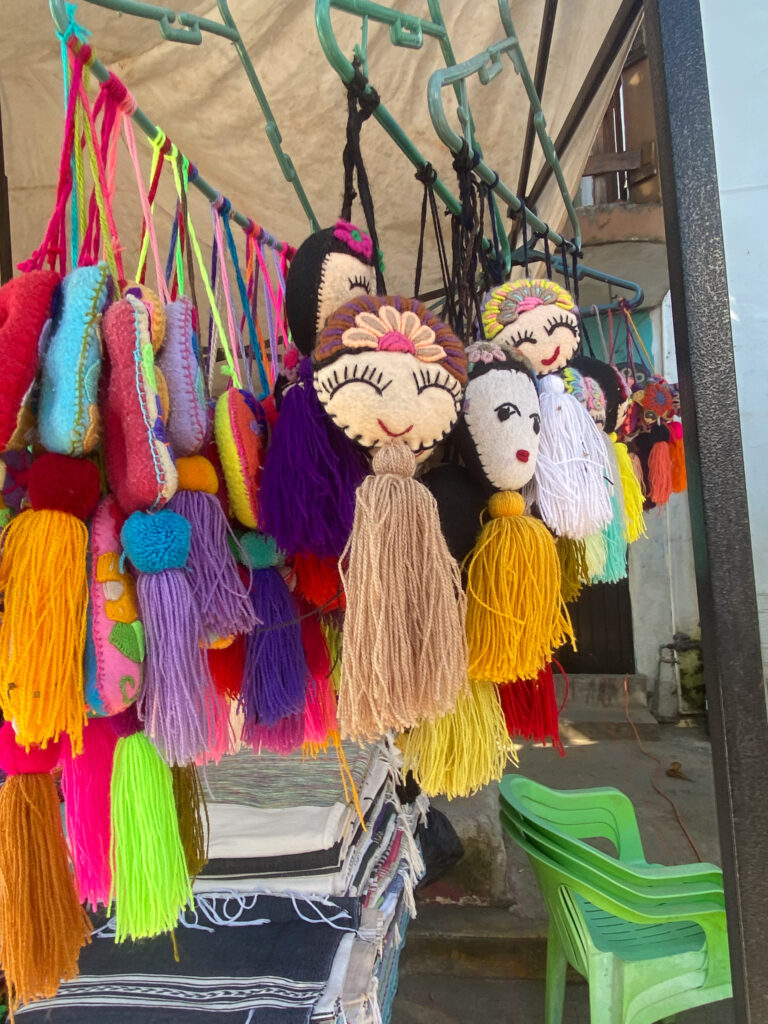
    Colors of San Pancho

    Getting there

    From Puerta Vallarta Airport, you can take a taxi.  The cost was $125 or $2,500 pesos. If you want to pay be credit card, you can pay before you get into the taxi line.  There are plenty of people asking you if you want a taxi and will take you to the booth to pay.  If you want to pay cash, you can just get in the taxi line. You will stop on the way out of the airport and will need to pay then.  Tips are encouraged.  Uber and Lyft are now allowed on the airport but if you’re willing to walk, there is a bridge that will take you off the airport property.

    Room Accommodations

    As indicated, there is Tierra Tropical Beach Club with a more resort atmosphere but I prefer the smaller hotels. The place I said, Hotel San Pancho was quaint, had large airconditioned rooms, a small pool and breakfast each day.  The staff was friendly and sweet.  Some other places to consider are Hotel Palmar, Hotel Mari and Hotel Cielo Rojo, all of which are close to the downtown.

    Restaurants

    Surprising enough, Mexican food is not the main staple in San Pancho. One night, we had lasagna and another pizza.  There are also some restaurants right on the beach to choose from.  Consistently, my wine was not great with the exception of Tierra Tropical Beach Club, where both the food and drink was excellent. In the high season, you’ll need a reservation.

    Beach

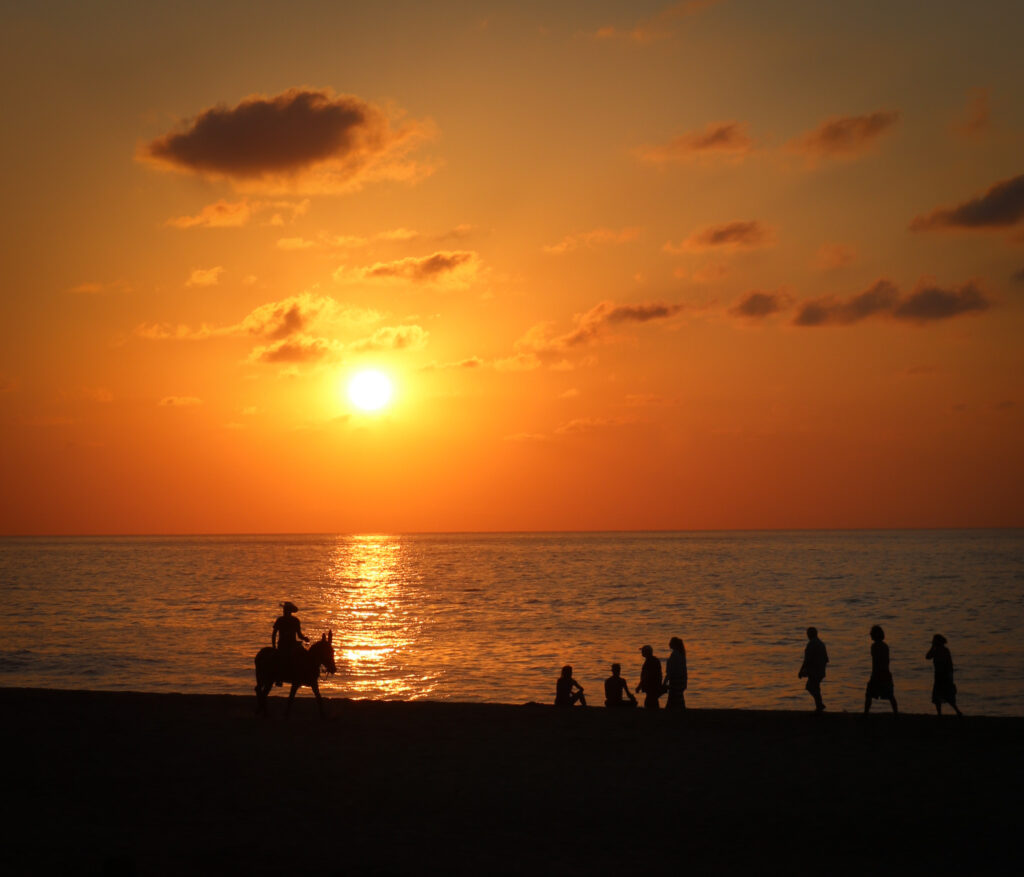
    In San Pancho, surfing is a big thing along with swimming in the water.  Surf lessons are available. When I was there in October, the waves and surge were strong.  I went in to tip my toes but didn’t feel like I was a strong enough swimmer to do much more.  For us sideliners, there are plenty of umbrellas to rent for the day that will also provide you food and drinks.  Lastly, for sunset, everyone comes out to enjoy the final rays, so. Bring a towel and be prepared to clap when that last spec of sun disappears into the ocean.

    Shopping

    While there isn’t a lot of stores, there are enough.  Most sell clothing and I didn’t find the prices less than what I could find at home.  There are also street vendors ever where selling small touristy items.

    Other Things to do

    Circus

    San Pancho is beneficiary to co-founder Giles Ste-Croix and his wife Monique Voyer who started Cirque Du Soleil a non-profit dedicated to helping children through circus arts.  Circo de los Ninos has more than 140 children enrolled. They will present shows so it’s best to check out the schedule to see if you’re lucky enough to be there when there is a show.

    Music

    San Pancho also has large music scene and there are plenty of places to check out to see various locals play. There also a few art galleries that show local artist along with Huichol (Native Indian) handicrafts.

    Polo

    La Patrona Polo Club is located in San Pancho. You can learn to play polo, take a horseback ride or enjoy a polo match.  Additionally, day passes can be purchased to take advantage of the pool and beach facilities.  I wanted to watch a polo match but was there a week too early.

    Turtle Releases

    The one thing I will definably go back for is to participate in a turtle release.  They are non-profits in both San Pancho and Sayulita.  You need to follow them on Facebook to see when releases are happening.  They will post something the day of the release.

    Sayulita

    Lastly, if you are feeling a little too laid back, a trip to Sayulita might be in order.  You can take a taxi that takes about 20 minutes to get to the larger city of Sayulita.  Its more touristy, and frankly, I enjoyed San Pancho so much, Sayulita felt too busy for me but if you want more of a party atmosphere and greater nightlife, this might be the place for you.

  • Riverside, California Travel Guide: Why This Inland Gem Is Perfect for a Weekend Getaway

    Riverside, California Travel Guide: Why This Inland Gem Is Perfect for a Weekend Getaway

    Nestled in the heart of Riverside, this vibrant Inland Southern California city is more than just a place to live—it’s a destination worth exploring. Having called Riverside home since childhood, attending University of California, Riverside, and working for the city itself, I’ve experienced firsthand what makes this community so special.

    Riverside blends rich history, scenic beauty, and a growing food and culture scene, making it an ideal spot for a weekend getaway. Whether you’re strolling through historic neighborhoods, discovering local attractions, or enjoying the laid-back Southern California vibe, Riverside offers something for everyone.

    If you’re looking for a unique, under-the-radar California destination, Riverside deserves a spot on your travel list.

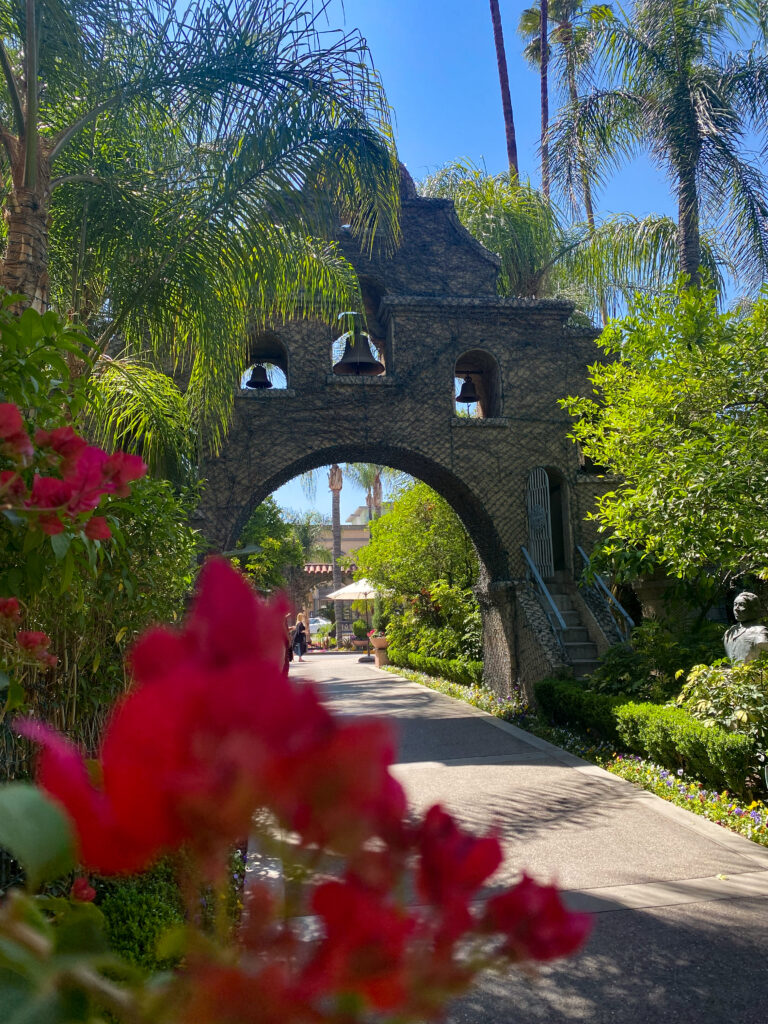
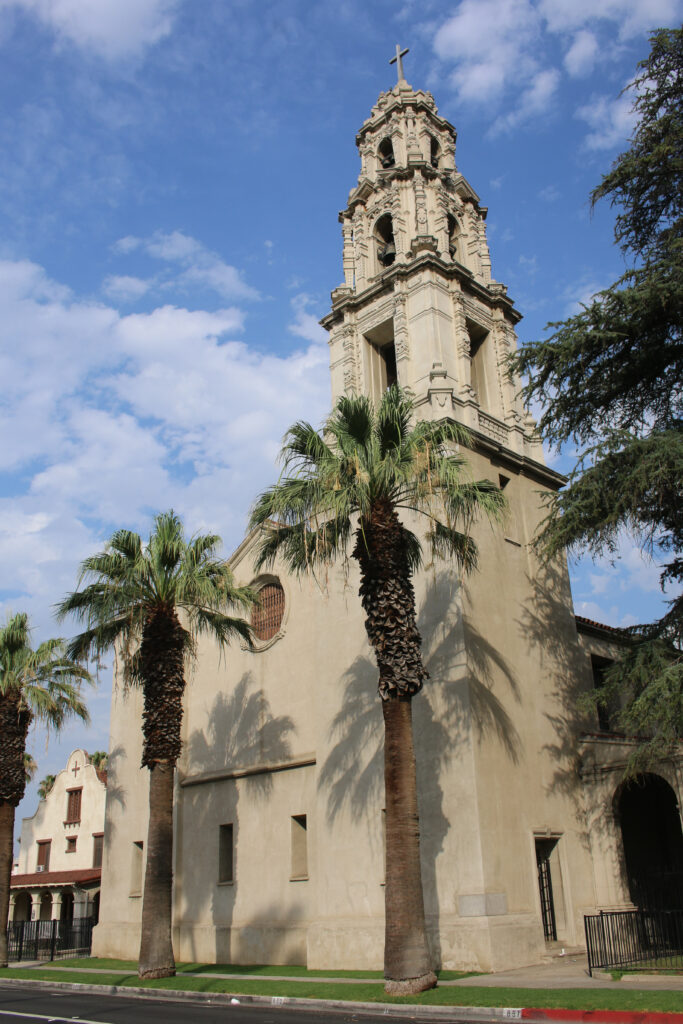
    Downtown Riverside is famous for the Mission Inn Hotel and Spa.  It’s always been an inn and never was a mission.  It was built in 1903. What started out as Glenwood Tavern has grown into an AAA Four Diamond hotel and spa.  Presidents have been married there (Nixon), honeymooned at the hotel (Regan) and just visited.  It’s one of the first places that Arnold visited when he became the Governator of California.

    Adding to the history, are the many large iron bells including one of the oldest bells in Christendom dating back to A.D. 1247. (You can find it in the lobby next to the concierge desk.)

    Many famous writers have stayed at the Inn including Ann Rice who used the setting for her book Angel Time.   Harry Houdini, Amelia Earhart, Bette Davis, Clark GableCary Grant and Barbra Streisand along with Raquel WelchDrew Barrymore, Bob Hope and Tears for Fears (whew) are just a few of the celebrities who have stayed here.

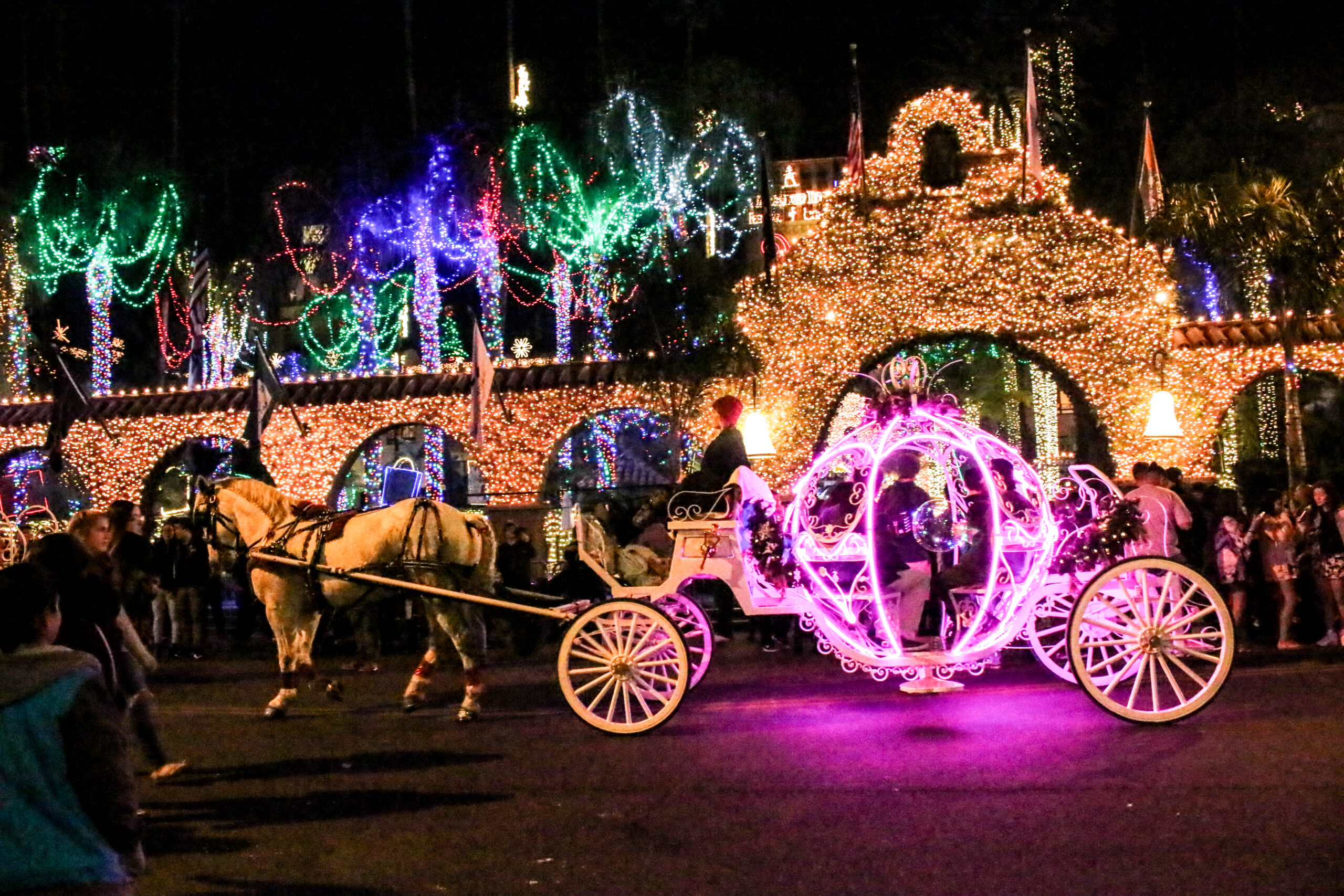
    In early September, workers start putting up the more than 4.5 million twinkling lights that will be shining brightly along with 200 animated figurines singing Christmas carols the day after Thanksgiving until early January.  Truly, the place gives Vegas a run for its money and the local utility company loves it. 

    Next door is the Cheech Marin Center for Chicano Art & Culture. The center is focused on the exhibition and study of Chicano art from across the United States. This is a collaborative effort between Cheech Marin, the City of Riverside and Riverside Art Museum. 

    So what else is there to do?  Well, if you’re an early morning riser, I would suggest a walk up Mt. Rubidoux.  You can see the mountain from Downtown and the walk is up but not extremely strenuous.  If someone is dropping you off, you can access the path from the top of 9th Street.  If you need to park, plan on using the parking lot at Ryan Bonaminio Park located at 5000 Tequesquite Ave.  The walk is a total of 3 (or so) miles.

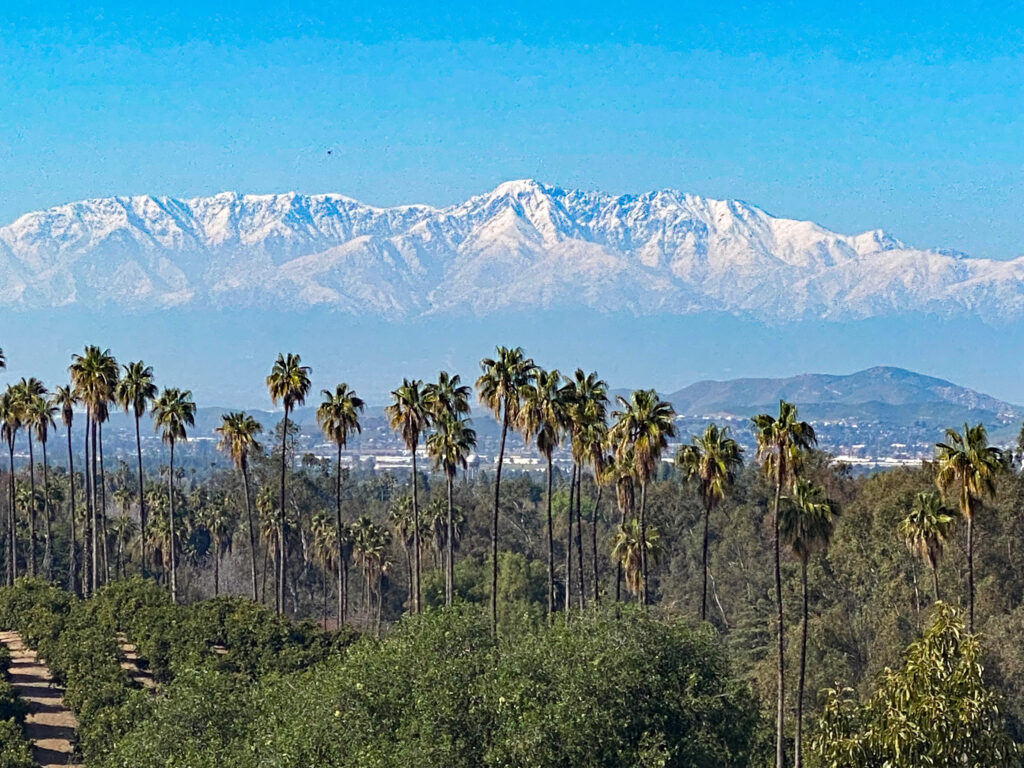
    If you rather take the longer, easier way up, veer to the right when the trail splits.  The trail to the left is shorter but also steeper.  From the top, you can see all of Riverside and on a clear day, the San Gabriel Mountains.

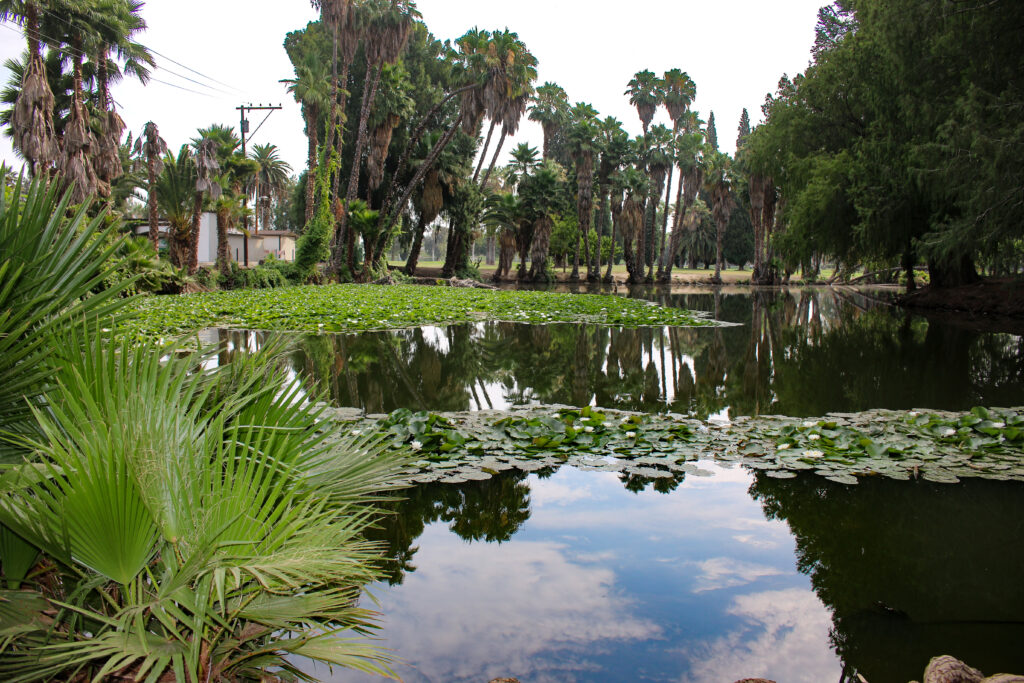
    Also, near the Downtown is Fairmount Park.  The park was designed by the same firm who designed Central Park in New York and you can see similarities with a large lake, boat house, rose garden and trails that meander throughout. 

    If you are planning on a weekend, you might want to see what’s playing at the Fox Theater.  This icon premiered Gone with the Wind in 1939.  Nowadays, you can see people like George Thorogood, Jerry Seinfeld and Mannheim Steamroller.

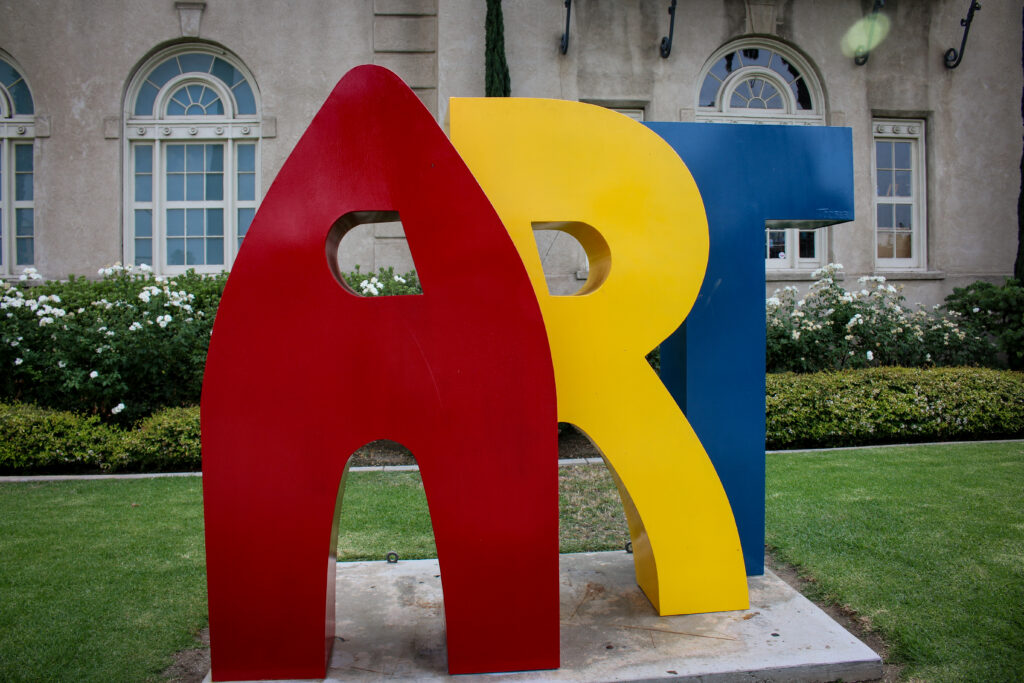
    There are also three (if you count the Mission Inn Museum) in Downtown.  These in the Riverside Metropolitan Museum and the Riverside Art Museum.  The all have various exhibits and displays.  In Downtown, the architecture is beautiful with building well over 100 years old, including the Riverside Courthouse and churches.

    If you’re a foodie, there are a number of places within walking distance of the Mission Inn to eat including a few within the Inn Duane’s is a high end steakhouse and Los Campanas offers delicious Mexican food along with huge margaritas.  My favorite place by far is Mario’s Place.  It’s across the street on Mission Inn Avenue and offers Italian cuisine.  Their wine list is extensive and I usually just ask the wait staff for their suggestion.  I will often just sit at the bar with a glass of red wine, a Leone salad (named after the founder and to die for) along with calamari, the best I’ve ever had.

    Additionally, there is the local’s bar with music during the weekends- Lake Alice Trading Company (bar food) one block down;, Mezcal Cantina y Cocina (Mexican  and an extensive Tequila list), to the west on the Main Street Mall near 8th Street;  ProAbition (Whiskey, bar food, outdoor seating and weekend music)- go east on the Main Street Mall toward 6th Street.  For breakfast and lunch, I like Simple Simon’s on the Main Street Mall between Mission Inn Ave. and 6th Street.  My standby for eating there is the spinach stuffed croissant and tarragon chicken salad.  Lastly, the Mission Inn also has an expensive but amazing Sunday brunch.  Yum.  Bon Appetit!

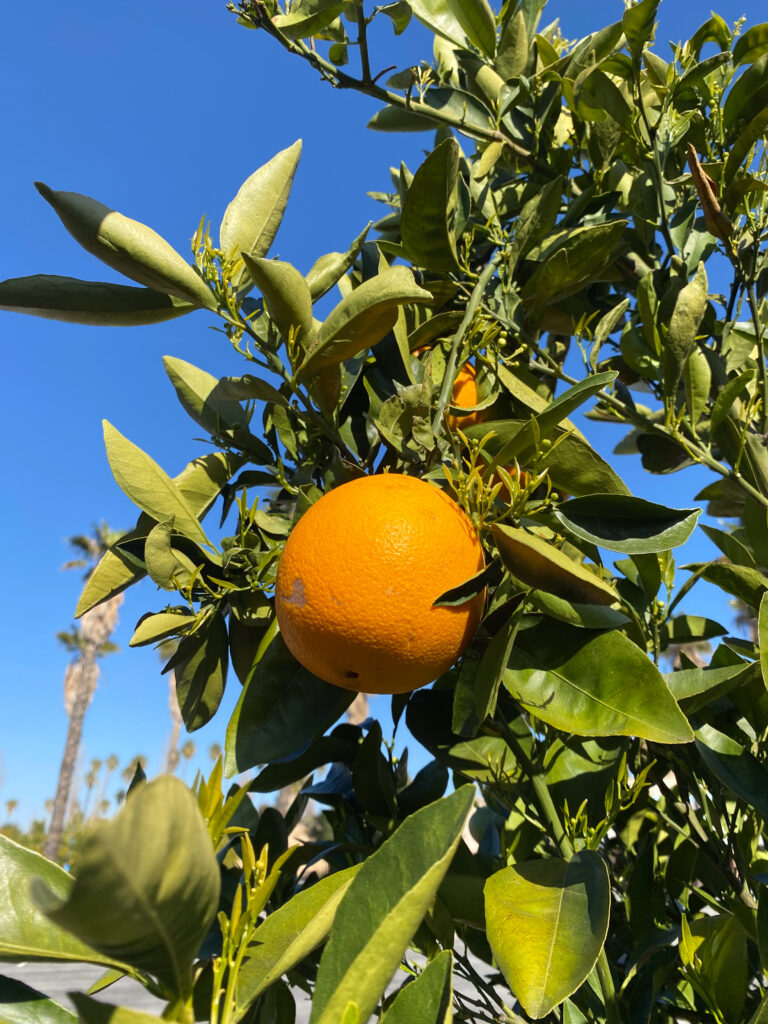
    Lastly, Riverside’s wealth was built in the early 1900s on the Navel Orange and citrus industry when Eliza Tibbets brought three Navel Orange trees from Brazil. For this reason, the Citrus Heritage Park is in Riverside. Can you walk around the park and enjoy the 250 acres of citrus groves.

  • Hiking in Southeast Arizona (Part 1): Trails, Weather & Scenic Views Near Sierra Vista, Arizona

    Hiking in Southeast Arizona (Part 1): Trails, Weather & Scenic Views Near Sierra Vista, Arizona

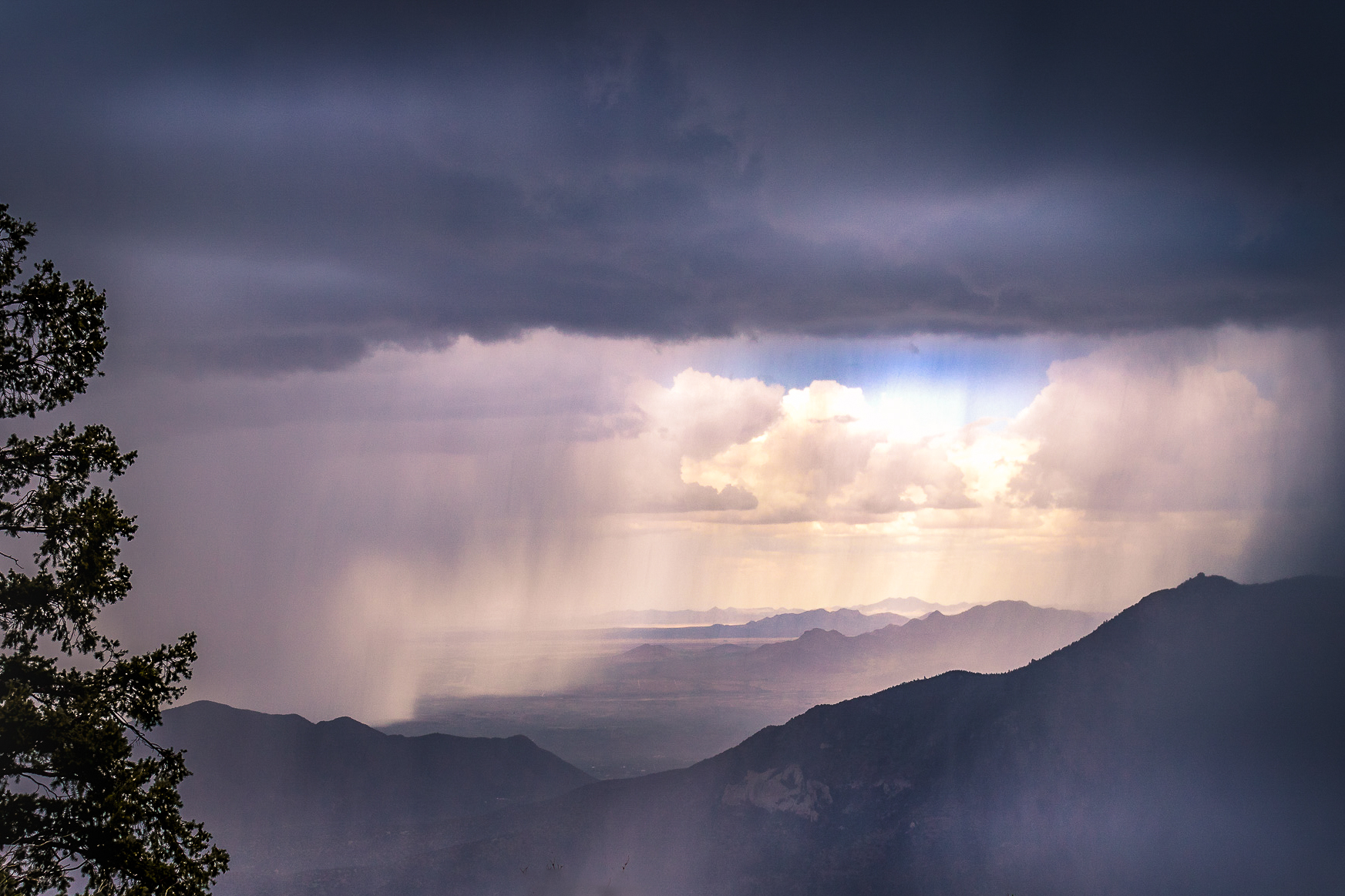
    Cool Days, Beautiful Views & a Monsoon or Two

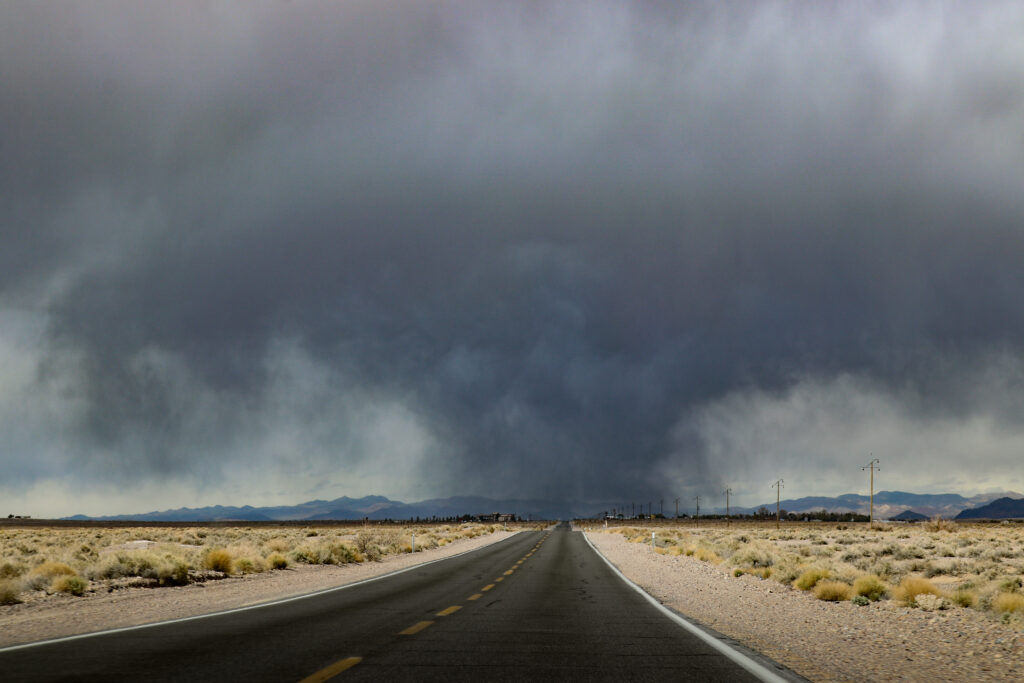
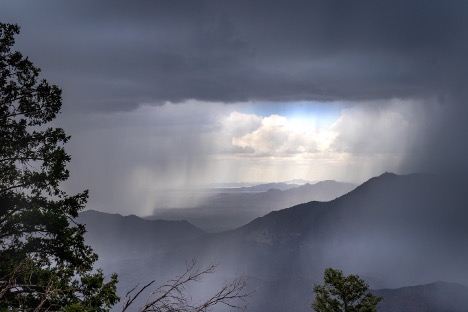
    If you’re looking to skip the crowds of Arizona’s more popular destinations and experience wide-open landscapes, Southeast Arizona hiking offers a quieter, equally stunning alternative. Known for its mild summer temperatures (often staying under 100°F), crisp winter days, and the occasional dramatic monsoon storm, this region is a year-round destination for outdoor enthusiasts.

    With endless blue skies and mountain ranges rising above 8,000 feet, Southeast Arizona delivers some of the best hiking trails in the state. From shaded canyon paths to panoramic ridge hikes, the variety of terrain makes it perfect for both casual walkers and experienced hikers.

    One of the best places to base your trip is Sierra Vista, Arizona. Conveniently located near several top hiking areas, Sierra Vista provides easy access to scenic trails, wildlife viewing, and diverse ecosystems—all within a short drive.

    Whether you’re chasing cooler temperatures, sweeping desert views, or peaceful trails away from the crowds, hiking in Southeast Arizona offers a unique and unforgettable experience.

    Ramsey Canyon

    One of my favorite places to hike is Ramsey Canyon in Sierra Vista.  The Canyon starts at the Nature Conservancy’s Ramsey Canyon Preserve.  The area is home to more than 170 species of birds and birders from all over the world come to watch, take tours and photograph the flying feathers.  I love the hummingbirds who visit the feeders located within the preserve.  The canyon follows a river that flows most of the year. Depending upon your level of expertise, you can just walk the short trail loop trail or if you want something more challenging, take the Hamburg Trail.  The trail starts at 5,550 feet in elevation so be aware you may get winded more easily.  From there you climb in elevation.  At the overlook, you’ll see expansive views at 6,390 feet. It’s only a mile but it’s a mile up.  If you drop back down the backside, you’ll experience a beautiful canyon with pine and oak trees and the river becomes even more beautiful.  I’ve taken this route back down the Brown Canyon Trail where it flattens out to grassy prairies and then walked back up the road.  The total is about 8 miles.  Make sure you take plenty of water as the altitude will also dehydrate you.

    The parking lot at the Conservancy is small so get there early. Also, there is a small fee to enter and hours in the parking lot are limited depending upon the time of year.  The trailhead can be found at 27 E. Ramsey Canyon Road, Hereford, AZ 85615

    Brown Canyon

    Ramsey Canyon

    If it’s cool out or threatening to storm, you might want to visit Brown Canyon Ranch.  It’s off of Ramsey Canyon Road.

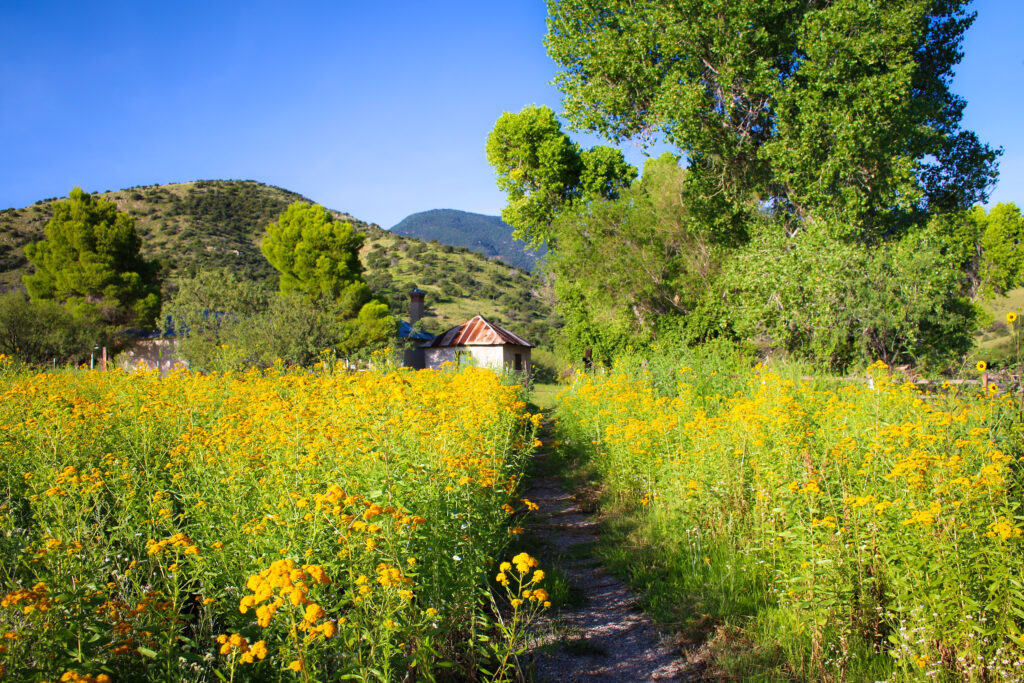
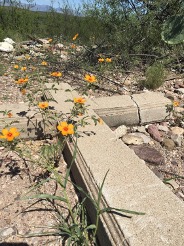
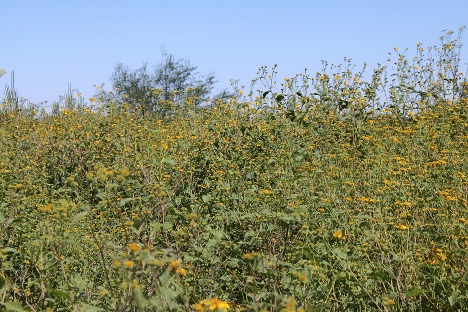
    The Ranch is an old house that is now used as an interpretative center.  It offers two loop trails.  The lower loop is 2.6/3 miles and the upper loop is 2.2 miles.  Both of these are pretty flat. You’ll see the grassy plains, rolling hill and if it’s lowered, the aerostat at Fort Huachuca, is a huge blimp used to monitor air traffic on both sides of the border.  In the spring and early summer, you may see wild daisies.

    Carr Canyon

    Carr Canyon offers a variety of hiking trails.  The Carr House and Nature Center provides free maps of the area.  On one trail the elevation changes from 4,875’ to more than 7,400’ at the Ramsey Vista Campground.  During the monsoons, generally between July and September, there is a huge waterfall flowing down the cliff.  There are loop trails that are as short as .5 miles.  Carr Canyon offers a picnic area and the Carr Ruins are interesting to look at.

    Coronado National Monument

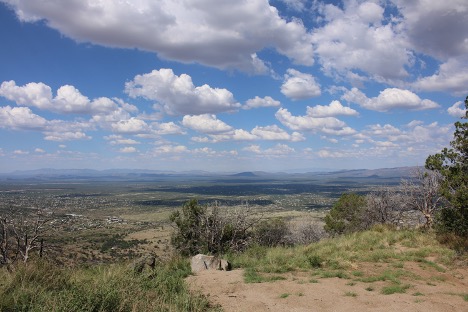
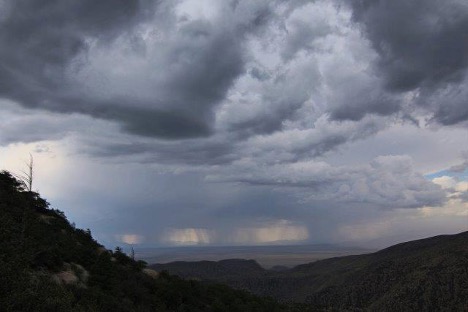
    Southeast Arizona also hosts the Coronado National Monument, home to several  hiking trails. If you’re into driving, the views along the Montezuma Canyon Road can’t be beat.  From up here, you can see for miles into Arizona and Mexico.  We love to just pull off the road and open the tailgate for a picnic.  If there are monsoons, you can just sit here and watch them blow across the valley.  There are a number of campsites located in the Monument.  One of these, off Parker Canyon Road skirts the lake. More suggestions follow in Part II.

  • A Trip of a Life Time; No a Life Time of Trips!

    A Trip of a Life Time; No a Life Time of Trips!

    A trip of a lifetime!  How I hate that phrase.  A coworker said it to me the other day after going on a safari in Africa for two weeks. “It was a trip of a lifetime,” she exclaimed to me after describe the elephants, antelope, lions and birds that she had seen. Yes, it was a trip of a lifetime for her and she’s a traveler.

    I heard this phrase again the other day from an acquaintance when I was explaining that I had just recently booked two weeks in Greece.  She cooed, “Oh, you’ll have sooo much fun! It will be a trip of a lifetime.”

    No, it won’t.

    My trips of a lifetime are the two trips to the hospital to birth my son and then again to have my daughter.  These are trips that will not be repeated.  Things that happen once or twice if you’re lucky in your lifetime. Travel; however, the trip of a lifetime people have talked about are not my trips of a lifetime.  They are part of my lifetime trips.

    A safari in Africa will be as much of a part of my life as my two weeks in Mykonos this September, France, Ireland, Spain, Hong Kong, China, Vietnam, Maylaysia-These are the trips of my life.

     I’ve consciously decided to make travel a part of me, who I am and what I experience.  My lifetime will be a series of trips of a lifetime.  It wasn’t always this way and it’s wasn’t easy to implement.  I had, it seemed, a lifetime of longing to see, to experience, to just get on a plane and go but there was never enough time, enough money, the kids were too young, all reasons for not going.

    Until I had enough…  I had to finally get to a point where you say, if I die tomorrow and this could be a real possibility, I will regret not traveling. This is important to me and I don’t want to miss it so I’m doing it now!

    Granted, I understand that needed to be concessions.  That’s fine.  My concession is a lot of my trips are within the U.S.  They are generally 3 to 4 day weekends. And, hoping on a plane after a full day’s  work on Thursday and coming home tired Sunday night or even early Monday morning to go straight from the airport to work is not always fun but I’m doing what I want.  I’m seeing the world and places I’ve always wanted to be along with taking some terrific photos, another passion of mine.

    I have a bucketlist, listing all the places I want to visit.  My bucketlist was originally a photo board on Pinterest.  It’s now moved to an official three page, two-columned Word document.   I usually pick two or three musts for the upcoming year and the am flexible with the rest looking for deals.  My bucketlist includes local travel so that when I don’t have the time, money or I’m bored one weekend, I can go to my list and select something near without thinking a lot.  I’ve also shared my bucketlist with anyone that will listen.  They always have ideas or have gone places that end up getting added. My list will never be completely checked off and hey, that’s okay. I already have quite a bit done.

    My friends often post on my Instagram account, “I wish I had your life, traveling all the time.”  My response is, “You can.” There are many ways to travel. Don’t have enough money?  You can travel cheaply, staying in hostels, pack your own food use coupons or find destination deals.  No time? Do local trips. Try treating your home town like you’re a tourist. I can’t tell you how many times people say, “I live here but have never been there.”  Have to bring the kids? Consider a road trips, local camping or even a day trip.   There are endless opportunities.  The world is awaiting…Are you coming?  It could be a lifetime of trips…..

  • Death Valley National Park: Diverse Landscapes, Scenic Views & Must-See Attractions

    Death Valley National Park: Diverse Landscapes, Scenic Views & Must-See Attractions

    Within Death Valley, California, is the lowest elevation within the U.S. It’s also famous for being the hottest place on earth and driest place in North America. The world record highest air temperature of 134°F (57°C) was recorded at Furnace Creek on July 10, 1913.

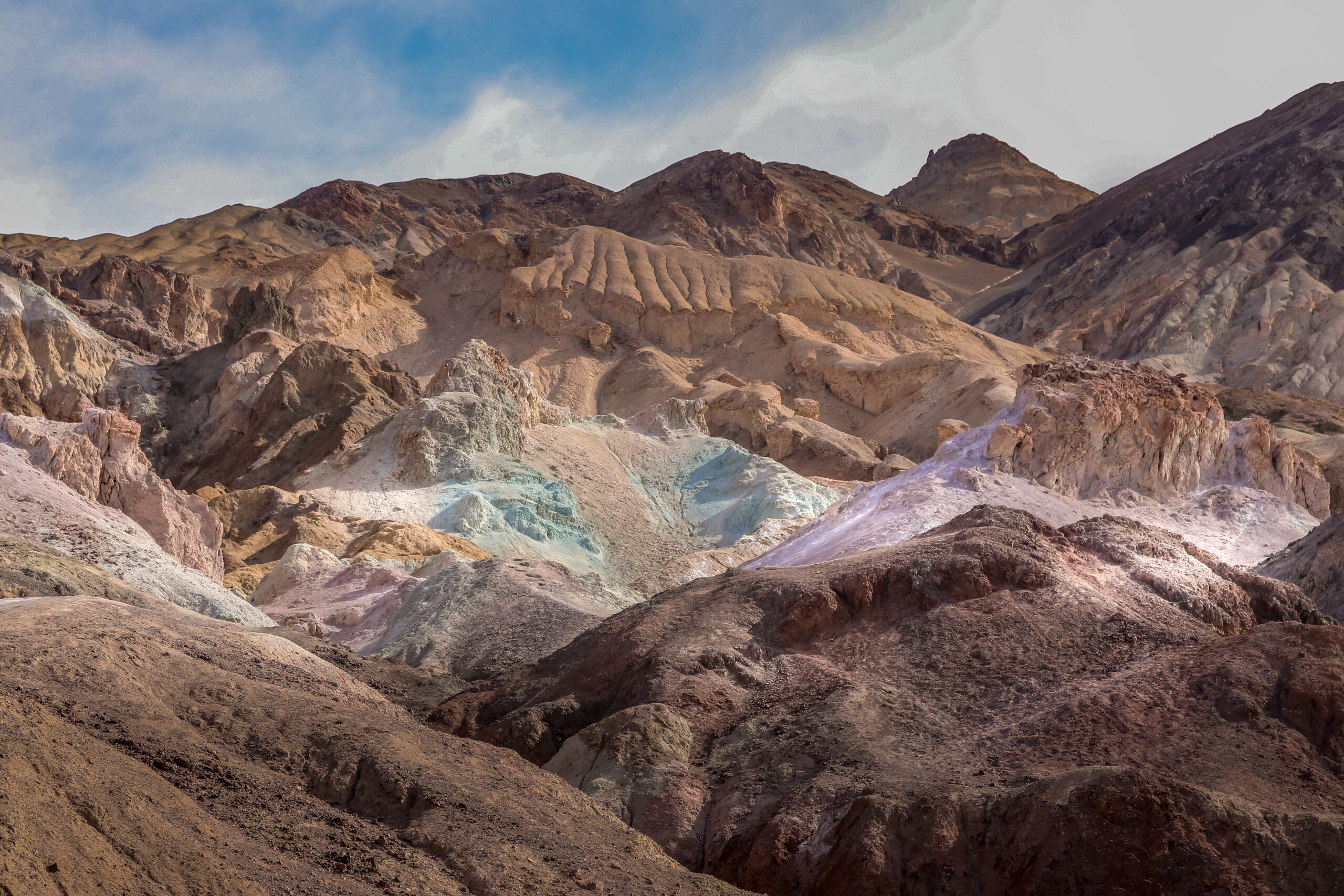
    With these scorching temperatures, it’s advisable to stay away during the summer or a least make sure you are prepared with plenty of water. And, in the winters, it can be freezing and windy. So why go to this Hell hole?  Because time it right and it can also be gorgeous. The diversity in scenery within Death Valley National Park is hard to beat.  Within the National Park, you can see lavender and turquoise-colored rocks, sweeping sand dunes, a 600-foot crater and views that last forever.  There two main roads that travel through the park form a X, running north and south and if you have a 4-wheel drive or high-profile vehicle, you can access even more areas along the dirt roads. At the same time, please remember, this is a bio diverse area other animals and plants live here and as humans our goal is to leave no trace and take nothing but memories and photos with you.

    When we visited, it was a chilly March weekend and we drove the Corvette, so no off-roading for us but there was still plenty to see our two days here.

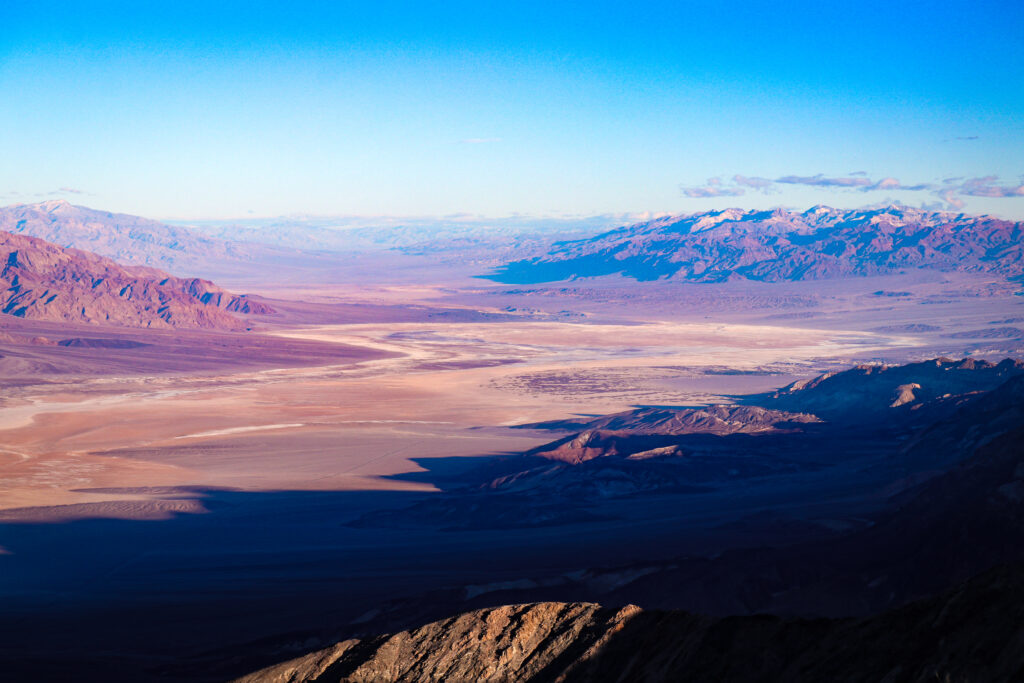
    Dante’s View


    This site is actually a little bit of a drive off the main road but still worth visiting.   The way there is curvy and mornings at the peak can be very cold and the windy.  Dante’s View is great for visiting in the morning and as the lookout is near the south end of the Park, looking out toward the north. You can literally see for miles through the valley to the mountains in the north. 

    Artist Drive

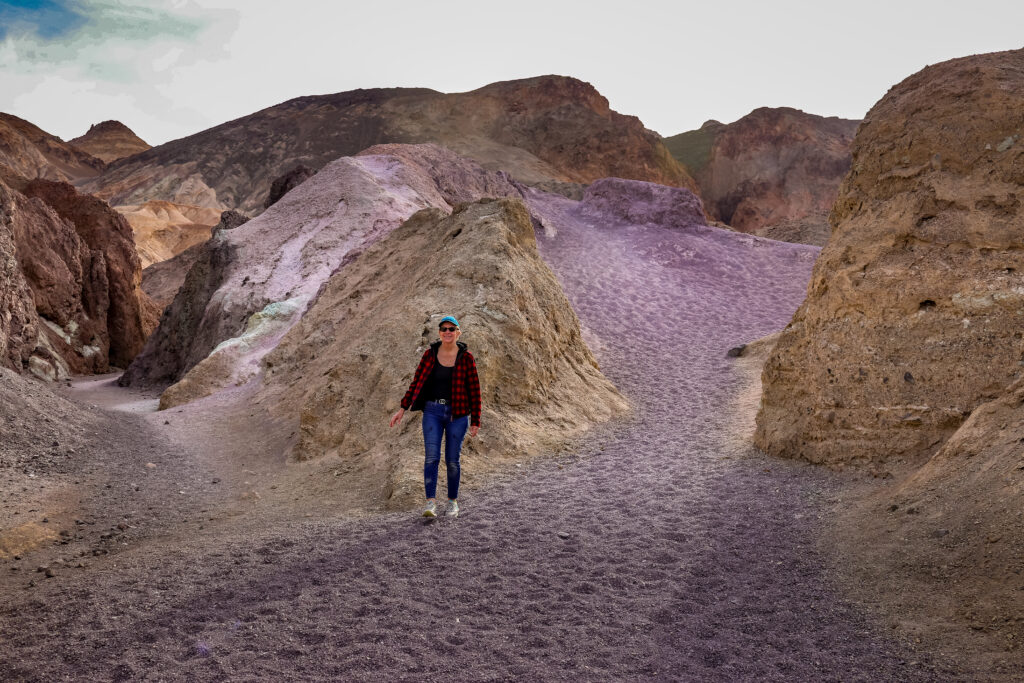
    This nine-mile loop road takes you to Artists Palette, which is probably the most Instagrammed location within the National Park.  The pinks, yellows, lavenders, turquoise and baby blue colored rocks form pastel rainbows that weave through the landscape.  These colors come from volcanic deposits rich in compounds such as iron-rich hematite that produce the reds and pinks along with the yellows and golds; manganese creates the lavender and chlorite create the greens.  

    Zabriskie Point

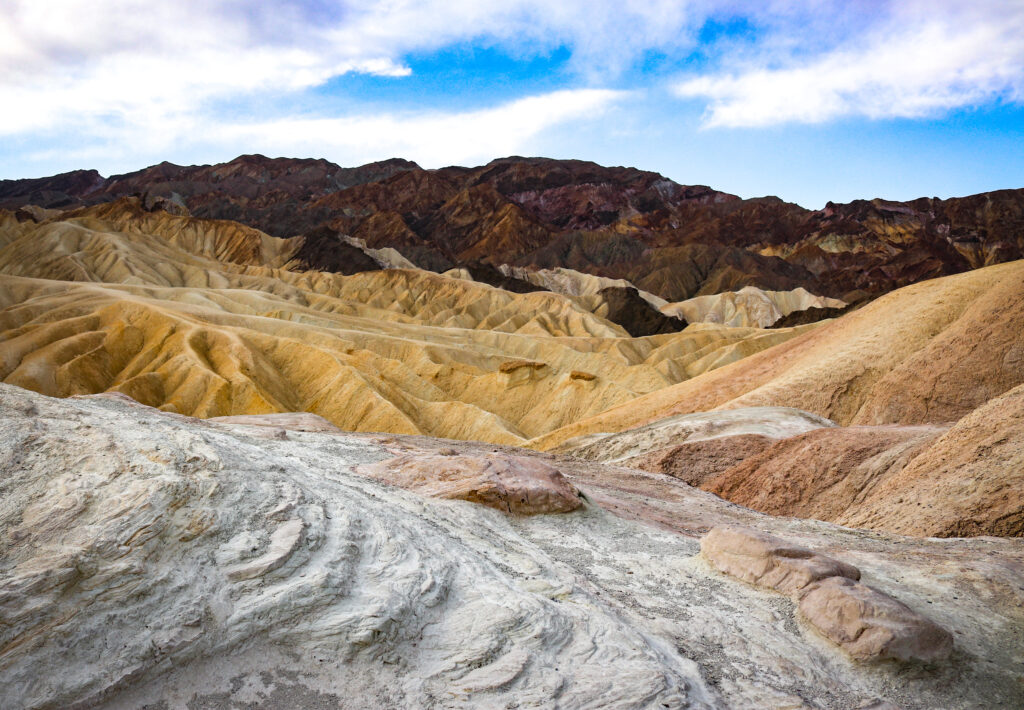
    If you like minimalist photography, this is the place to go.  The mountain ridges just repeat upon themselves making for layers upon layers of the same colors.  Each side from the parkway and short trail is different color.

    Ubehebe Crater Rim

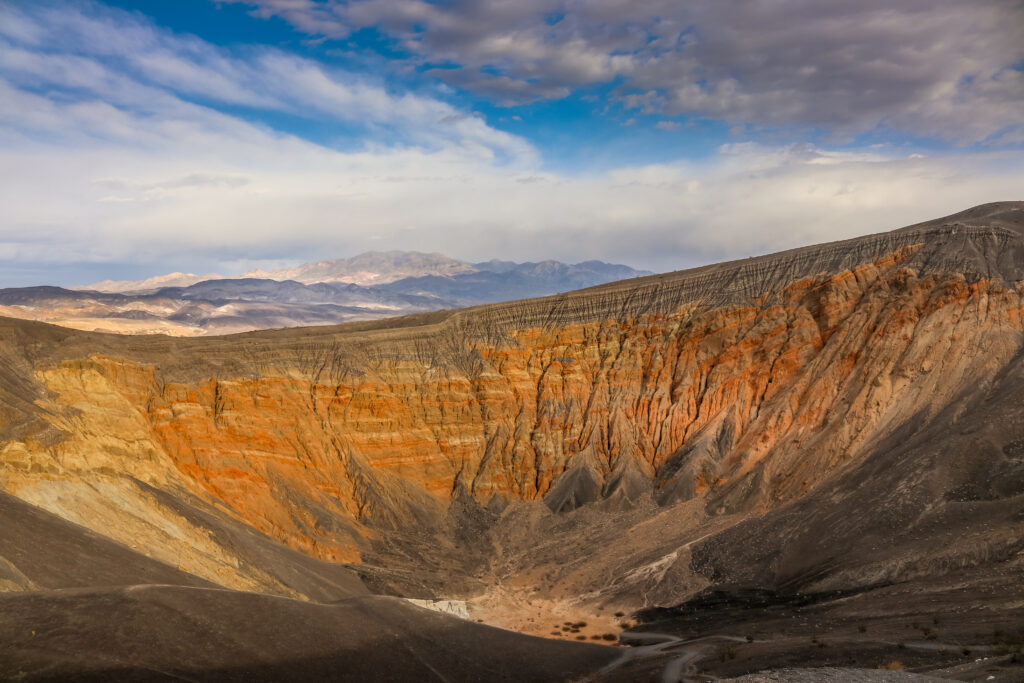
    The Ubehebe Crater was formed 2,000 years ago when magma came into contact with groundwater.  The combination created a steam and gas explosion resulted in this 600-foot crater.  You can hike along the ridge.   

    Mesquite Flats Sand Dunes  

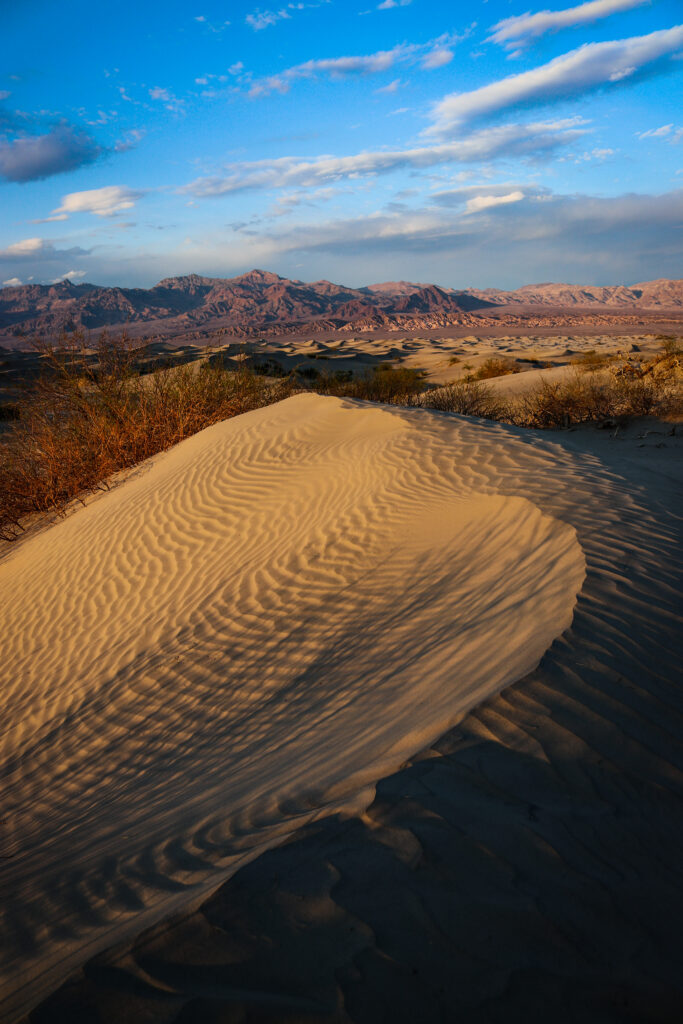
    There are too many places that are best visited at sunrise or sunset in Death Valley and since you only get one of each of these a day, it’s hard to pick.  I knew I wanted to see the shadows build upon the dunes so we toasted the day’s close here as the sun disappeared behind the mountains.  If your goal is the same, make sure you get here early as the mountains will hide the sun long before your phone says sunset occurs.

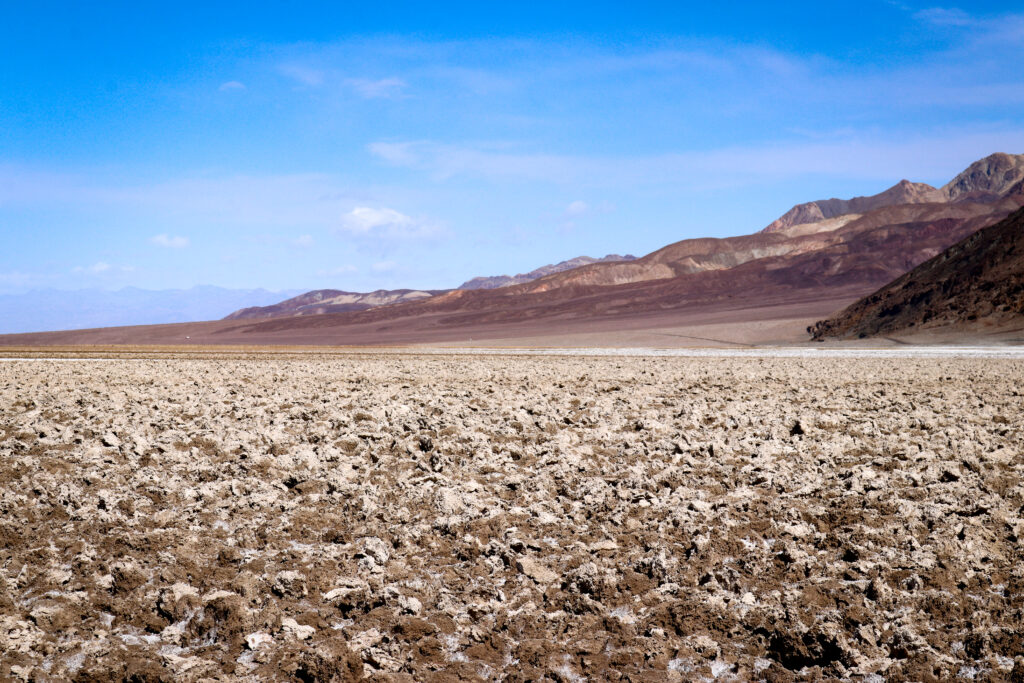
    Badwater Basin

    This location is the lowest elevation in the United States, 282 feet below sea level.  You can walk along the path of this salt flat and turn around to look at the sign high above that shows sea level.  What is sea level since the ocean’s water is constantly changing you might ask?  According to Nat Geo, because the ocean is one continuous body of water, its surface tends to seek the same level throughout the world. However, winds, currents, river discharges, and variations in gravity and temperature prevent the sea surface from being truly level. In the United States and its territories, local mean sea level is determined by taking hourly measurements of sea levels over a period of 19 years at various locations, and then averaging all of the measurements. 

    Because of its elevation, Badwater Basin will probably be the hottest place you experience in the Park.  Dante’s view will be the coolest at 5,575 ft (1,699 m) above sea level.

    Scotty’s Castle

    Just a note about Scotty’s Castle.  This “Castle” was “Scotty’s” folly in the middle of the desert but you can no longer get to it as the road is closed no matter which side you try to access it from. We wasted a few hours following the GPS just to find out that road was washed out years ago.

    Where to Stay

    There is camping within the Park and a variety of lodging opportunities but they fill up fast. Additionally, the Park is accessible from both California and Arizona.  We stayed at Longstreet Casino and RV Park in Amagosa Valley, AZ.  The rooms were clean and had balconies. Each night, they had entertainment in the bar area.  If you hate cigarette smoke, the bar is not for you but the outside grounds were nice.  Overall, I’d say this place was just okay but provided a good meeting place between AZ and CA.

    Death Valley is certainly worth another visit and I’d like to go camping and off-roading here to explore more of the Park. Additionally, I hear that stargazing on a cloudless, moonless night is fabulous.  Another reason to come back.

  • Hiking in Southeast Arizona (Part 2): Trails, Weather & Scenic Views Near Sierra Vista, Arizona

    Hiking in Southeast Arizona (Part 2): Trails, Weather & Scenic Views Near Sierra Vista, Arizona

    In Part II of your Southeast Arizona hiking guide, discover even more scenic trails and outdoor opportunities across this beautiful region. From cooler mountain elevations to wide-open desert views, Southeast Arizona is perfect for year-round hiking.

    Base yourself near Sierra Vista for easy access to top trailheads and diverse landscapes. During summer hikes, bring plenty of water and prepare for monsoon storms, while cooler months can bring sudden weather changes—so dress in layers and plan ahead.

    Enjoy safe, rewarding hikes while exploring one of Arizona’s most underrated outdoor destinations.

      Chiricahua National Monument

    For a weekend or longer get away, the Chiricahua National Monument offers hiking, camping and star gazing.  From Sierra Vista, it’s almost a two hour drive as the Monument runs close to the New Mexico border and is totally worth it.  The park is less busy than those in Northern Arizona.  We stayed in Bonita Canyon Campground but put our blow up mattress in the truck bed and at midnight headed up to the peak to look at the stars.  We were the only people in the parking lot and were rewarded with one of the most beautiful sunrises I’ve ever experienced. There are also plenty of hiking trails in the area.  If you’re planning on camping, make reservations ahead of time.

    Fairbank

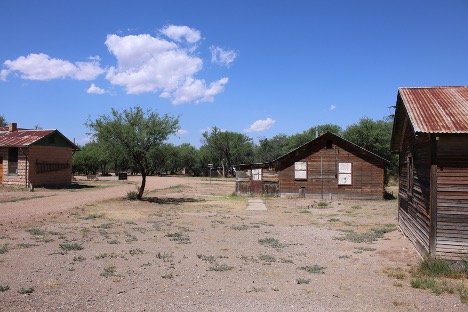
    Fairbank, Arizona is a preserved ghost town.  Built in the 1880’s as a mining town,   there is an old outhouse, post office and some other buildings.  If you take the 5-mile loop walk, you’ll be rewarded with views from the small hilltop graveyard, old mill ruins. On the way back, the San Pedro River and old railroad tracks used to transport the ore out of the mine.  It’s a flat walk but can get quite warm so make sure to take plenty of water.

    San Pedro House and River

    The San Pedro House offers a two-mile, flat loop walk along the San Pedro River.  There is a picnic area and large trees to sit under.  When we went to hike the mosquitoes were out and impossible next to the river.  At non- summer times, it can be beautiful.

    Dragoon

    If you’re in the area, you must at least drive through the Dragoon Mountains.  They look like something out of Star Wars.  The rock formations are round rocks piled on top of each other. They offer hiking, camping in the area along with the scenic drive.

    Our Lady of the Sierras

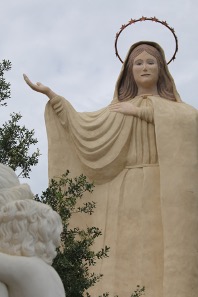
    Built in the 1990’s, Our Lady of the Sierras has a huge cross and statue of the Virgin Mary.  It’s not really a hike but worth a stop. You can drive up almost to the top where you will see amazing views.  The shrine is located in Hereford, south of Sierra Vista.  There are two small parking lots.  The pavement is very steep when driving to o the upper one, so you might just want to park in the lower area and walk up the stairs. Read Part I

  • Alaska, Synonymous with Adventure and Beauty!  What Not to Miss.

    Alaska, Synonymous with Adventure and Beauty!  What Not to Miss.

    Alaska is a beautiful state with its tall leggy spruce trees, pretty summer flowers in purples, pinks, blues, yellows, whites and reds. Immense black peaks with sprinkles of white snow and glaciers that play hide and seek disappearing behind white and black clouds, only to reappear to shiny blue skies. Shades of green are everywhere. The air smells clean and flowing braided rivers flow along the highways and trails. The allure is present everywhere and I can understand while so many people came and just never left.  We hear that from more than one local,  starting with our waiter at the restaurant who came up to work a summer and just stayed; to our bus driver who now rents a homestead without electricity and an outhouse. He tells us, I left after one summer and Alaska kept calling me back.  I get it.  Even though it’s summer and I know the winters are harsh up here but Alaska has permeated through my skin and eyes and gotten into my bones and I don’t want to leave.  I’m not ready to go back to the harsh sounds of the city.  I will leave a piece of my heart here. 

    This trip is my third time to this gorgeous state and while I wasn’t going to get to see the Northern lights, having 20 hours of daylight allows for a lot of time to see other sights. 

    I took a late after-work flight out of LAX and met my boyfriend In Anchorage just in time to see the sunset, at midnight!

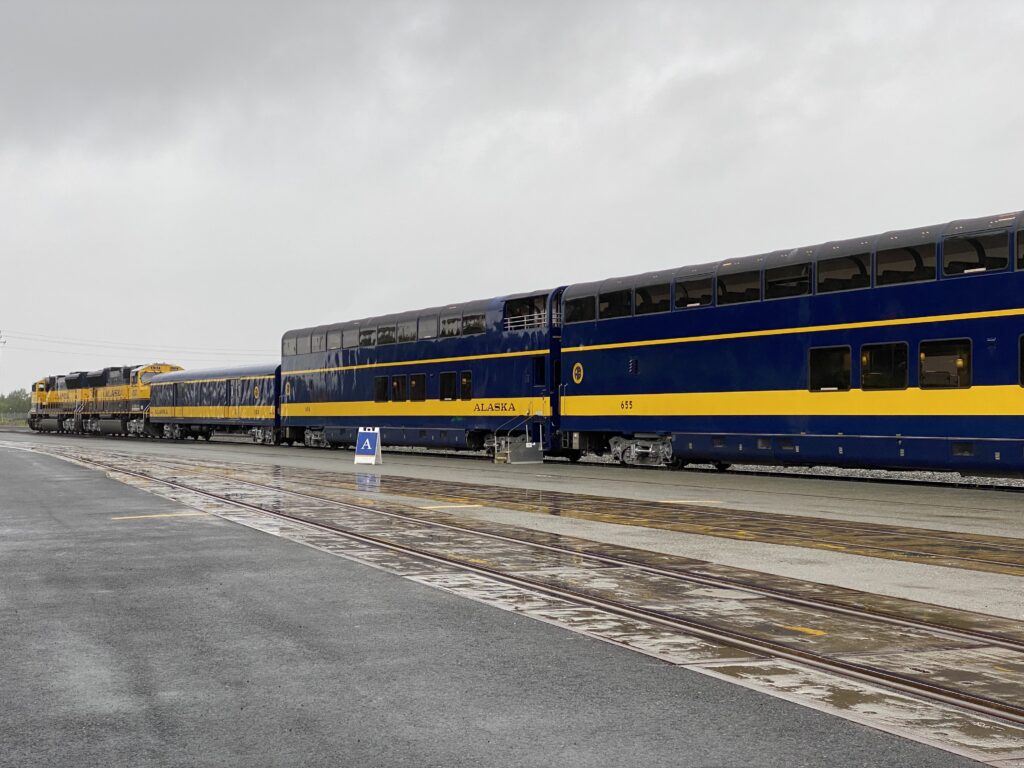
    We got up blurry-eyed at 5:00 am to be at the Alaskan Railroad train station before 6:00 to go to Seward.  The Alaskan Railroad train is a four-hour ride from Anchorage to Seward. Along the way, you pass through beautiful county, snowy mountains, black muddy lakes the shiny aqua gray, tall pines and wildlife.  A narrator will fill you in on Alaskan history and tells everyone when to jump up and run to one side of the train to spot a bear, moose or bald eagle.

    Seward

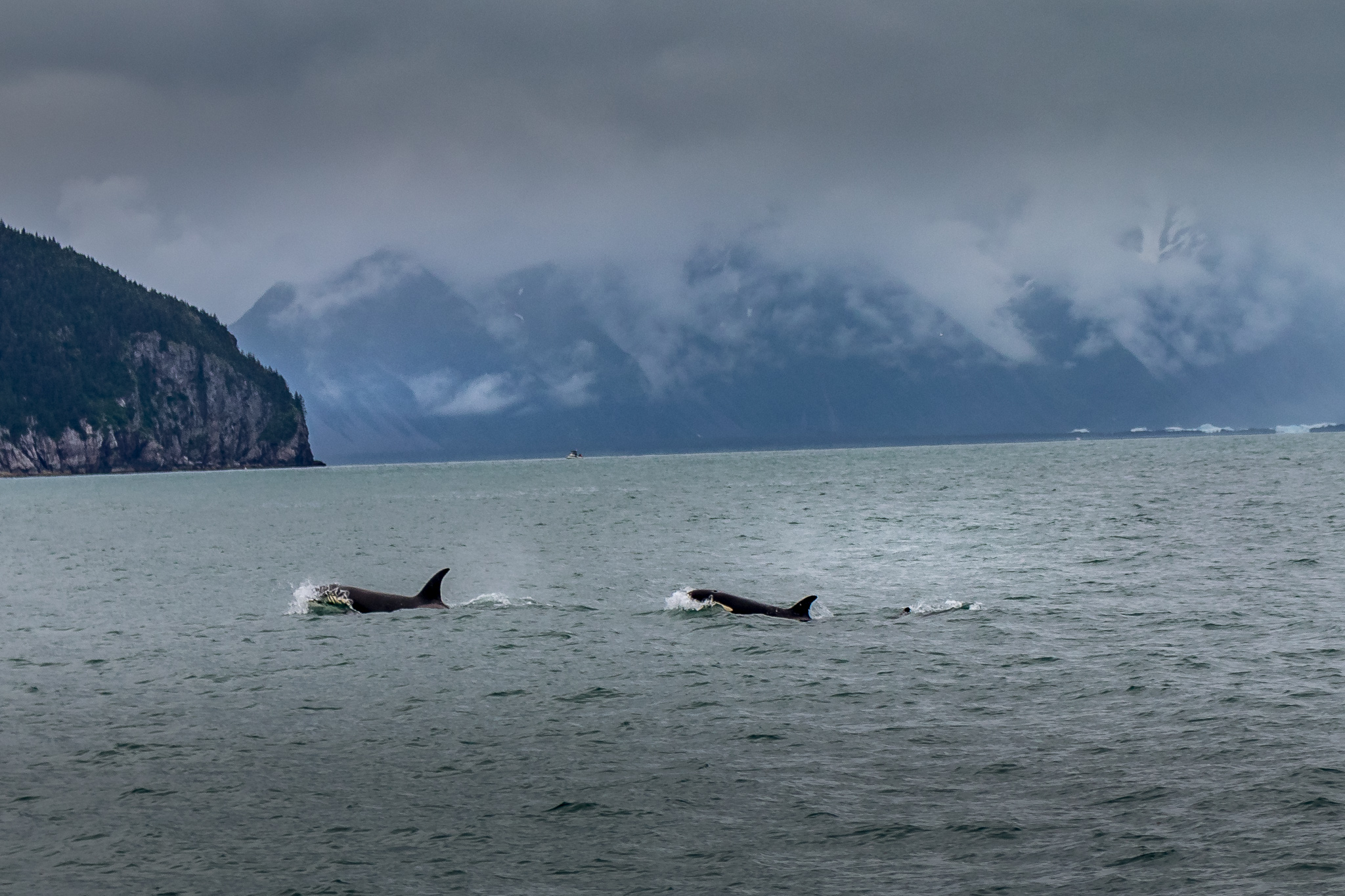
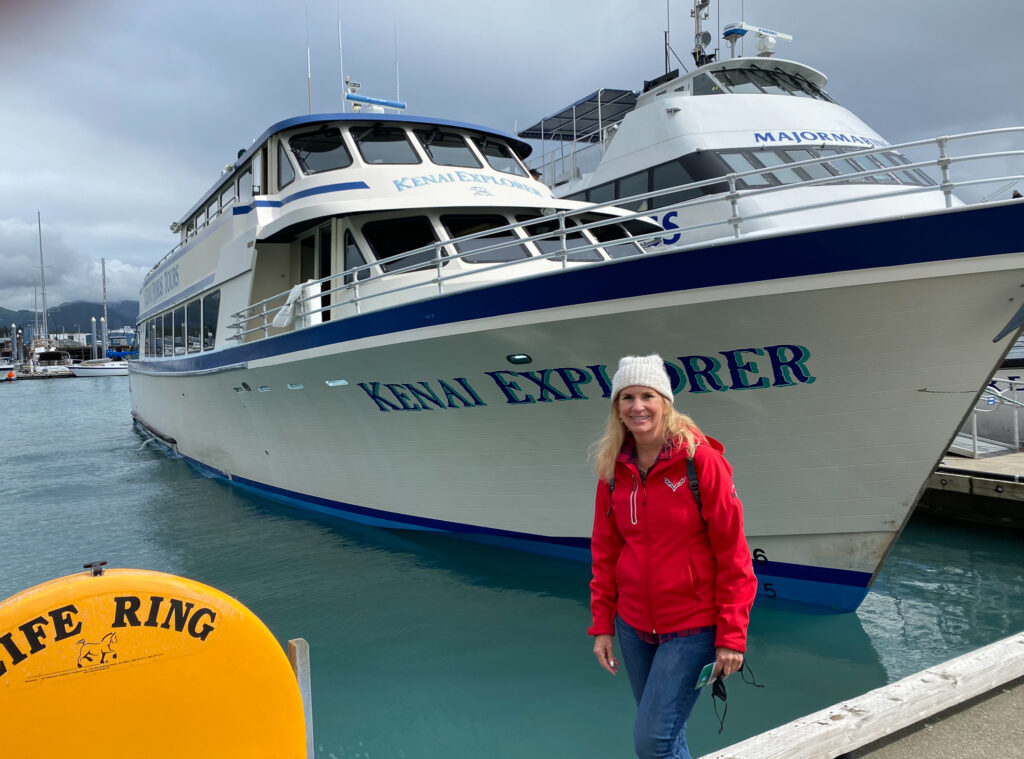
    Once in Seward, we hopped on a Kenai Fjords Tours boat for a day cruise.  This is the second time we’ve booked with Kenai and they do an excellent job.  Last time we went on a short boat ride and had so much fun, this time I booked us for a six-hour tour.  It was a cold raining day but I still couldn’t resist freezing while standing on the bow of the boat as we bounced over the rolling swells. We first visited Fox Island, which was named to entice fox farming in Alaska.  That didn’t quite work out but the Island is now a local tourist destination offering lunch. Salmon cakes, yum! Afterward we walked along a shoreline covered with shale like skipping rocks.  Having finished, we all scrambled back to the boat ready for sightseeing. We saw more bald eagles and were enjoying cute little puffins when someone sighted two slim line black fins gliding through the water – Orcas!  We followed them for a bit when the captain got a call from another boat about a pod of humpbacks. Reeving up the engines we took off to find whale spouts. There was a Momma and a baby swimming behind another eight or so whales.  At one point, their heads came up right in front of the boat!  These are some of the largest mammals on earth weighing in at 50 tons and up to 50 feet long.  Hint: If you look for where the birds are congregating, you can usually know where the whales are hiding under the water.

    Running out of time, we sadly headed back to port and the train ride back to Anchorage, napping on the way back. 

    Ninja tips: The train leaves Anchorage at 6:50am and comes back at 6:00pm. There was a shuttle when we got off to take us to the port and back again, which was great but there was no time in between to walk around. On the train, there is a cafe that offers drinks and limited food service.  If you have Goldstar tickets, you sit in luxury cars and can go to the dining car.  We didn’t purchase these as they are pretty expensive.  The last car has an open-air balcony to stand on. 

    Talkeetna

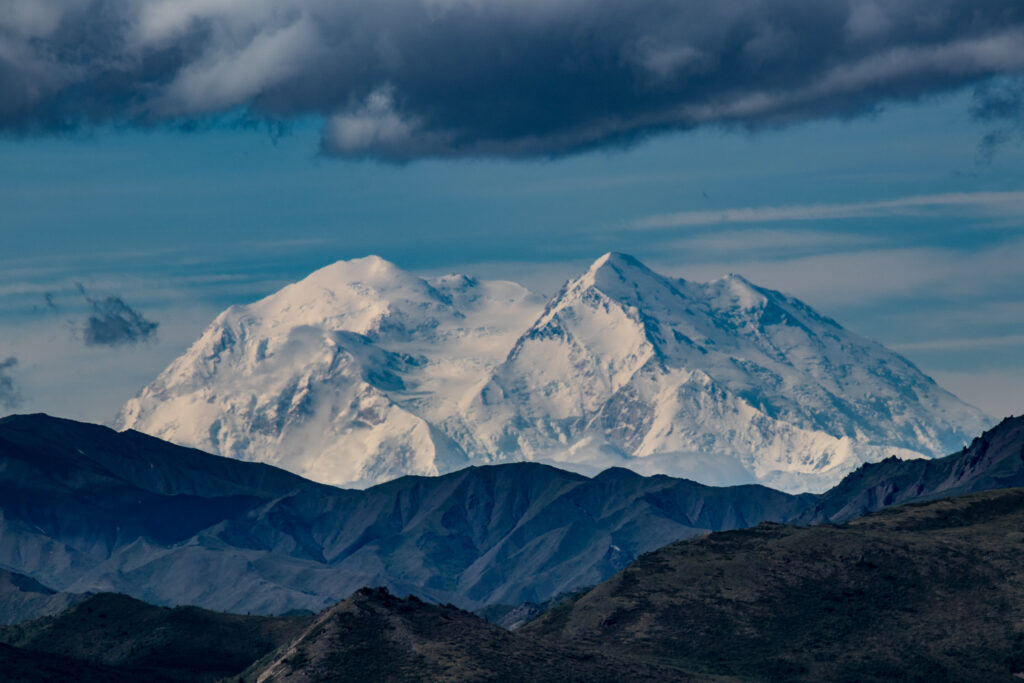
    We rolled into Talkeetna on July 4th. The town was full of locals and visitors enjoying a lovely sunny Alaskan day. You could actually see the top of Denali (Mt. Whitney) and shorts and t-shirts were acceptable clothing.

    Talkeetna is a small town and terribly cute.  The Downtown consists on a few blocks of shops selling unique and touristy goodies. I just had to go into all of them while my Mike waited outside.   While we waited for our next Alaskan adventure, a flight and landing on an actual glacier!, we had a couple of drinks at the bar along with a slice of pizza at Mountain High Pizza. You can order by the slice and pick your own toppings.

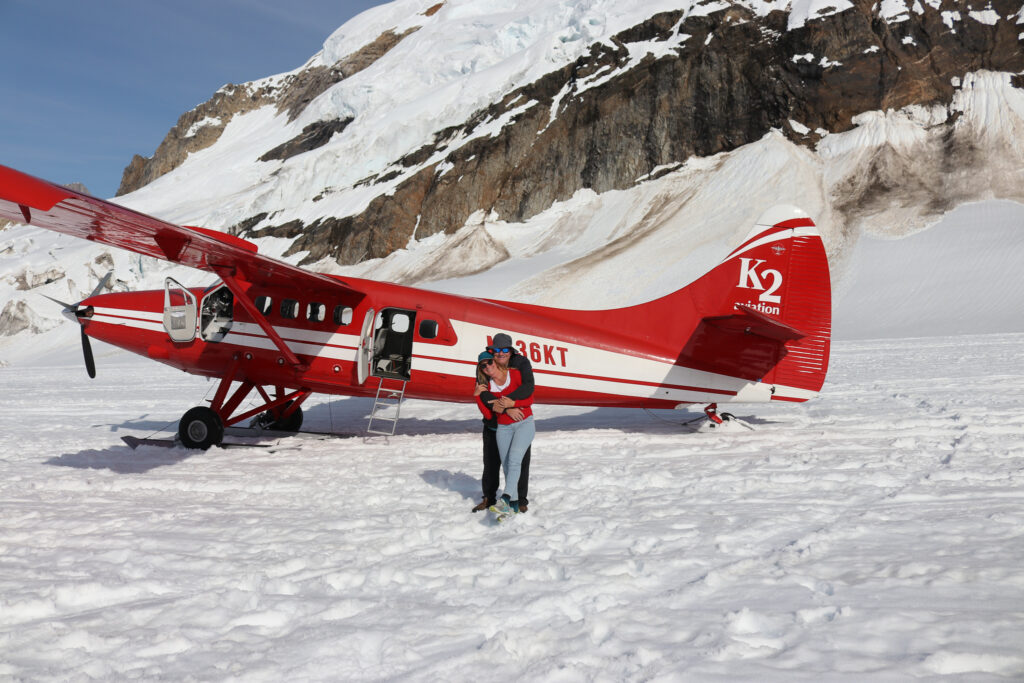
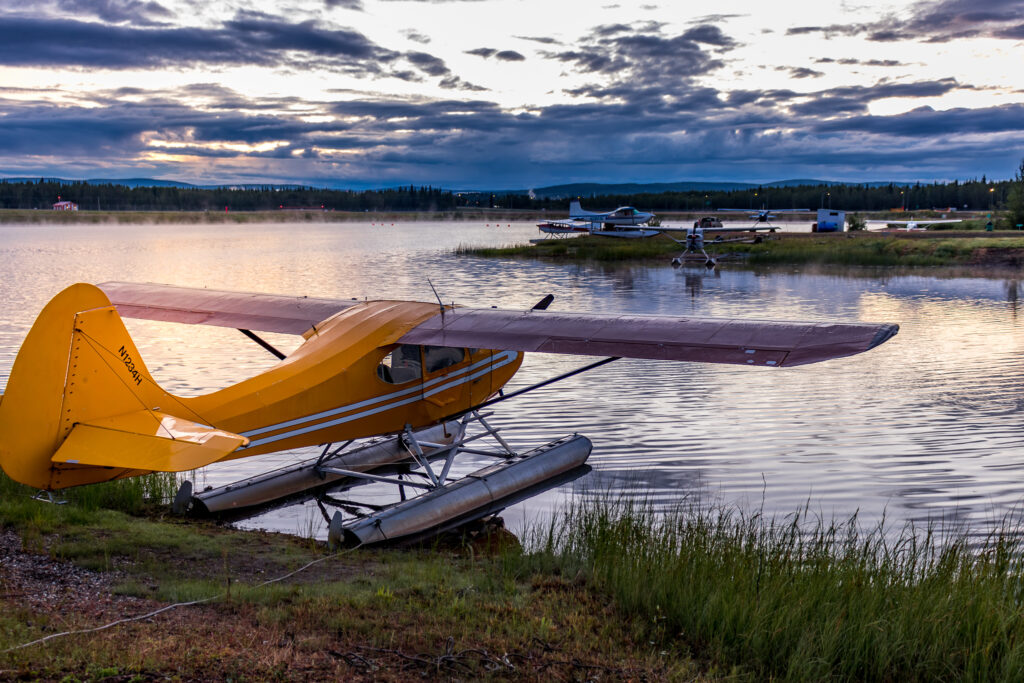
    At K2 Aviation, we met our pilot Chad, who provided a safety briefing.  When he asked who wanted the co-pilot seat, I quickly raised my hand. We had a 5% day, which means only 5% of the year do you get a day where you can see the top of Denali.  This equates to about 18 or less days a year. Because the weather was perfect, we flew all the way around to the backside of Denali. It’s impossible to understand the scale of the mountains even from the air. Denali is 20,000 feet high and we flew at 14,000 feet. Below were glaciers, huge crevasses that looked like tiny tears in a piece of material and bright teal blue pools. Chad skillfully landed us right on the glacier where we got out, played in the snow and took photos.  There are no words that explain how beautiful it was. 

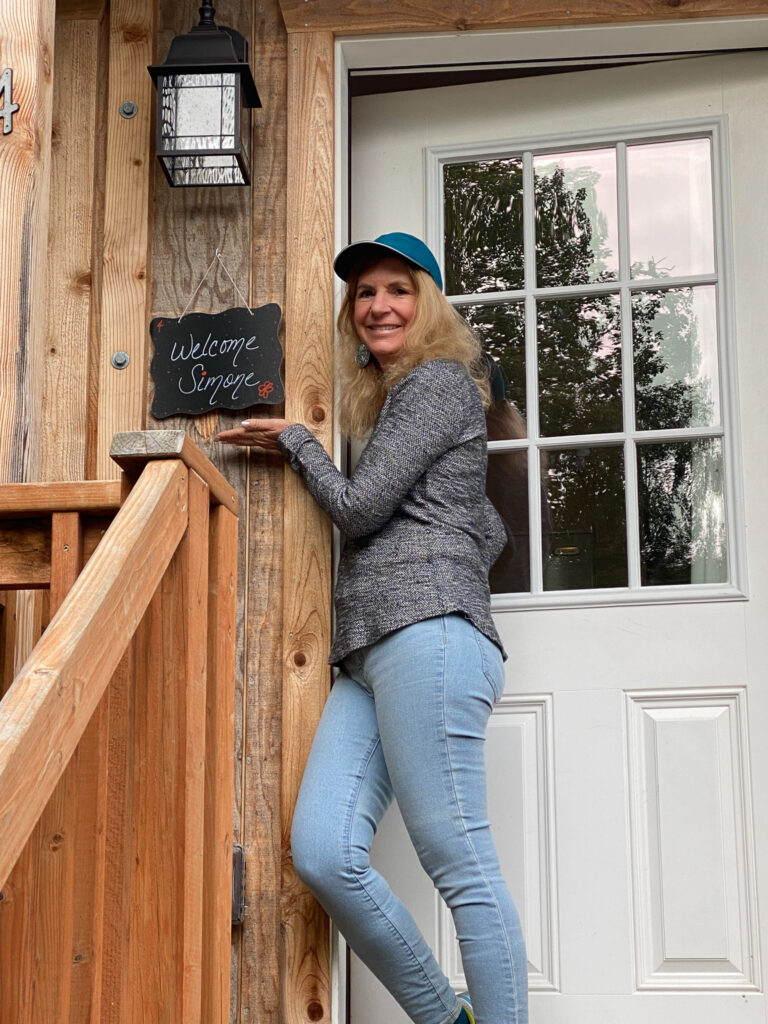
    We stayed at Talkeetna Wilderness Lodge, cute little cabins on a forested area.  Susan was great, contacting me in the morning with final reservation information and I was welcomed with my name on the cabin. 

    Also, there south of Talkeetna is Alaska Wild Harvest where they tap Birch trees to make syrup.   We didn’t stop here this time but have before and had fun tasting different syrup vintages.  It’s interesting how much the taste changes during the years.

    Ninja tips: I checked the weather and rescheduled our flight at the last minute knowing the day we supposed to fly, rain was predicted and luckily, they had an opening. All the restaurants in Talkeetna closed by 8:00 PM and we were starving. Luckily the Talkeetna Alaskan Lodge was still opened.

    Fairbanks

    After breakfast at the Flying Squirrel Bakery & Cafe.  I had a Sunrise Breakfast that consisted of bread, with an egg, spinach and a delicious sauce. 

    From Talkeetna, we drove to Fairbanks. It’s a six-hour drive and somehow we always manage to make these longer than the time stated on the map.  We rolled in looking for dinner at the Bakery Restaurant.  It’s one of those cafes where everything and more is on the menu and my Ruben sandwich was pretty good. 

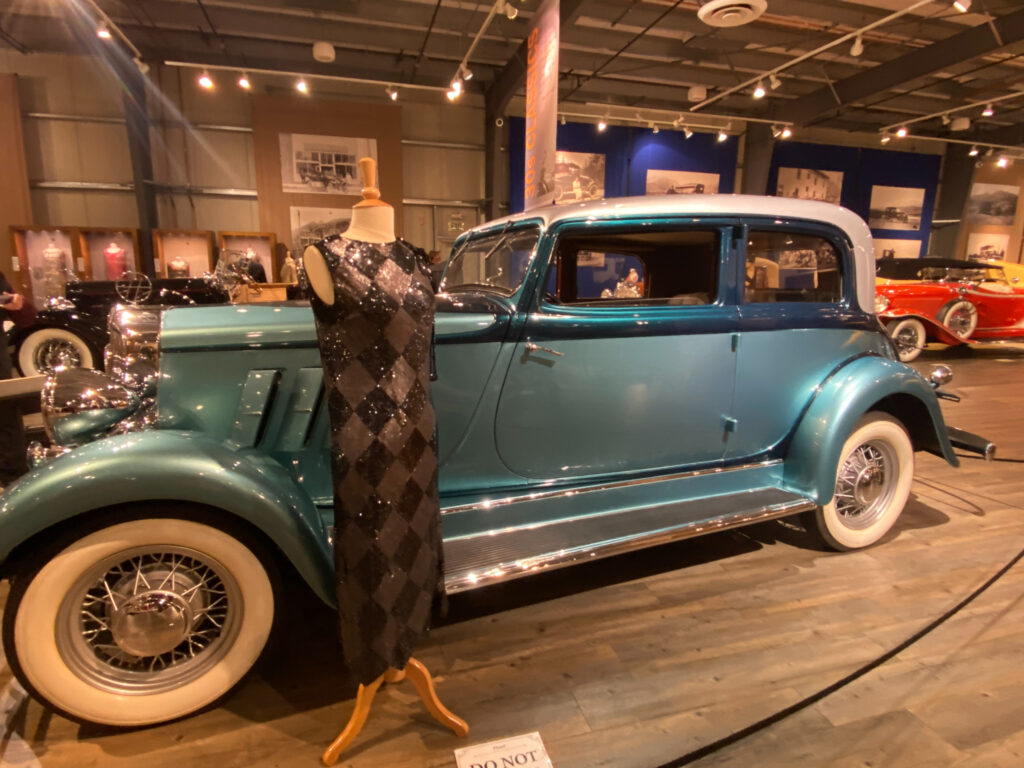
    The next day, being wiped out, we took it easy and started our day with a walk along the river.  Not sure what we wanted to do, we selected the Fountainhead Auto Museum. Score!  They have a huge, pre-WW2, all-American car museum. The cars are immaculate, being restored to their former beauty. My favorite was a baby blue 1933 Hupmobile.  The paint’s shine was created by adding fish scales to the paint.   The museum is brilliant in that there are a lot of cars for the automotive enthusiasts and on top of that includes one of my loves, vintage dresses that are from the same time period as the car.  Mike and I were both happy.

    Afterward, we had a large leisurely lunch with a glass of wine at Giraldo’s Italian Kitchen.  My lasagna was really good.  We followed it up with a drive out to the Chena River and State Park where we saw a Bald Eagle hunting for fish and fought off swarms of mosquitoes.  Fun Fact: Caribou in Alaska can lose a pint a blood a day due to these tiny beasts.

    Calling it quits early, we went back to the room to get ready for the next day, traveling to the Arctic Circle.

    Artic Circle

    Before going to the Fairbanks Airport to catch our flight through the Northern Alaska Tour Company, we wanted to fill our bellies so we pulled up to a bar that was highly recommended and didn’t look like much but boy, the Oasis Restaurant and Lounge, was delicious.  I had an omelet with ham and hollandaise sauce along with biscuits and sausage.

    Our next adventure was an all-day tour. When I say all day, I mean we met at noon and didn’t get bank to our room until 3:30 am. The trip included a plane ride into Cold Foot, a worker’s camp with a restaurant, post office and a place where you could rent a room for the night. It earned its name by being the location where miners looking to make their fortune would get cold feet and turn around to go home. As we flew to Cold Foot, you could see the mighty Yukon River and miles of the Trans Alaskan Pipeline

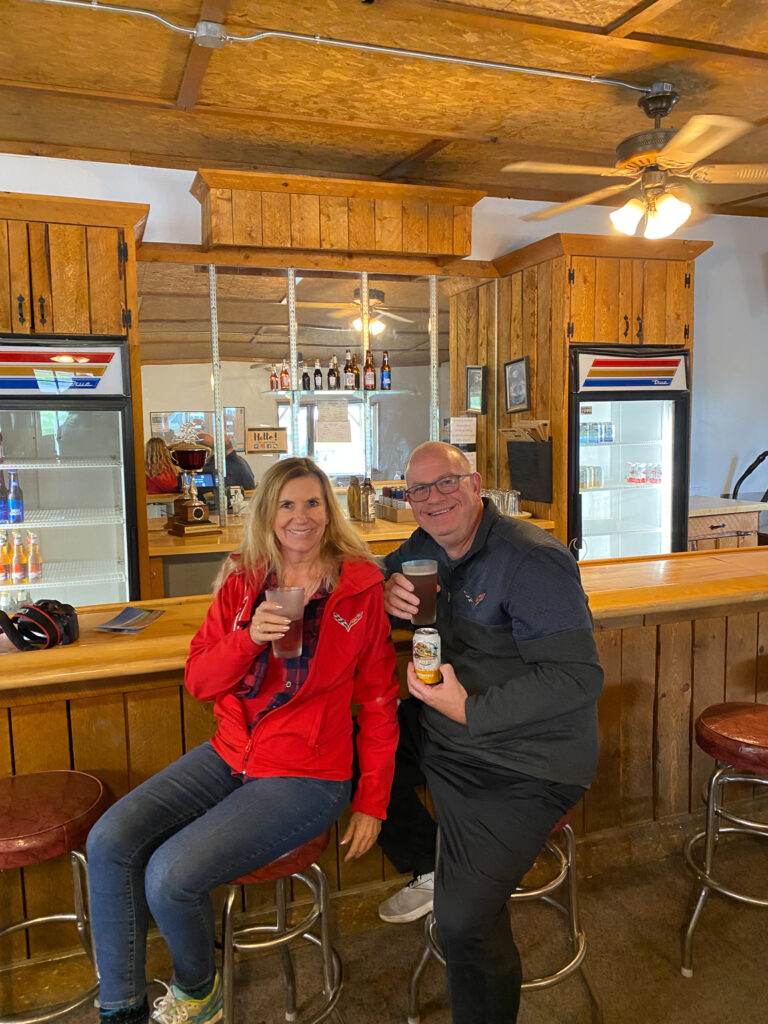
    In Cold Foot, you can purchase lunch but having already eaten, we opted for a local beer in the bar.  I love bars for the comradery and interesting people. While here we talked to a guy who was riding his bike alone the Pan-America Highway all the way from Alaska to Argentina. He estimated that would take him two years!  

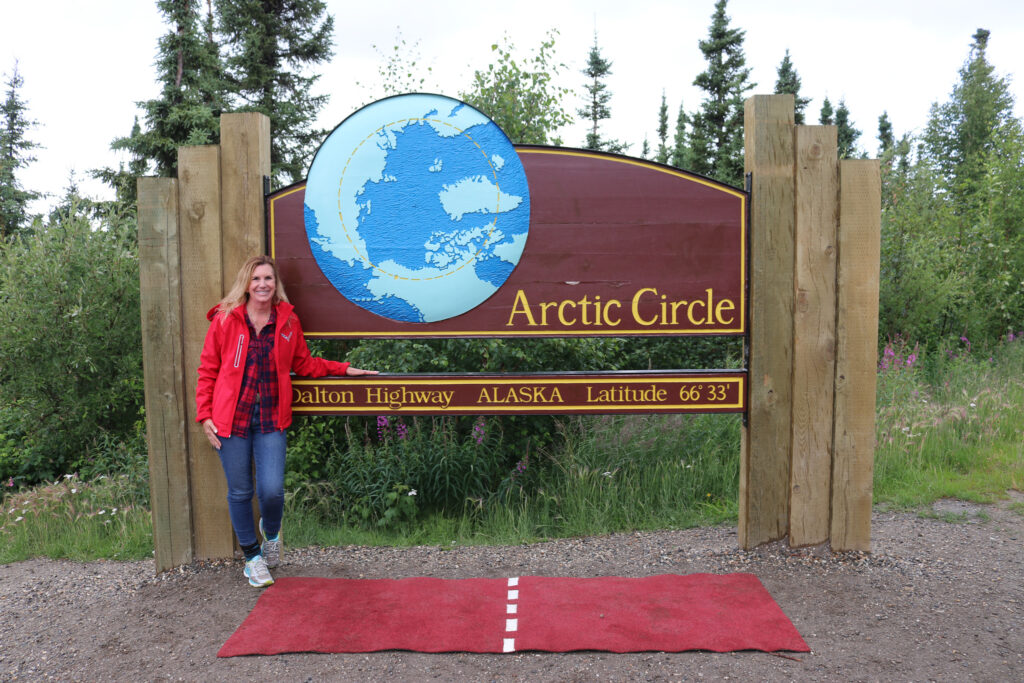
    From Cold Foot, we drove south to the Arctic Circle, about two and half to three hours, which precisely located at the 33’ 66” longitude.  The road is really rough and we ended up in the back of the van. I was wishing for my old kidney belt most of the way and our driver, Steven, entertained us with stories about living in Alaska. 

    The Arctic Circle This is where during the summer solstice, the first day of summer and the longest day of the year, the sun never sets lower than the horizon. Likewise, on the first day of winter, the sun never comes up.  It’s because of the tilt of the earth and how it rotates on its axis. Hence the phrase, Land of the Midnight Sun. 

    Leaving the Arctic Circle, we changed vehicles to a nicer touring bus and headed back.  The trip was another seven hours drive back to Fairbanks along the Dalton Highway made specifically for the Alaskan Oil Pipeline for more than 800 miles and wide vista views.

    We made stops along the way to check out the permafrost, soil that has remained frozen for more than two years and to cross the only bridge across the Yukon River in Alaska.

    We watched the sun set at 12:30am and the sun was rising when we got back at 3:30am. 

    Overall, I would change out this trip and take the plane up, spend the night to see sunset and sunrise and then either drive back or fly back the next day.  Tomorrow, Denali National Park.

    Denali National Park

    Denali National Park’s primary purpose was to set aside 6.1M acres of land to protect animals and nature from humans, keeping tourism imited.  You can’t drive further into the Park than 19 miles unless you were lucky enough to snag one of the very limited campsites but that doesn’t mean Denali National Park it’s not worth seeing.  Very much the opposite.

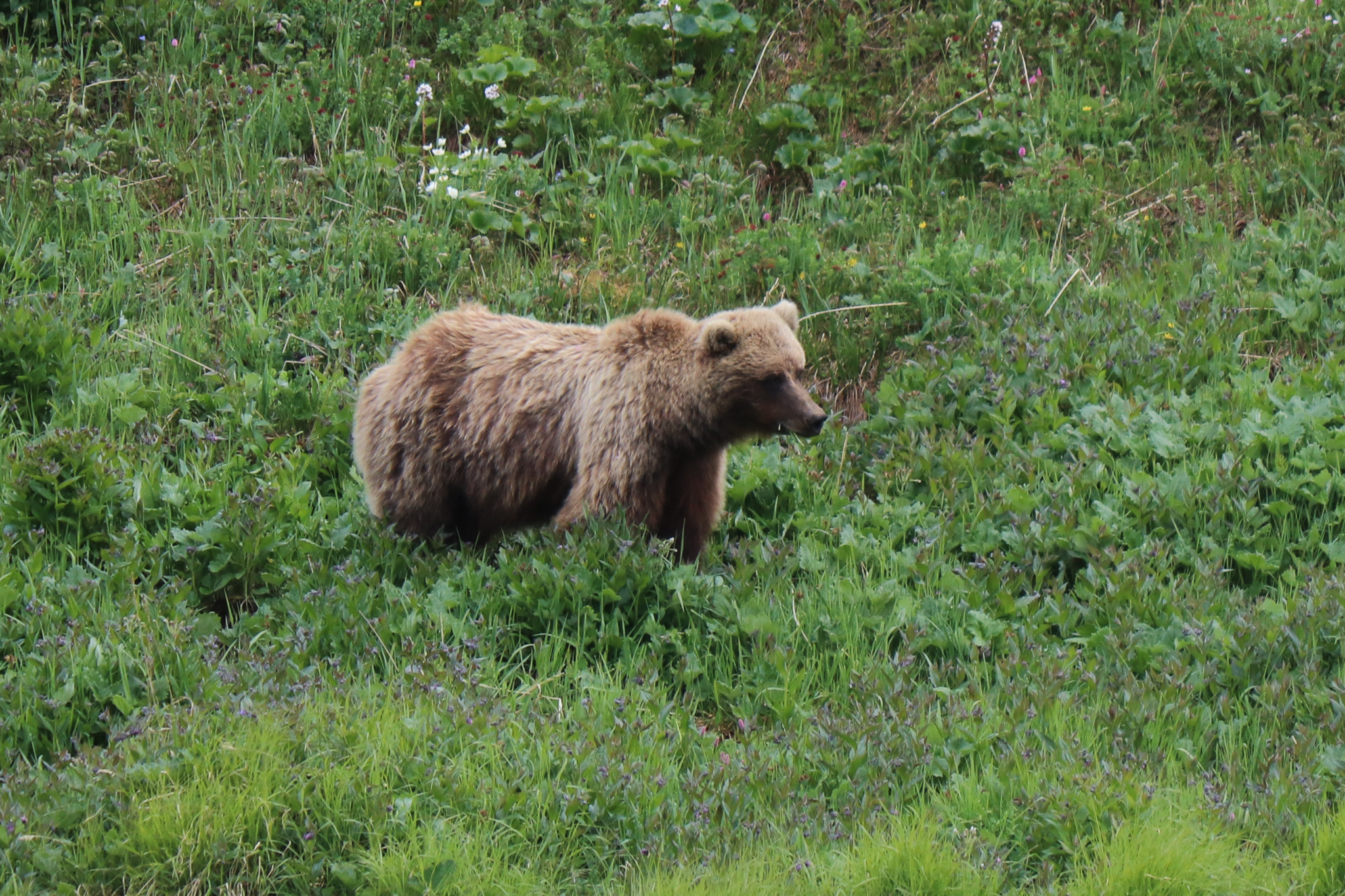
    You can book bus tours deeper into the Park with varying lengths of time.  We selected the eight- hour tour and while that seems like a long time, it didn’t feel like it, giving us about six hours in the actually Park.  All along the way, Brian, our guide who is a trained botanist, stopped and explained park conservation, the animals and the names and medicinal uses of the flowers.  We were lucky enough to have another gorgeous day and we’re able to see all of Denali. This only happens about a few days a year so definitely buying a lotto ticket soon.  We saw bears, Dahl sheep, elk, a moose and a marmot.

    We stayed at The Grand Denali Lodge, which sits high on the hill and you can’t miss it.  From our room, we looked over the entire valley. 

    Food in Denali was limited. They, like everyone else, are having troubles finding workers after the pandemic.  The Lodge was serving dinner and we ate lunch and one of our dinners at Karsten’s Public House located in McKinley Chalet Resort.  I’m the evenings they have music and fire pits that you can sit outside and enjoy. 

    Ninja hints: On the bus, sit on the driver’s side. The views are better on the way up and pick a seat with a window so you can open it and not have to take photos through the glass.  Also, if you react to mosquito bites, pack bug spray as they are everywhere.

    I loved our third trip to Alaska and will come back for many more, particularly for the Northern Lights and fishing. 

    Alaska is calling and I’m definitely going to answer back.

  • Explore Burbank: Film Studios, Vintage Finds & Celebrity Hotspots

    Explore Burbank: Film Studios, Vintage Finds & Celebrity Hotspots

    With the pandemic ending in the U.S., a lot of us are itching to get out and travel, including me. As we plan for our next trip, we thought we’d try one without ever leaving home so we donned some big sunglasses and an oversized sun hat, put down the top of the Miata and took off to see the sites in Burbank, my current home town.

    As far as home towns to travel in, Burbank’s a fun one to visit, even if you’re there almost every day. 

    Burbank is the media capital of the world.  As Hollywood’s backlot, the city is home to the world’s largest media studios, the Walt Disney Company, Warner Bros., Netflix’s Animation, Nickelodeon, and Cartoon Network along with hundreds of smaller studios.   And, right next door is Universal Studios.  It’s been said that almost every American-made film has made its way through Burbank somehow, either through film, sound, music or editing.

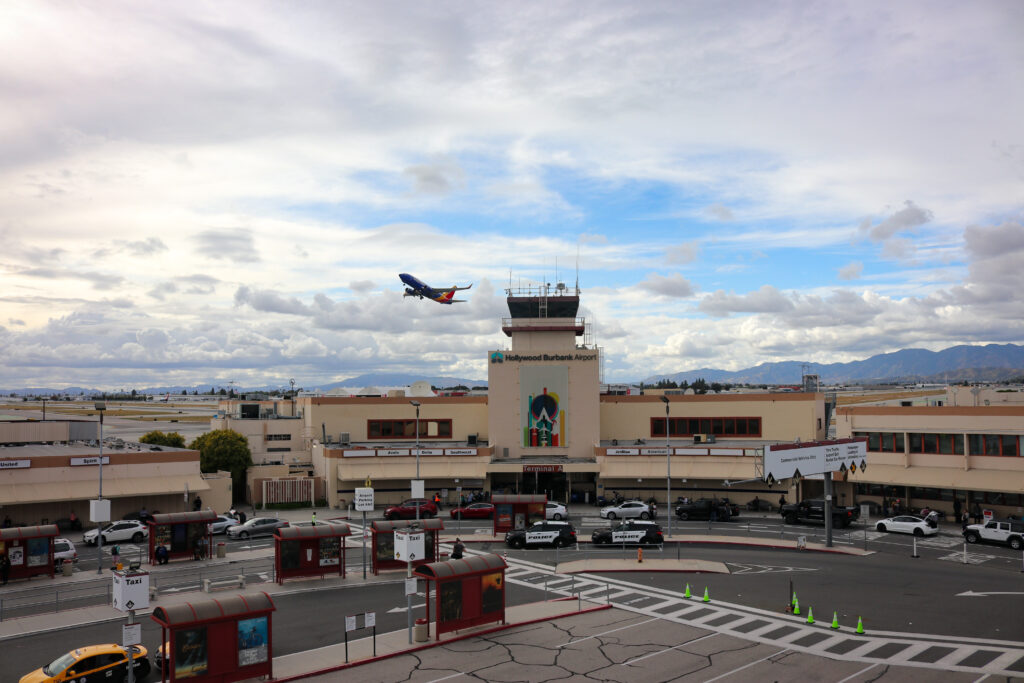
    In the beginning, almost a hundred years ago, the talkies began with pop up filming happening all around town.  Mary Pickford, Bette Davis and Humphrey Bogart were seen around town.  And, the closing scene in Casablanca was filmed at the Hollywood Burbank Airport. During the years, movies such as Back to the Future, Argo, La La Land and Apollo 13 were all filmed within the streets of Burbank.  This doesn’t include the thousands of television shows filmed and still being filmed.  Prior to COVID, Burbank was issuing around 1,600 film permits each year and this doesn’t include studio filming. 

    Staying in Burbank makes sense if you want to see Los Angeles.  The Hollywood- Burbank Airport is smaller than LAX and a lot faster. I can leave my office and be walking up to the gate in less than 20 minutes and that includes parking. 

    We started our staycation in Downtown.  Artelice Patisserie (117 N. San Fernando Blvd.) has recently opened and they create beautiful, single or shareable desserts for the Oscars along with incredible croissants and macarons.  I’ve been looking for a reason to splurge on the calories and this is the perfect reason.  For breakfast, I ordered a Persian Princess croissant filled with orange and rose flavors.  I expected it to be good but that first bite, ooo la la, it was eyes roll back into my head, delicious.

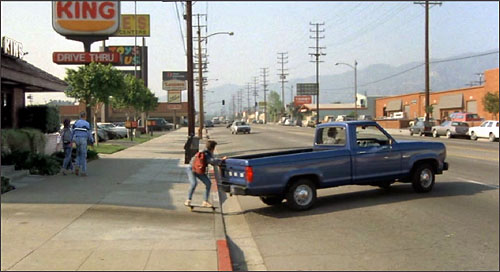
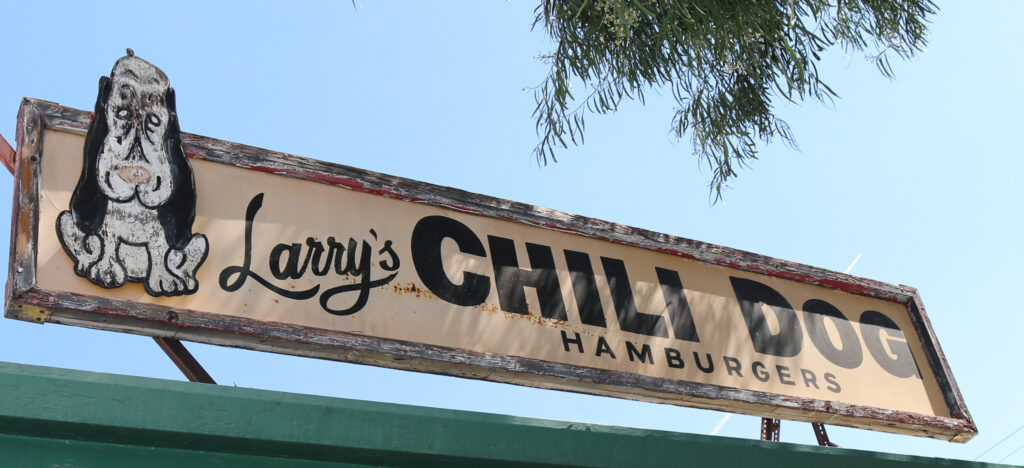
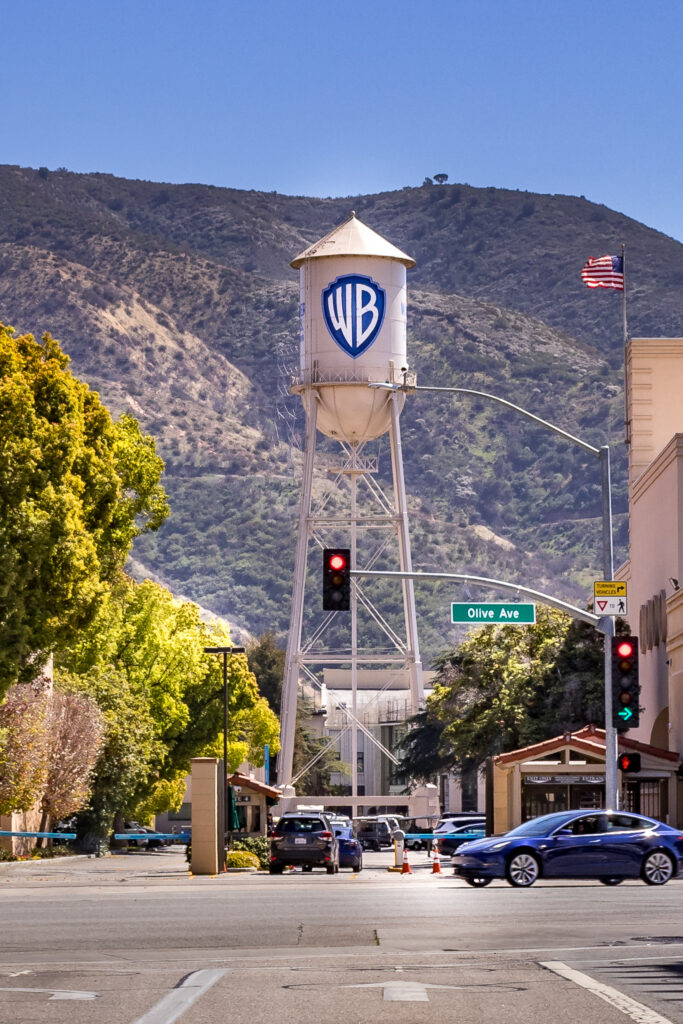
    Next up was driving through town looking at places where movie scenes were filmed and comparing them to the film clip at that location.  The iconic Back to the Future scene where Marty McFly hops on his skateboard and grabs on to the back of the truck was filmed at a Burbank Burger King.  I have driven by this Burger King many times but never realized that it was THAT “Burger King.”  From there, we also visited Larry’s Chili Dog, used as a backdrop for The Office and serving scrumptious looking hot dogs. We stopped in the Ugly Mug right next door to check it out as they have great reviews from coffee drinkers followed by Handy Market where He’s Just Not That In to You filmed was next.  They have a huge butcher shop in the store.  And, I had to drive by The Wonder Years house.  Last stop had to be Warner Bros. gate 2 where the Blazing Saddles scene with them riding out the horses was filmed. Here are just some of the film sites within Burbank. 

    Burbank has four famous coffee shop restaurants that are stuck in the 50’s and they all serve large portions when you are craving comfort food.  I’ve been to them all and it’s like going back in time, which means they are often used for films set in the 50s.  These include:

    1. Frank’s Coffee Shop where Larry Crowne and CSI was filmed.
    2. Tallyrand, the subject of an episode of Huell Howser
    3. Lancers, which is in the same parking lot as Burger King
    4. Bob’s Big Boy where Heat was filmed and the Beatles once ate in the booth on the right before you go into the back area.  There used to be a sign but someone keep stealing it.  Every Friday night, they have a classic car show where people just show up to talk, grab a bite and show off their cars
    5. Burbank Airport was the site of the last scene from the Casa Blanca

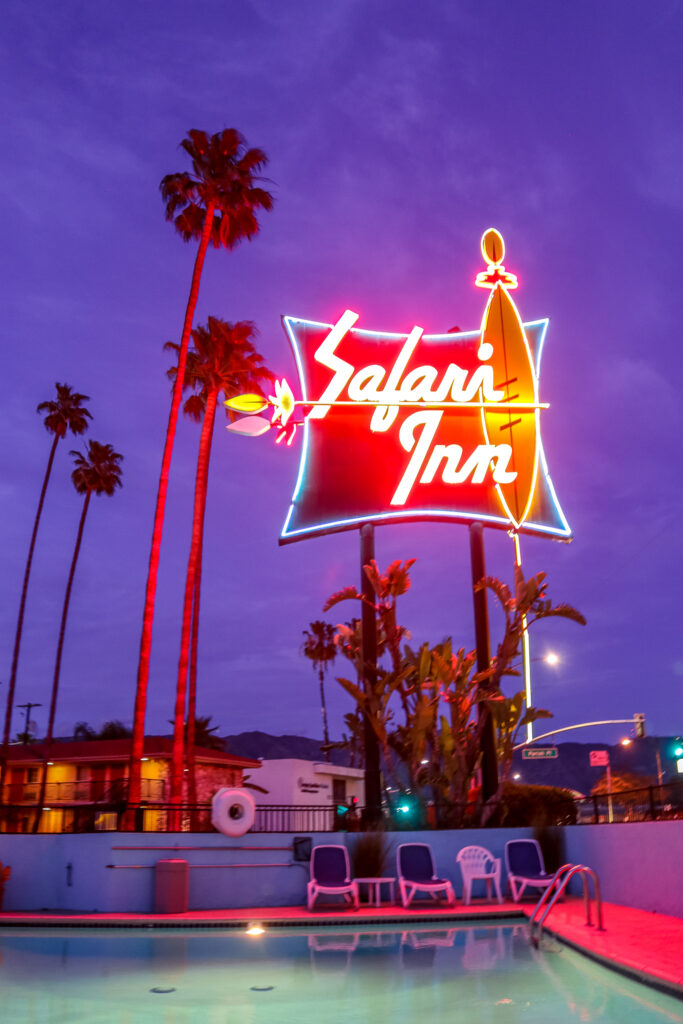
    There are a few boutique hotels in Burbank and two of these have a very retro style.  For a full list, go to Visit Burbank. For our staycation, we selected the Safari Inn.  It was built in 1955 and hosted a slew of shows including Apollo 13, True Romance, Lethal Weapon 3, Parenthood, The Closer, Coach Carter, the Partridge Family, Six Feet Under, Desperate Housewives and more. I love the drive-under-the-patio entrance and the neon sign.  The rooms have been fully updated are nice.  I had packed a cooler of gin and tonic mixings, which we drank by the pool as we took photos. The next hotel on my staycation list is the Tangerine, another retro-style hotel in Burbank.

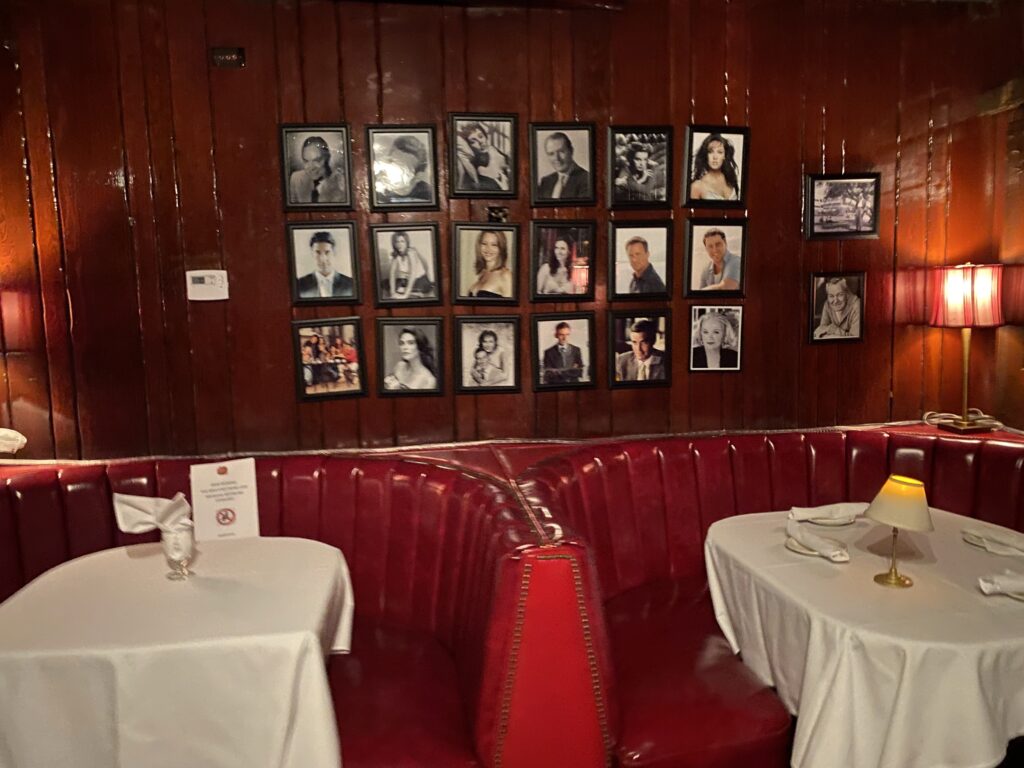
    Our last stop of the day was dinner at the Smoke House.  I love this restaurant for its romantic connection with film along with its food and service.  Many movies have been film here including La la Land and Argo and the walls are filled with photos of famous people who have eaten here.  Both Jay Leno and George Clooney use to hang out after filming on the Warner Bros. lot across the street and Clooney named his production company after the Smoke House. 

    While we didn’t get to everything in Burbank on our staycation, here are some other ideas if your visiting.

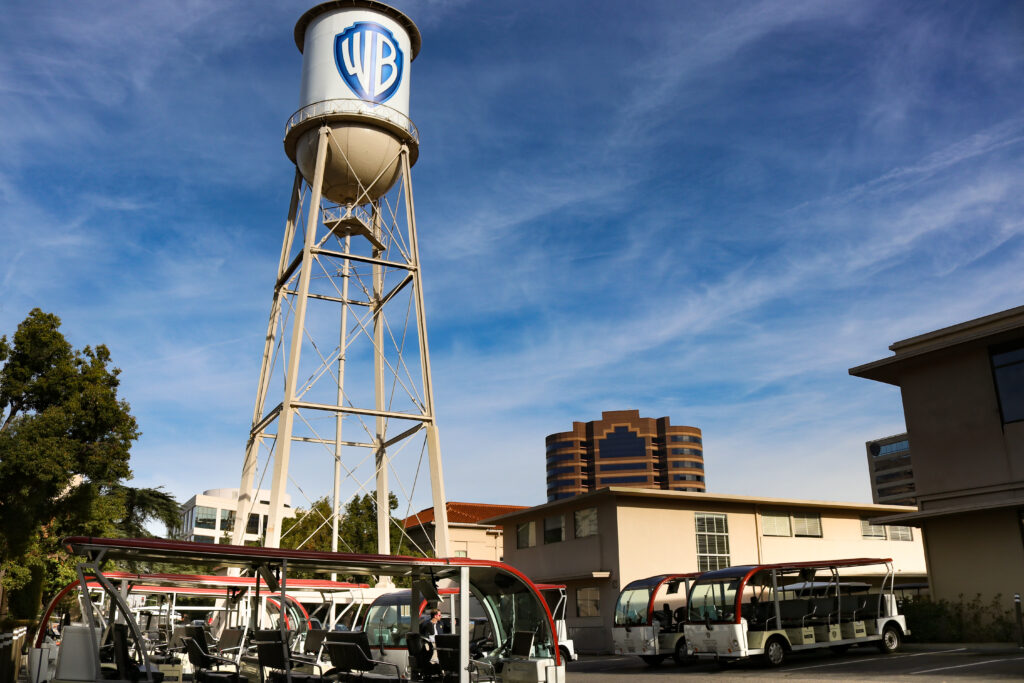
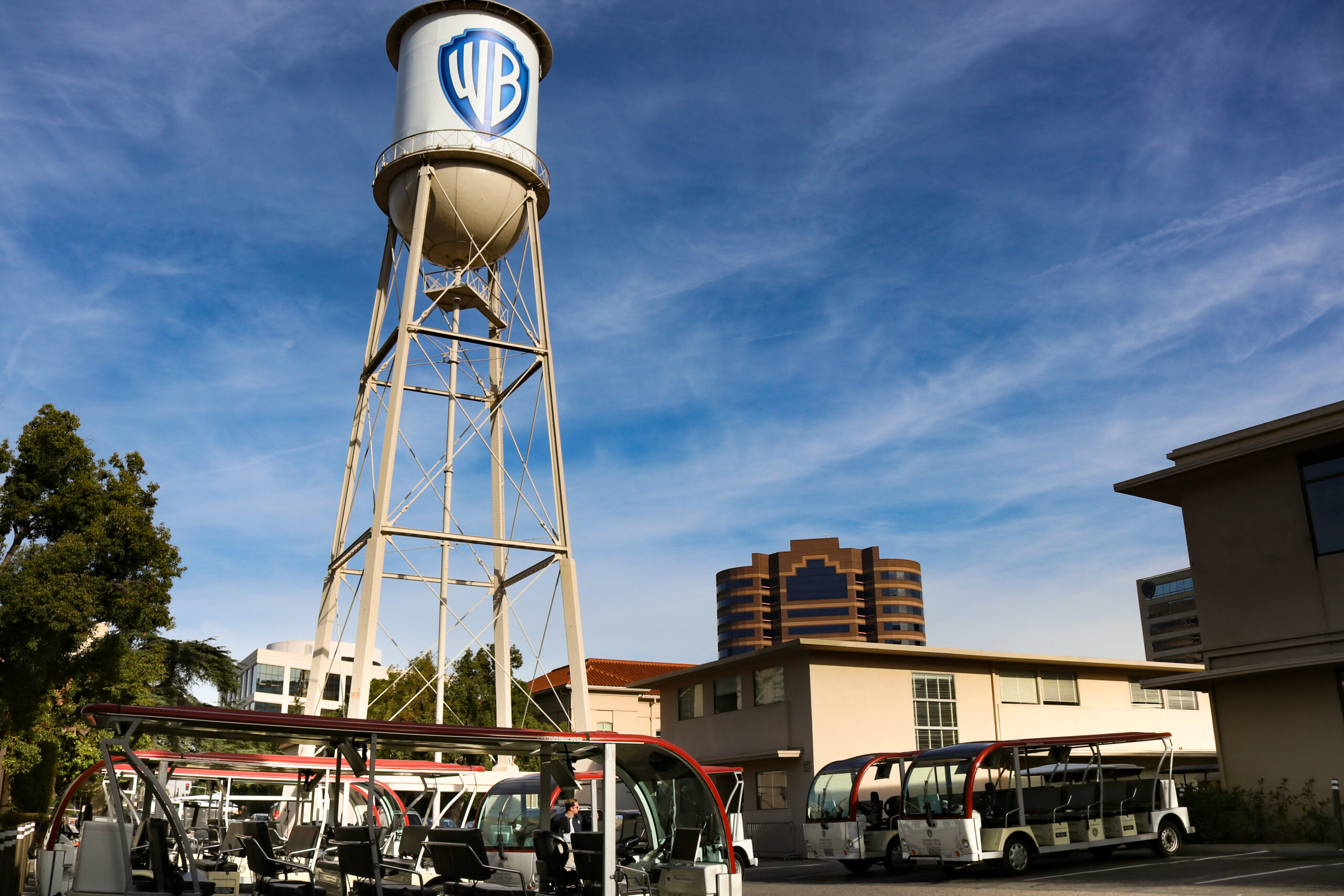
    Warner Bros. Tour This tour is currently stopped due to COVID but hopefully, will soon return as they’ve just built a new tour center that hasn’t been used yet.  You get to see sets, enter studios and spend time in the museum.  The Friends fountain really isn’t in New York, it’s here along with the set from Gilmore Girls and Big Bang Theory. I’ve been on the tour three times and it’s always fun.

    Universal Studios: They have reopened to California residents and have limited attendance.  Universal is adjacent to Burbank.

    Horseback riding:  Yes, you can ride horses in the middle of LA into Griffith Park and from the LA side, you can ride up to the Hollywood sign.

    Vintage Shopping: In Magnolia Park, there are a number of vintage and eclectic shops, some sell clothing that has been previously used on film sets.  Also, here, is world famous Porto’s restaurant that offers delectable desserts and Cuban food. And, Morphe with reasonably priced make up and brushes.

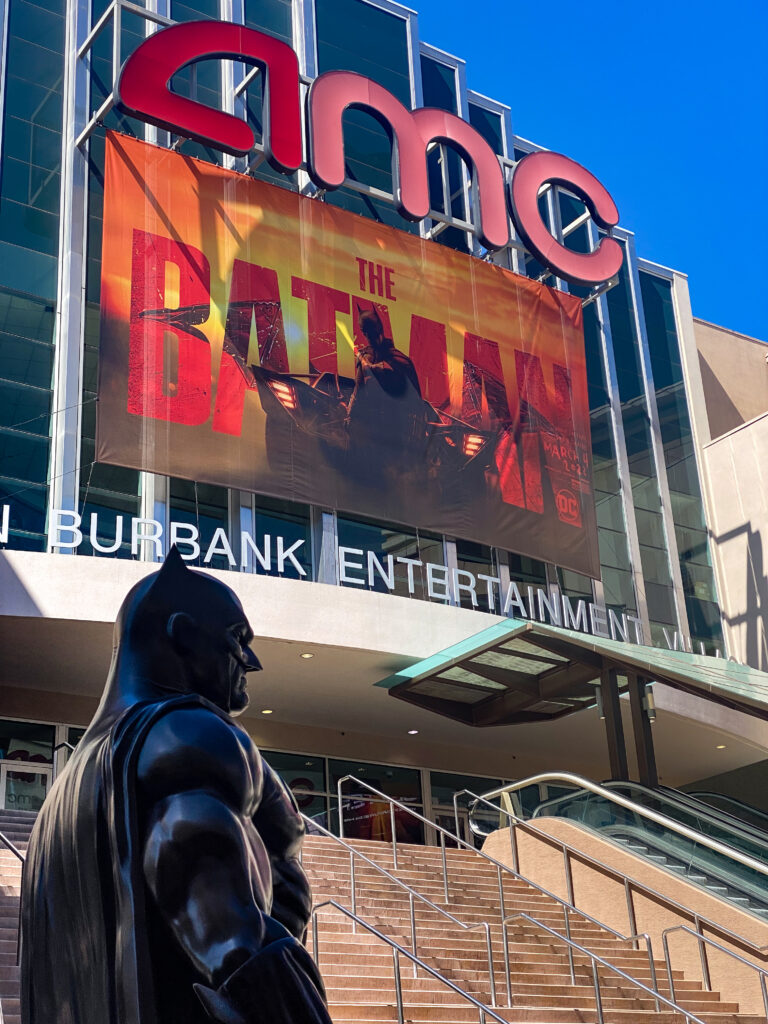
    Downtown Dining:  Downtown Burbank has all types of food offerings.  The City has also installed an 8’ bronze Batman statue and many murals that are perfect selfie spots. The Burbank Town Center and one of the top three AMC theaters in the world is also here.

    There are two more DC Superhero statues that have been added since this initial post. They are Wonder Women in front of the Warner Bros. Tour Center and Green Lantern at the Empire Center.

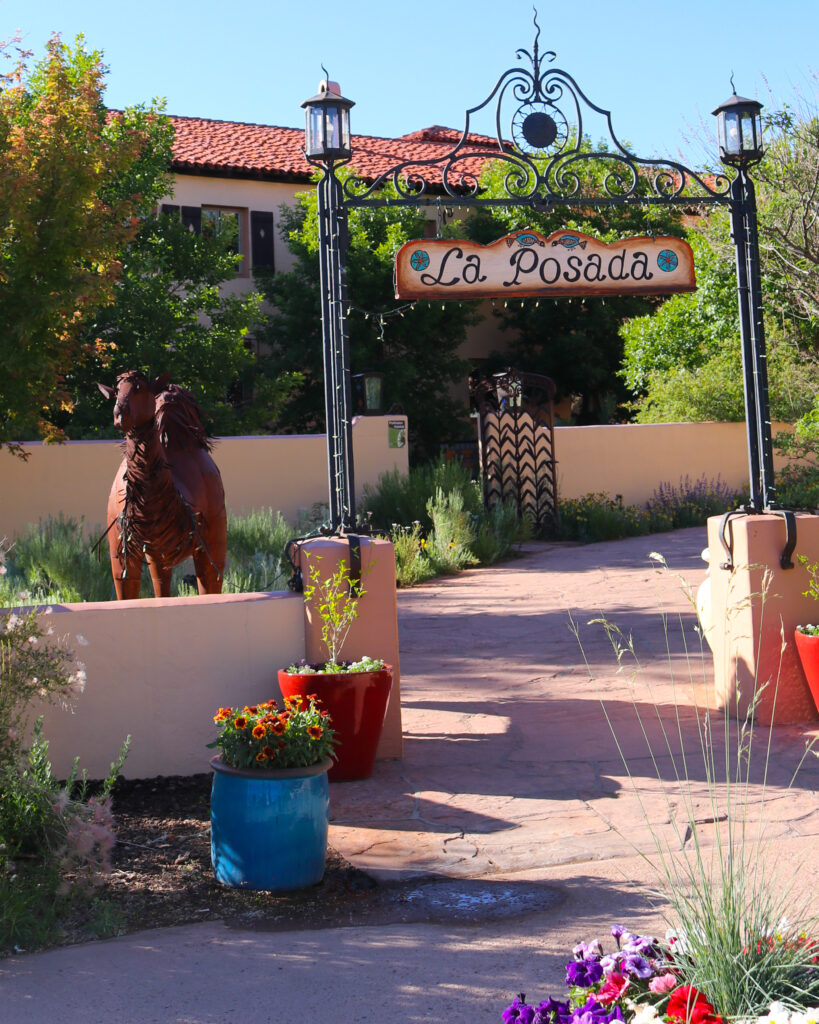
  • Standing on the Corner in Winslow, Arizona: Route 66 History, La Posada Hotel & Must-See Stops

    Standing on the Corner in Winslow, Arizona: Route 66 History, La Posada Hotel & Must-See Stops

    “Standing on the corner of Winslow, Arizona—such a fine sight to see…” The iconic lyric from Take It Easy, written by Jackson Browne in 1972 and made famous by Eagles, has turned Winslow into a must-visit stop for music lovers and road trippers alike. But beyond its pop culture fame, Winslow has long been an important travel hub, dating back to the rise of the railroads and its role along the historic Route 66—making it a classic destination for anyone exploring the American Southwest.

    Staying overnight at La Posada adds another layer to the experience, as the hotel has hosted notable guests like John Wayne, Amelia Earhart, James Stewart, and Franklin D. Roosevelt. Each room reflects a piece of history, and the on-site Turquoise Room offers a memorable dining experience with classic Southwestern cuisine and a nod to the original Harvey Girls tradition.

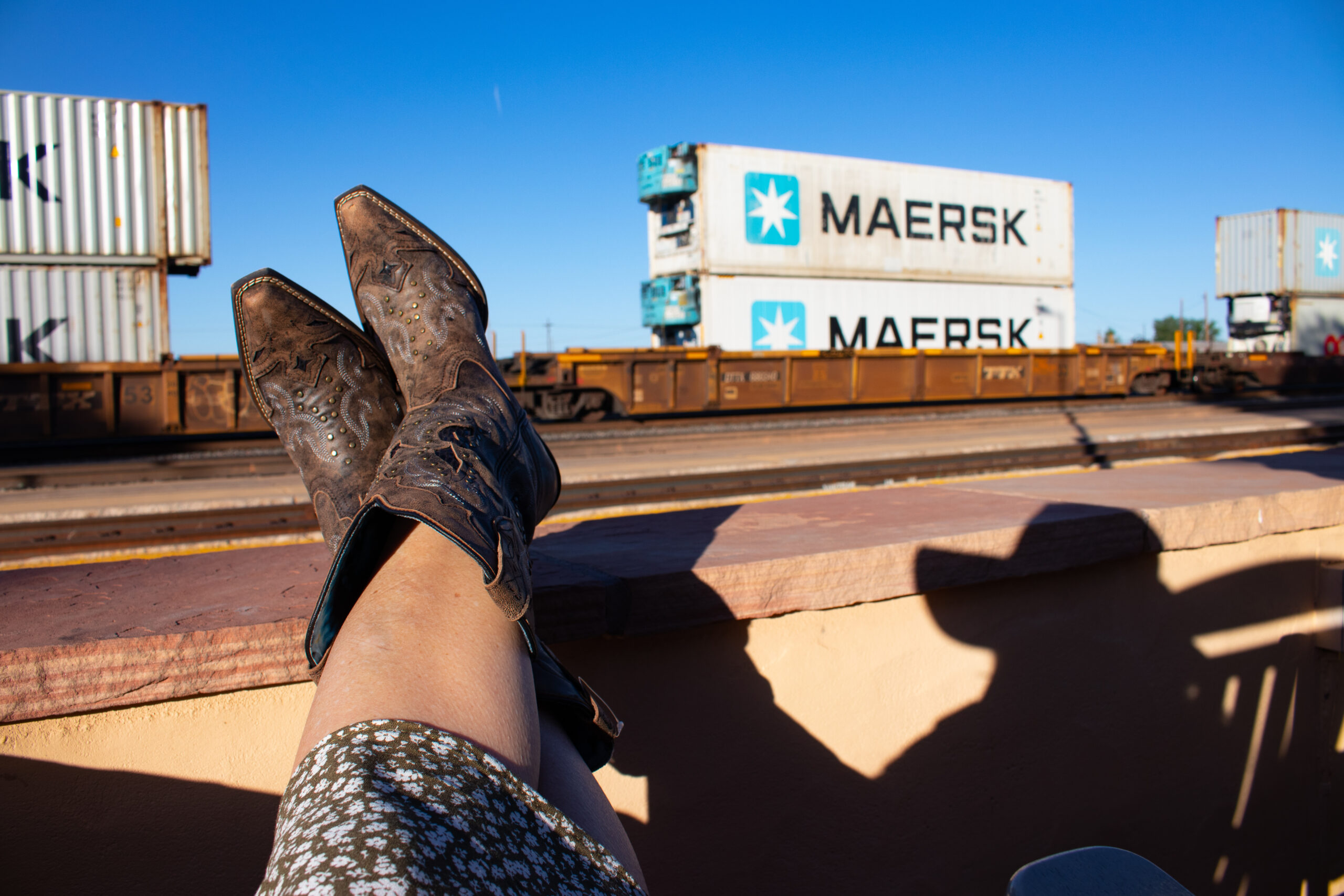
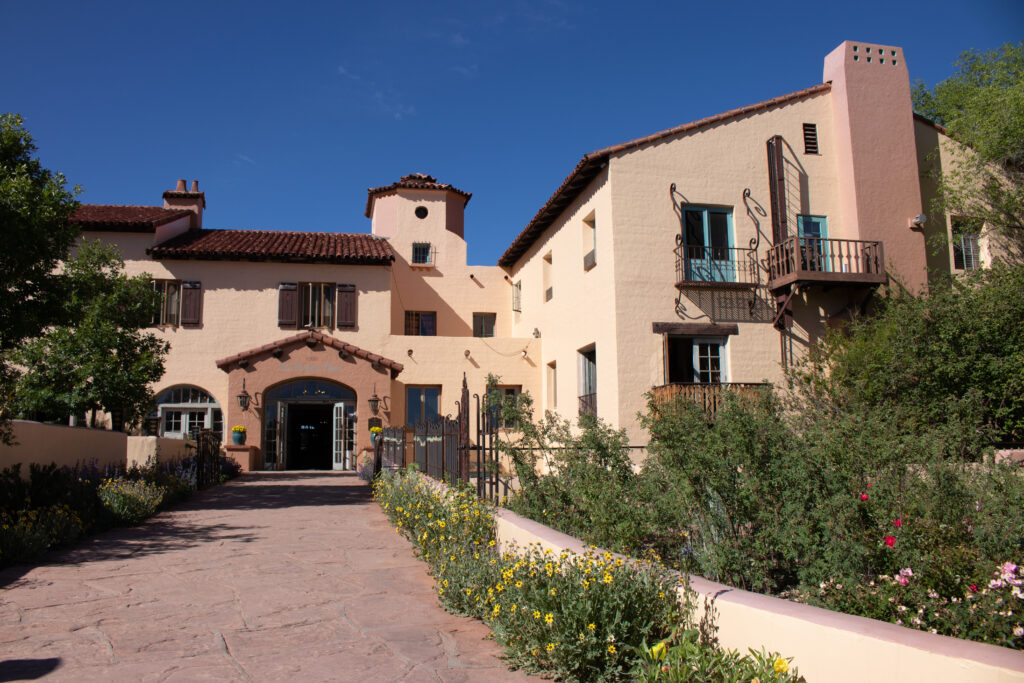
    In the 1880s, the Atchison, Topeka and Santa Fe Railway helped establish Winslow as a key stop for cross-country travelers heading west. Today, trains still pass through regularly, and visitors can even arrive via Amtrak. The town’s rich railroad heritage is beautifully preserved at La Posada Hotel, a restored Harvey House that originally opened in 1930. Designed by Mary Jane Colter, the hotel offers a unique blend of Southwest charm and historic elegance. Sitting on the back veranda with a drink in hand while watching trains roll by is an experience that perfectly captures the spirit of old Route 66 travel.

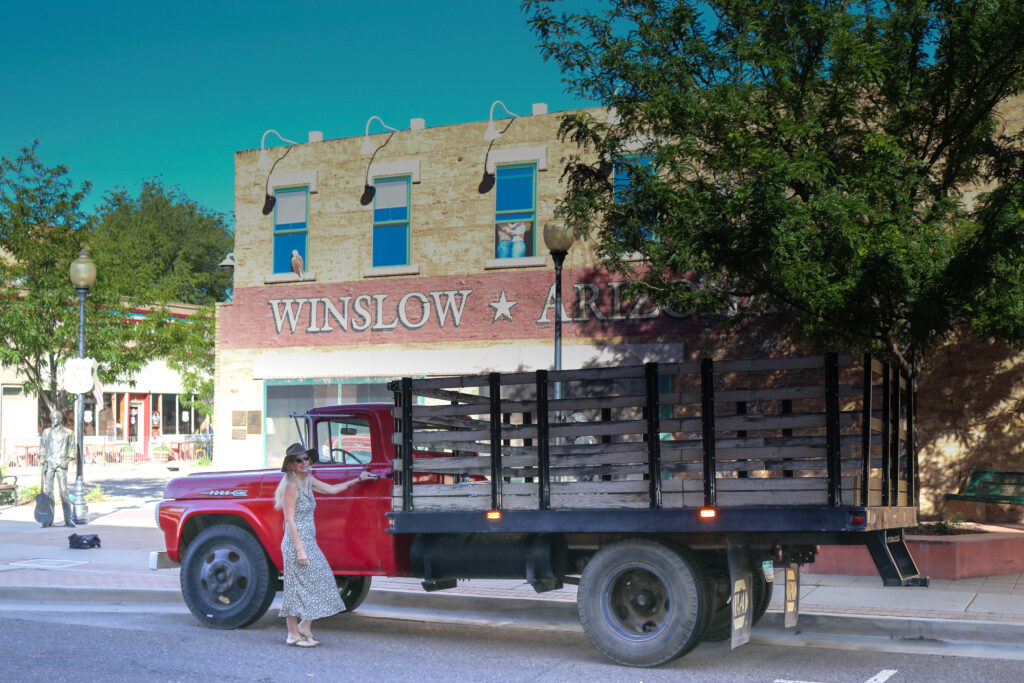
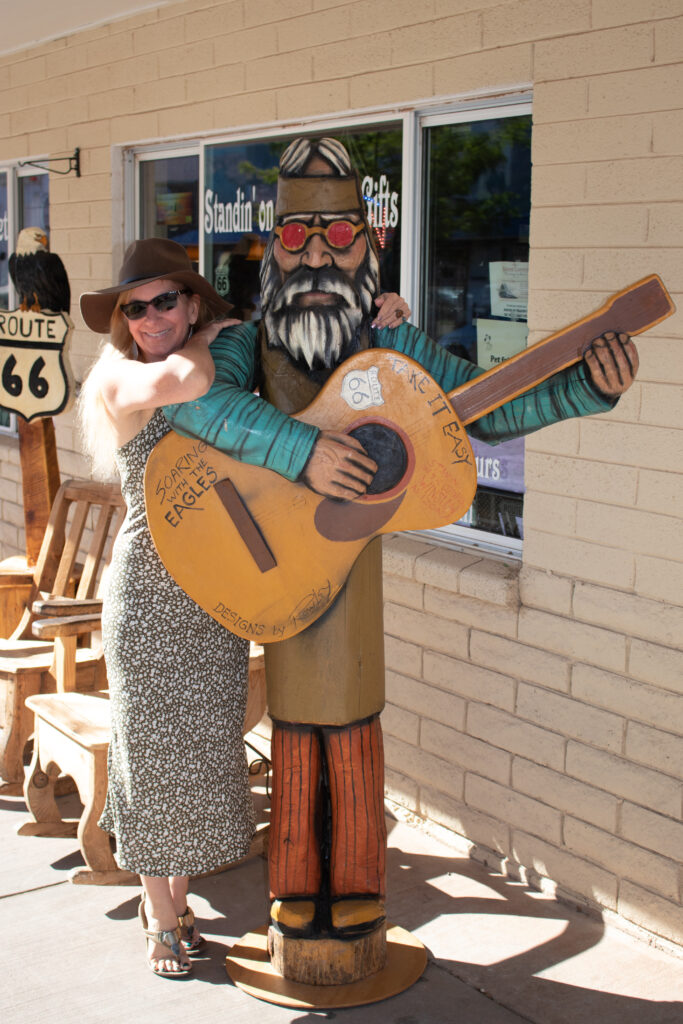
    No visit to Winslow is complete without a stroll through its charming downtown. Be sure to stop at Standin’ on the Corner Park, where you can snap a photo with statues inspired by the famous song—including a flatbed Ford and tributes to the musicians who made the town famous. Nearby shops and quirky photo ops, like a giant guitar and colorful street art, make this small town surprisingly lively. Whether you’re on a Route 66 road trip or just passing through northern Arizona, Winslow is more than a quick stop—it’s a nostalgic, worthwhile destination that captures a unique slice of Americana.

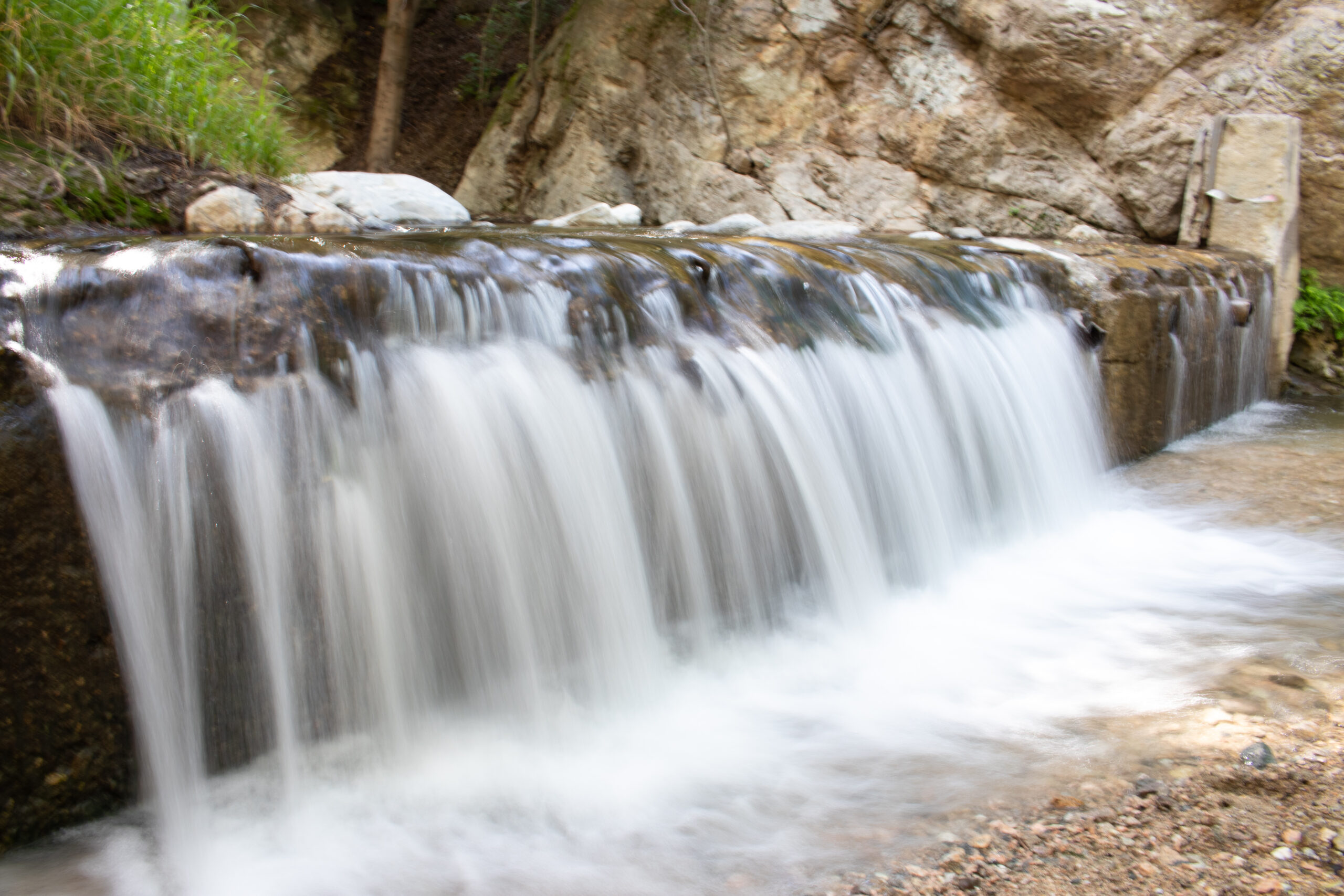
  •  Four Great Los Angeles Waterfall Hikes

     Four Great Los Angeles Waterfall Hikes

    Who would expect to find scenic hiking trails with waterfalls in the desert landscapes of Los Angeles County? While many falls slow to a trickle during dry months, winter rains and El Niño seasons can transform these hikes into stunning destinations with flowing water that often lasts into spring. If you’re searching for the best waterfall hikes near Los Angeles, especially after rainfall, these trails are definitely worth exploring.

    Note: Whenever we hike, I check the conditions on the All Trails app first to see if conditions have changed before we start off.

    Monrovia Canyon Falls, Monrovia

    Length: 3 miles out and back Effort: easy Climb: 311 feet

    Parking in Park: $6 for the shortest hike, park  in the most upper lot

    Picnicking and BBQs available/Bathrooms

    Dogs: on leash

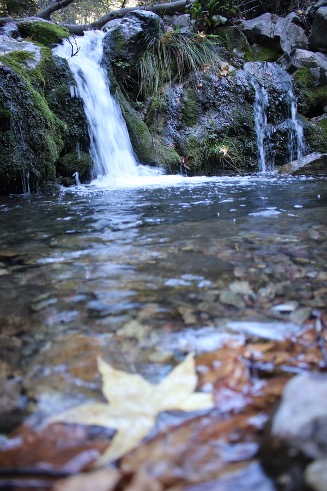
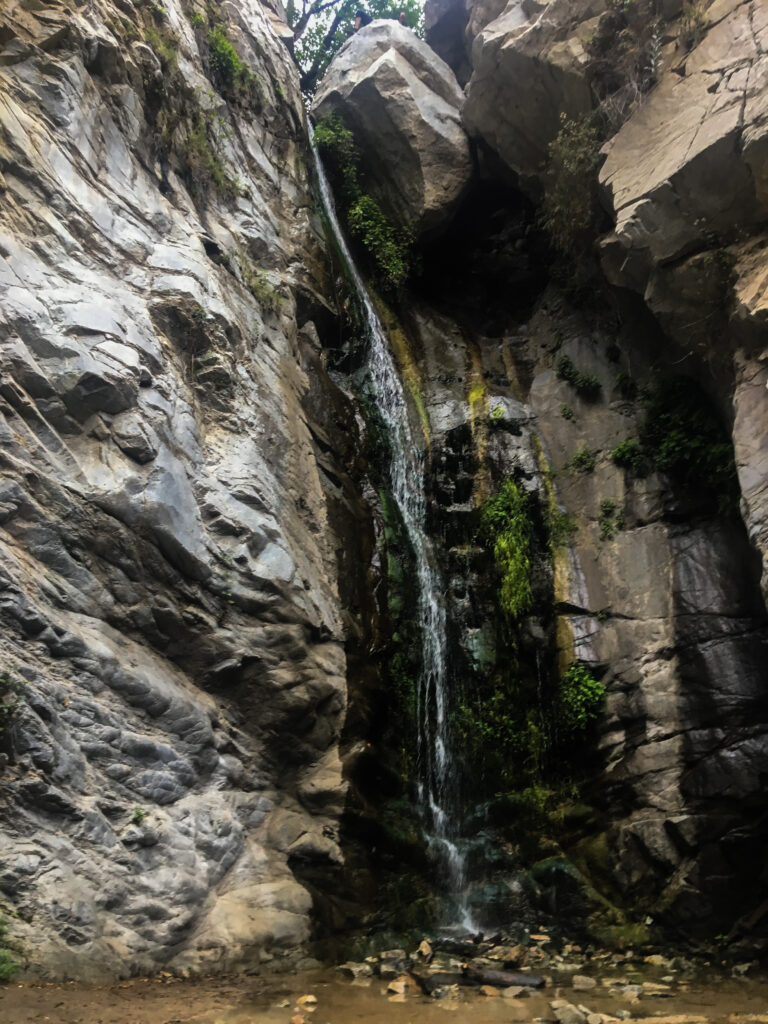
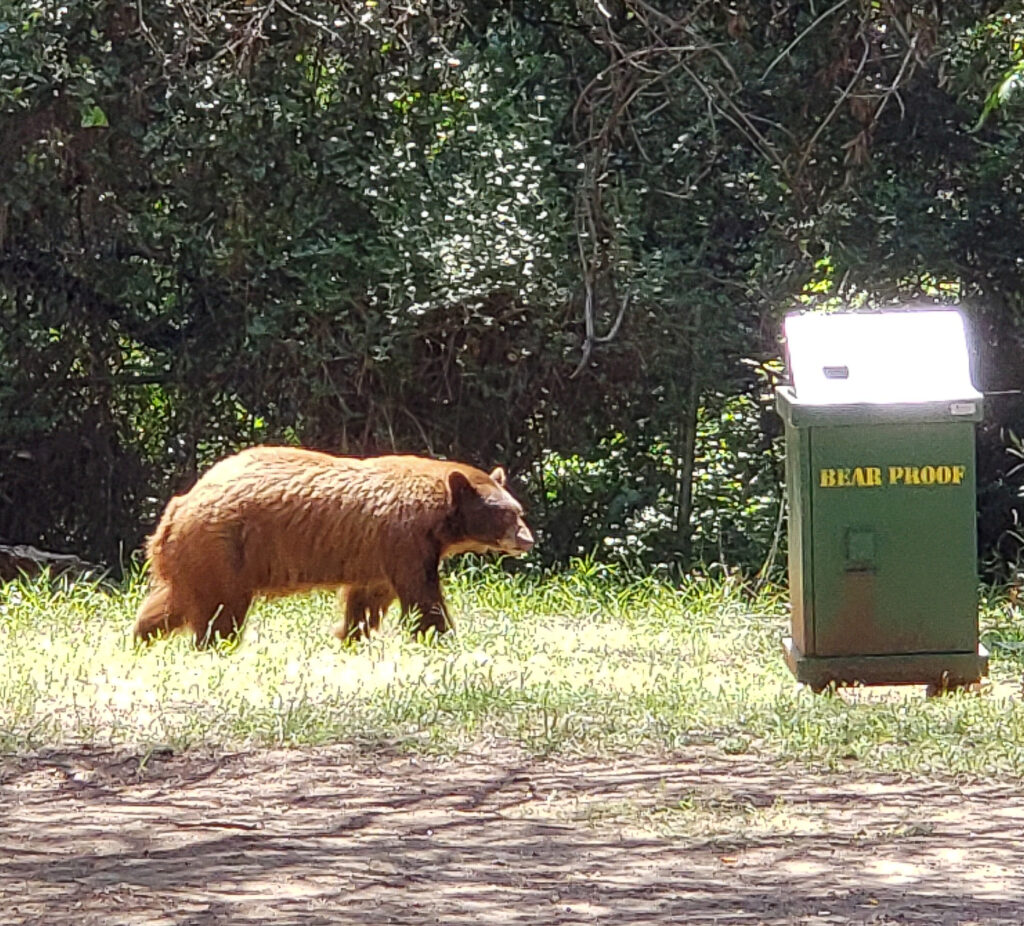
    On this hike, you will enjoy the many trees and heavy vegetation along the path following the adjacent stream.  The Canyon is beautiful.  There is one area where the path becomes narrow for people passing each other but there is room to stand to the side if you plan for it.  At the end is a beautiful waterfall.  We have gone twice in June and the water was still running.  The hike is popular so plan on other people and pups along the route.  The second time we grilled some hotdogs in the park and a bear showed up not 25 yards from us to dig into trash left by other picnickers.  He wasn’t threating and didn’t appear afraid or agitated by people but to be on the safe side, we called the rangers and packed up. 

    Eaton Canyon Falls, Monrovia

    Length: 3.5 miles out and back Effort: easy Climb:436 feet

    Parking: Park along side of the road

    Dogs: on leash

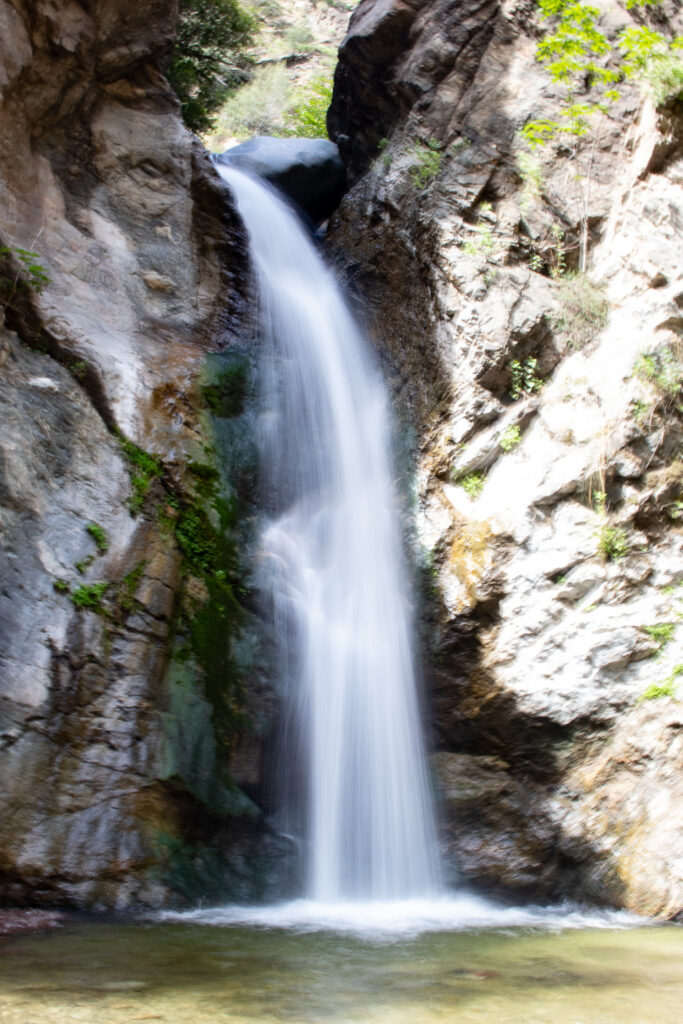
    The waterfall here awesome for Southern California’s desert.  The hike is easy and there are multiple trails in the area so follow the map.  The trail is fairly flat and is a favorite of people in the area so plan on having others hiking with you.   You also cross the river multiple times but there are stepping stones to keep you out of the water.  I always wear my hiking sandals as I’m a klutz and its better for me to walk through than jump from rock to rock. –Besides then you can get into the water at the end without having to trudge back in wet tennies. 

    Millard Canyon Falls, Pasadena

    Length: 2.6 miles out and back Effort: easy Climb:564 feet

    Parking in Park: Parking along side of the road; In lot needs a permit and is limited.  We used our National Park Pass.  You can also purchase one there.  Do it or you will be ticketed.

    Dogs: on leash

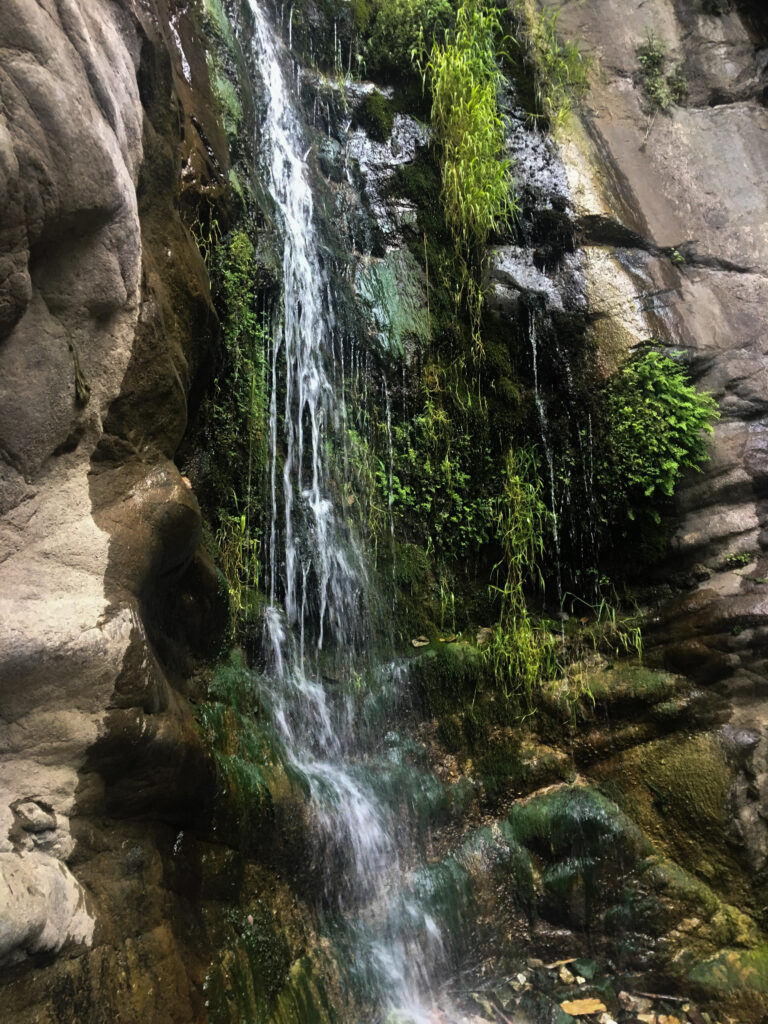
    This is an easy walk and you cross the stream (A California river lol).  The trail is highly shaded and beautiful.  At the end, you’ll be rewarded with a lovely waterfall that cascades gracefully along green plants and moss.  We went in the early spring.  Parking is tight so its recommended to get there early.  From this same trailhead area, you can also reach Bronson Caves.

    Escondido Falls, Malibu

    Length: 3.7 miles out and back Effort: easy Climb: 626feet

    Parking: Park along side of the road or in lot is $8.  

    Dogs: on leash

    This hike gets crowded so if you don’t want to hike a long way from your parking spot to the trailhead, get their early.  Also have patience as its located right off Pacific Coast Highway and you may need to park here.  The hike is easy and pretty.  Parts of Malibu Canyon burned in 2018 but with the rains of 2019, vegetation is returning and the wildflowers along with the butterflies were beautiful.  At the end you’ll find the waterfall and its worth the time and effort to see.

    Have fun, obey the rules, leave no trace behind.

  • New York City Travel Guide: Top Things to Do in the Big Apple

    New York City Travel Guide: Top Things to Do in the Big Apple

    New York, New York—few places in the world offer the energy, diversity, and iconic experiences of New York City. From glitz and glamour to gritty, lived-in streets, this city is a dynamic blend of contrasts—where luxury meets everyday life and history blends seamlessly with modern culture.

    No matter what you’re looking for, New York City has it all. Enjoy world-class dining with cuisine from nearly every country, explore renowned art and history, and experience landmarks recognized across the globe. Each season transforms the city—crisp black-and-white winters, vibrant green springs and summers, and colorful autumn streets.

    With so many things to do in New York City, you could spend months here and still not see it all. But if you’re visiting for a short time, this guide highlights some of the must-see attractions and experiences to help you make the most of your trip to the Big Apple.

    Statue of Liberty and Ellis Island

    Ellis Island


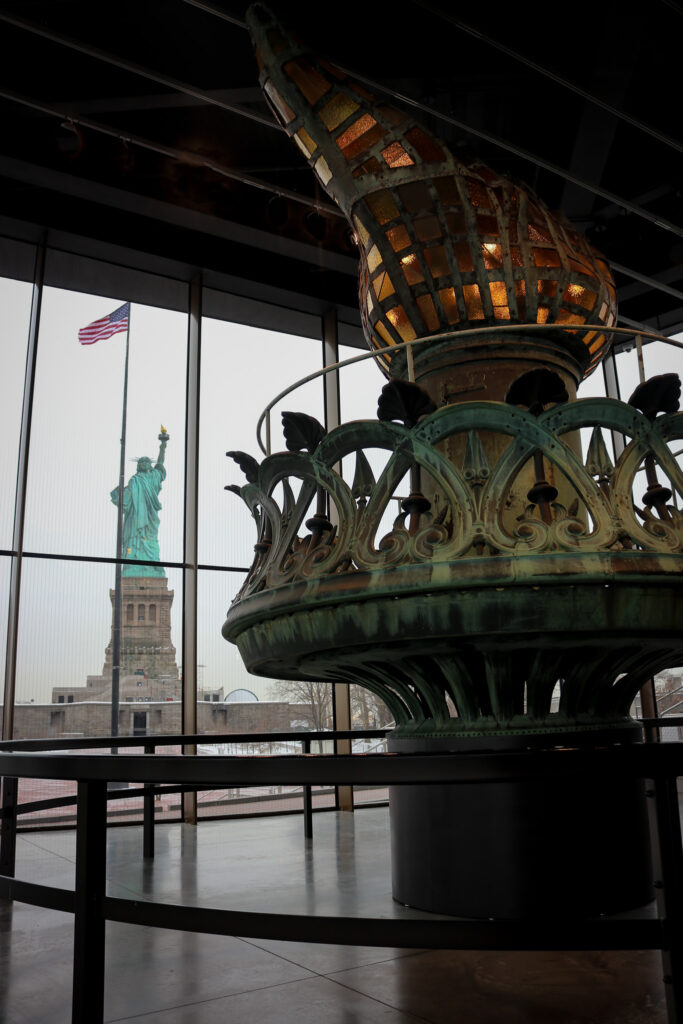
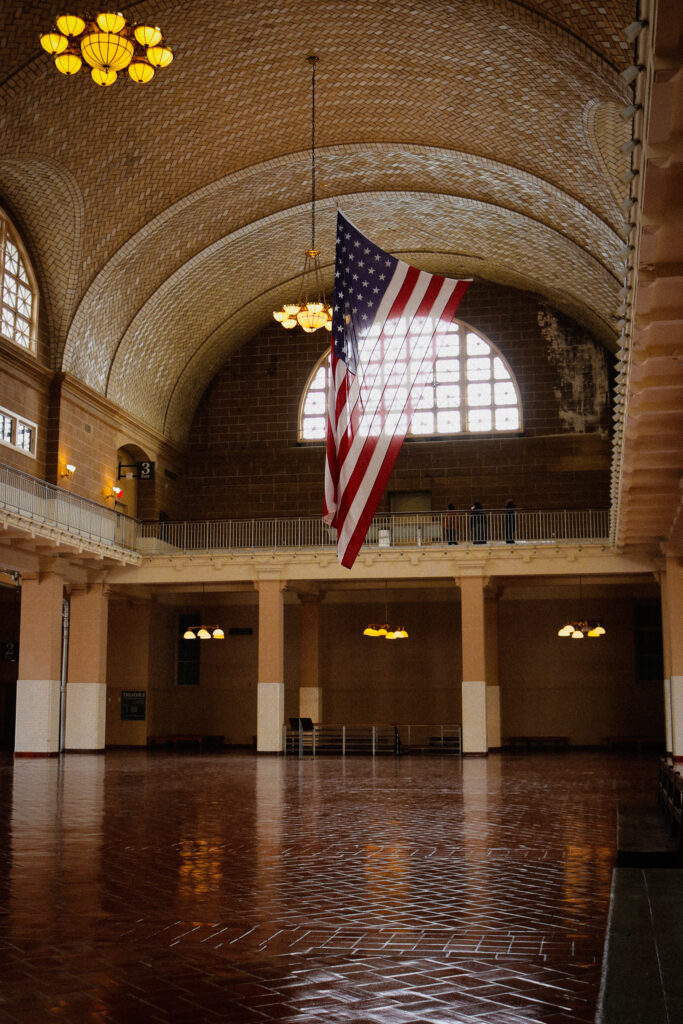
    Give me your tired, your poor, Your huddled masses yearning to breathe free, The wretched refuse of your teeming shore, Send these, the homeless, tempest-tost to me, I lift my lamp beside the golden door!   This quote was written by Emma Lazarus and was placed at the Statue of Liberty in 1883. The Statue was a symbol our willingness to accept people from all over the world in the U.S. at the time. Even then we had specific criteria and Ellis Island processed more than twelve million people between 1892 and 1954.

    To get there, you need to purchase your tickets early and cross to the island by boat.  Additionally, if you want to walk the 345 steps to the top, there is an additional fee. While you won’t have to walk up the stairs with doctors assessing your health to get in, the is a lengthy security process that mimics airport security.  Leave any sharp objects behind. The boat goes from the pickup point to Lady Liberty first where there is a small museum holding the old flame.  There is also a café and store here.  Once finished, you can get back on the boat and go to Ellis Island where you walk around and visit a larger museum.  There is also a free 30-minute ranger tour that I would recommend. Back to the boat and it will take you back to Manhattan.

    Staten Island Ferry

    If you want to go on a boat ride but don’t want to pay a fee, you can hop on the Staten Island Ferry.  Its free and about 25 minutes long.  It goes from St George on Staten Island and Whitehall Street in Manhattan and back again about every 30 minutes. If it’s cold, there is a section of the boat that is indoors but seating is limited. 

    Views

    There are so many places where you can get a view of the skyline from above.  Some of the choices include the top of the Empire State Building, Top of the Rock (Rockefeller Center), One World Observatory, all of which are the most popular. This time we went to One World.  It was so foggy, you couldn’t see anything.  They offered to trade out our tickets for the next day but it was our last day in New York.  So, the tip is go before you need to leave incase the weather doesn’t cooperate. If you don’t want to pay but still want an experience there are a number of roof top bars and restaurants that you could go to instead. This photo is from a different day.

    Times Square

    Times Square is always worth a walk around.  FAO Swartz is here, the one in Big along with the New Year’s Eve Ball and just general mayhem.  There are bright lights, advertisements for this and that, and people everywhere. Night time is a fun time to go to really enjoy the sites.

    Broadway Shows

    Speaking of shows, if you want to see a particular show, you’ll need to buy your tickets early and they can be pricey.  Off Broadway plays are another less expensive option and just as fun. In Times Square, if you’re willing to wait in line, you can purchase discount theater tickets for that night. Tickets are half price for remaining seats that can be limited. The ticket booth is located underneath the red steps between Broadway and Seventh Avenue at 47th Street.

    Museums

    If you’re into museums, I’d recommend the Guggenheim or The Met. The Guggenheim is an art museum and a gorgeous building designed by Frank Lloyd Wright.  The Met also houses art and has rotating exhibits. I’ve have spent hours in each.

    Central Park

    A trip to New York wouldn’t be complete without walking through Central Park.  Here is a link to the map.  The Bow Bridge and Strawberry Fields are probably two of the more popular spots to visit.  At Strawberry Fields, there is the Imagine Mosaic, which is dedicated to John Lennon who was killed at his home across from the park.  If you want to take a carriage ride around the park, you can find them all over lined up like taxis.  Just negotiate the price before you get in.  In the winter, there is ice skating here as well as the famous one at Rockefeller Center.

    St. Patrick’s Church

    While you are near Rockefeller Center, dip into St. Patrick’s Cathedral.  The cornerstone of this cathedral was laid in 1858 and 24 years later was finished. It’s on par with the cathedrals built in Europe. Masses are held seven days a week.

    9/11 Memorial and the Oculus

    The 9/11 Memorial and museum is a solemn experience. You can just walk around the two Memorials that sit at each tower site, visit the museum and/or take a tour depending upon how much time you want to spend.

    While you are at the 9/11 Memorial, go into the Oculus.  This is my favorite building in all of the U.S.  It’s actually a transportation hub with both the subway and train meeting here.  It was designed to look like a hand releasing a white dove. If you are into photography, this is the place to get some excellent architectural shots.

    Radio City Music Hall

    Last time we were in New York, we took at tour of Radio City Music Hall.  Its home to the precision dance team, the Rockettes, famous for their Christmas Spectacular Show and synchronizing their leg kicks above their head.  Not impressed?  Read The Spectacular and then you will be.  If you take a tour, you can have your picture taken with a Rockeette.

    Brooklyn Bridge

    Walking across the Brooklyn Bridge is another free fun thing to do. It goes from Manhattan to Brooklyn.  It’s a little more than one mile in length and leads to Dumbo (Down Under the Manhattan Bridge Overpass), an area in Brooklyn. At the end of the bridge as you enter Dumbo, you can get that iconic shot of the Empire State Building under the Bridge. 

    Highline and Chelsea Market

    Another great place to walk is along the Highline.  It is a old Central Railroad spur that has been converted to a walking path and park.  The 1.45 mile, raised platform will provide you upper level views of the city.  Tours are also available and pretty interesting.  Note If the weather is bad, make sure its open. Afterwards, stop in the Chelsea Market for some snacks or a sit down meal.  

    Grand Central

    Grand Central Train Station is worth a look and even a tour or lunch.  Built in 1913, the Station is beautiful and houses more than 70 shops and restaurants. The Grand Central Terminal has been featured in many movies and photographs over the years.   

    Other Fun Places

    Bull of Wall Street
    Take a selfie at the Charging Bull symbolizing symbol of financial optimism and prosperity. Its located between 25 and 26 Broadway.

    Katz Deli
    Branded as NY’s oldest deli, this institution has been serving corned beef and pastrami since 1888.  They have a walkup bar for pick up and also a place to sit in the back with as many pickles as you can stuff in your belly.  We have even had Katz shipped to California for a party.  It’s just that good!

    Serendipity
    This ice cream shop will provide your entire days’ worth of calories in one sundae.  It’s so popular that I recommend you make reservations.

    Schmackarys
    Awesome cookies here.  You’ll have to wait in line.  We went twice!

    Broad Nosh Bagels Deli & Catering
    Bagels like pizza are part of New York’s culture. We loved this place. There are more than 20 bagel choices and after you finally figure that out, you still need to pick out your cream cheese.  Your choices include: Plain, Scallion, Chipotle Scallion, Sundry Tomato Basil, Walnut Raisin, Strawberry, Jalapeño, Non Dairy Tofu, Non dairy Scallion Tofu, Olive, Sundry Tomato, Vegetable, Plain and Jelly, Butter and Jelly, Peanut Butter , Peanut Butter and Jelly, Pumpkin Spice, Vegan Garlic Herb, Vegan Smoked Paprika & Chili, Vegan Garlic Herb, and  Blueberry. Phew.  Robert the owner of the store on 58th Street makes eating a bagel and event with his Al Pacino jokes and friendly face.  We went back a second day for more. 

    O’Hara’s Restaurant and Pub
    We just found this pub looking for a place to hide out from the snow coming down.  O’Hara’s is near the 9/11 Memorial and when 9/11 happened, its windows were blown out and there was substantial damage.  Within six months, they had rebuilt and opened their doors.  On the first anniversary of 9/11, a patron of the pub took off a patch of a first responder and stapled it to the wall.  By the end of the night, there were 250 patches on the wall.  Today, there are more than 6,000 from all over the world.  We sat down in a booth and right next to me was two patches from my work hometown, the place where I live and the airport I fly out of.  Coincidence?  I think not.  Check it out and see if you can find a patch from your city/country.  They also have a book that shows the history.  It’s a tear jerker but worth the read.  Just ask a server to see it.

    TWA Hotel

    The TWA Hotel is my favorite fun hotel. Located at JFK Airport, its fashioned after airport travel in the 60’s.  If you are flying in or out of JFK, make sure you set some time aside to spend here.  The main area offers a sunken lounge and bar.  Warning, the drinks aren’t cheap but you can also just hang out, listening to Old Blue Eyes and his fellow crooners and people watch.  Outside, there is an old Lockheed Constellation “Conni” airplane that has been converted to a small bar and upstairs, there is a small restaurant that is fashioned after a Swiss Chalet along with the hotel pool that overlooks the runway.  I’ve spent the night here and its truly awesome.  

    Hints

    Be prepared to walk and bring comfortable shoes. Our first day in New York, we walked nine miles. If you don’t want to walk, I would recommend the subway.  For the most part, its clean and an excellent way to get around.  The system has been upgraded so you can tap your credit card to get on the train and you don’t have to tap to get out. The exception is if you are taking the trains out of Manhattan, you might have to purchase a Metro card.  We needed one from New Jersey to Manhattan.

    Also, make a list of places you want to see and organize them on a map.  Manhattan is organized by three areas.  Upper, Middle and Lower Manhattan and it takes time to get to each area.  You won’t want to waste time and money going back and forth on the subway or using rideshare.  Your feet will also thank you. 

    As far as places to stay, New York has all types of options.  One of our favorite places is along the shoreline in New Jersey.  It’s cheaper to get a hotel here and you get the skyline view looking back at the city.  We have stayed twice at the Hyatt House.  It has a great view. The train is just across the sidewalk or you can take the water taxi.

    Warning, New York can be bitterly cold in the winter.  The wind whips off the water and through the tunnels between the buildings.  I learned my lesson as a professed whimp and now pack really warmly.

  • Bryce to Sedona Driving Itinerary

    Bryce to Sedona Driving Itinerary

    If you love the outdoors hiking through streams, seeing waterfalls, pine trees as well as cactus. And, if you love seeing a panorama of color from below your feet and soaring above your head. And, if you love taking in the outdoors, snapping photos and just relaxing in a lounge chair staring at the vista in front of you, Northern Arizona/Southern Utah is the place for you! The area is full of national parks, each one is beautiful in its own way. Below is an overview of some of your options. They are out of order but I’ve included a driving map to lead the way.

    The area is full of national parks, each one is beautiful in its own way. Below is an overview of some of your options.  They are out of order but I’ve included a driving map to lead the way. It’s at the bottom of this post.

    Arch in Arches National Park.

    Arches National Park:
    Arches is aptly named for its overabundance of rock arches, in fact the Park has more than 2,000 of them.  Within Devils Garden, spans Landscape Arch, which is the longest arch in North America extending 306 feet.  At its narrowest spot, it is only 6 feet in diameter. Double Arch is also worth a stop.  It soars 112 feet above ground and is 144 feet across. In Arches, there is a road that traverses through the park with many places to park along the way and walks that are easily accomplished by beginner and those with children.  More challenging hikes are also throughout the park and lead to some of the lesser visited arches. Stop by the Ranger Station ahead of time to pick up a pamphlet.  Camping is available but fills up quick.

    Antelope Canyon
    Horseshoe Bend

    Antelope Canyon and Horseshoe Bend: I visited Antelope Canyon five years ago and it was crowded but not crazy.  We went again last month, and that has changed.  It’s testament to social media’s influence.  Having said that, both are still worth a visit but be patient. There are people everywhere.  These sites are located in Page, Arizona, along the Colorado River and near Lake Powell.  Page was a sleepy little town but no longer.  There are plenty of hotels to choice from and some decent restaurants.  My favorite is a Mexican place called El Tapatio.  The service and atmosphere is terrific and the food good. Horseshoe Bend is where the Colorado River makes a U-turn around an outcropping of rocks.  We went during sunset but I think sunrise is probably less crowed.  There is a parking lot with bathrooms and the walk to the Bend is short, about 1.5 miles round trip.  

    Antelope Valley has been made famous because of its two canyons that are divided into Upper Antelope and Lower Antelope Canyon.  The colors of the sandstone rocks are orange and brown but a camera will change the colors depending upon how much light is hitting them, bright yellows for those with more light and deep purple for those in the shadows. Antelope Canyon is located on Navajo Indian land so you have to purchase a tour ticket to see them.  I suggest you do this before you leave because they do sell out.  There are a number of tour companies that are generally ran by just a few families.

    In Upper Antelope Canyon, rays of sun shine through the rocks creating beams of light that are particularly cool.  For this reason, we spend the extra money to do a photo tour of Upper Antelope Canyon. You need a DSL camera and you can take your tripod.  The guide will help you with the correct camera settings and making sure people don’t walk through your photo. They also know the exact time when the sun will shine through the rocks and will throw sand into the light beam making it more prominent on your photos. For this tour, you will take a short ride to site and then walk through the Canyon.

    The Lower Canyon offers tours too but because of the number of people and the ladders to go in, out and through the Canyon, tripods and backpacks are not allowed.  Our guide told us around 2,000 people a day go through Lower Antelope so expect lines and crowds.  Luckily, if you’re a photobug like me, you’re shooting up the entire time so you can easily crop people out.  Ask the guides ahead of time to set your camera, this works even if you’re shooting with a cell phone. 

    Note: Most tours require cash so be prepared. 

    Bryce Canyon

    Bryce Canyon:  Bryce Canyon has orange, white and red pinnacles called Hoodoos that soar throughout the park. If fact, Bryce has the largest collection of Hoodoos in the world.  In the winter, the Canyon often showcases a dusting of snow and it can get quite cold.  There is hiking, camping and a road that winds through it teasing you with a number of lookouts.    

    Zion Nattional Park

    Zion Canyon: Zion Canyon is one of my favorite National Parks.  It doesn’t have the colors of some of the other locations but its green, has a river and pine trees. You have to see the Great White Throne and Checkerboard Mesa.  We camped a few times here when I was a kid and I always have loved hiking through the woods and along the river. During peak season, you will need to park your car and ride the shuttle bus through the park. The shuttle buses are free and make many stops along the way.  You can hop on and hop off as you like taking hikes in between.  

    Grand Canyon

    Grand Canyon: Of course the Grand Canyon is the mother of all of the National Parks in this area and there are a number of ways to see it.  You can hike the Canyon both along the rim and at the bottom.  You can raft down the river (generally, you need to make reservations a year in advance for this), see it by train via Williams, Arizona, or drive through and stop along the way.  I’ve driven along the south side stopping and taking short hikes which are always fun and also taken the train from Williams to the Canyon for the day. No matter which you choose, the Grand Canyon is awe inspiring and literal took my breath away the first time I saw it.

    Flagstaff: You can’t write an article about this area without mentioning Flagstaff.  We always stay here along the route.  Flag, as the locals call it, has a quaint downtown with delicious food and a variety of hotels.  Last time we drove though, we stayed at the Hilton Garden Inn.  The hotel has a fireplace and cozy furniture so we ended up not leaving for dinner and just staying here reading in the lobby and getting dinner at the bar.  Another local restaurant I love in Flagstaff is Black Bart’s Steakhouse.  It’s a restaurant that caters to tourist but unlike other tourist restaurants, the food here is really good here. They have waiters and waitress that sing on stage in between serving your food.  A lot of them go to the local university and are really good. During the fall, Flagstaff has bright, yellow Aspens that dot the hills and it’s known for its skiing and snowboarding.

    Sedona: Sedona is the gateway to northern Arizona and southern Utah.  Here the red rocks start to pop out of the ground giving you a glimpse of the beauty to come.  People go to the Mesa Sedona Airport to view the sunset.  It costs $3 to park but worth the view as you look down upon the town.  Another place to visit here is the Chapel of the Holy Cross built in the side of the hill in 1956, the Chapel hangs over the cliff and you can walk through it.  Additionally, Sedona has hiking trails and you can take jeep tours through the area.  There are two state parks, Red Rock and Slide Rock.

    Meteor Crater

    Meteor Crater: A large hole in the ground doesn’t sound very exciting but we all agreed we really liked this excursion.  The Crater is nearly one mile across, 2.4 miles in circumference and more than 550 feet deep.  Tours for adults are $18 and kids are $9.  The price is really worth it as you walk around the Crater, the guide explains the geology of the rock, why they know it was a meteorite that caused it and how they proved it. 

    This trip never gets old and there is always something new to explore.  Have fun!
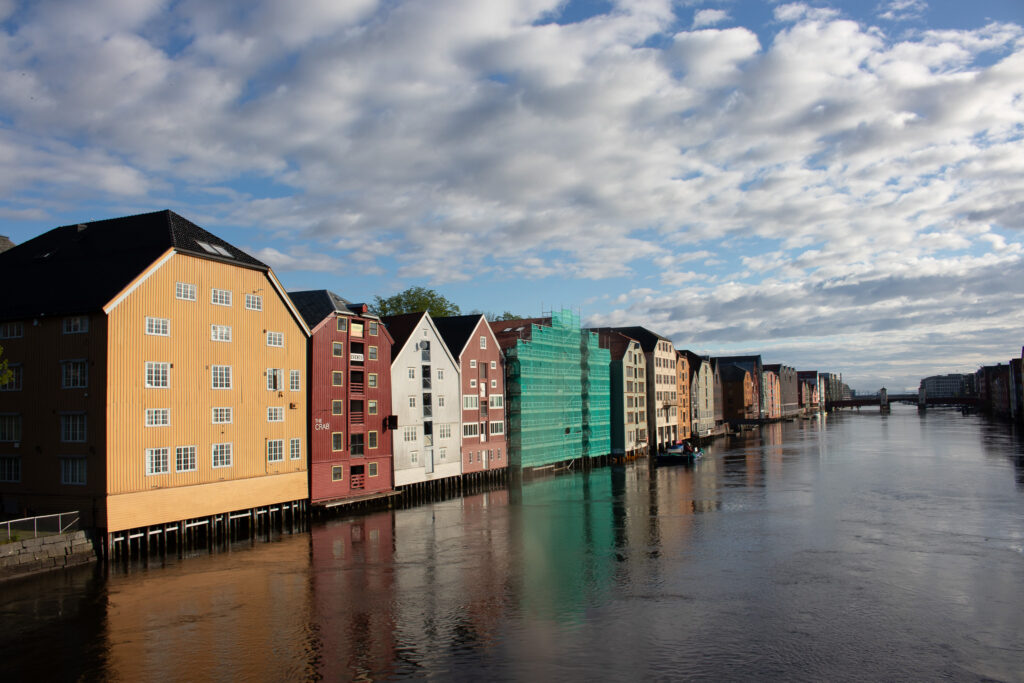
    Driving Map

  • Waco! The Heart of Texas Travel Guide: Things to Do and Explore in the Central Texas

    Waco! The Heart of Texas Travel Guide: Things to Do and Explore in the Central Texas

    Set along the banks of the Brazos River, Waco has quietly become one of Central Texas’s most overlooked destinations. Once known primarily as a college town and pit stop between Dallas and Austin, Waco now draws visitors with its mix of history, culture, outdoor spaces, and a rapidly growing food scene. Whether you’re planning a weekend getaway or just passing through, Waco offers a blend of small-town charm and big personality that’s well worth discovering

    Fix ‘er Up

    This not so little town (MSA around 270,000 people) has been lit on fire with the Chip and Joanna Gaines fixer upper television hit. The couple are not only creating their own intrinsic marketing campaign for Waco spurring tourism, they are also making a difference by renovating local old homes and commercial venues.  If you are even just a casual fan like me, you’ll want to visit Magnolia Market at the Silos. What once was an old grainery is now as home goods store; outdoor space with a bakery, Silos Baking Co.;food trucks and an outdoor space. If standing in line between 20 minutes to two hours for a muffin is not for you, then there are other restaurants within walking distance. We ate at Hecho en Waco. The food was delicious and the margaritas perfect. They were serving brunch but were happy to bring us a lunch menu. 

    You can also go down the road to the Gaines’ new restaurant Magnolia Table. My friend was there at the same time and opted for the two hour wait.  She said the food was really good. Note: It’s only open for breakfast and lunch and closed­ on Sundays.  Across the parking lot is Rudy’s County Store. We ate some delicious BBQ there where you get parchment paper for your plate, toss all your food on top and then proceed to gobble it up.  Delicious.

    50,000 Year Old Bones??

    Did you know a Woolly Mammoth and a Columbian Mammoth are not the same thing?  One of the biggest differences is that Columbian Mammoths are about 14 feet tall and Woolly’s areonly about 10 feet tall. If you are into old bones, you can see these creatures at the Waco Mammoth National Monument. Entrance is $5 and you get a 40-minute tour to see the excavation site housed under a metal building. You can also walk the grounds for free. There are hiking paths throughout the Park. 

    One of the Largest Municipally-Owned Parks in the U.S.

    Cameron Park is on 400 acres of land. Running through it is the Brazos River. Locals spend time on both the river and enjoying the beautiful views along the many hiking trails. We drove up to Lovers Leap to lookout over the city. The Park would be a great place to go kayaking or just relax with a picnic. 

    The Waco Suspension Bridge crosses the Brazos River and opened in 1870 as a

    part of the Chisholm Trail. Cowboys ran cattle across the bridge as they made their way from ranches in Texas to the railroad in Kansas. Currently, you can walk across the bridge and get some good photos of the river and other bridges. It’s a favorite place for prom and  quinceañera pics. 

    “I’m a Pepper, He’s a Pepper. We’re a Pepper. Be a Pepper. Wouldn’t you like to be a Pepper too?”

    Are you singing? Waco is home to Dr. Pepper. Charles Alderton, a pharmacist, spent most of his time mixing up medicine and serving carbonated drinks at the soda fountain. He liked the way the drug store smelled and wanted to make a drink that tasted like the smell. So if you think Dr. Pepper tastes like medicine, your right, it’s supposed to. The Museum costs $7.00 to enter and includes a small soda at the end or you can upgrade to an ice cream float and get a $1.00 credit towards your drink. 

    While we only had a short time in Waco, we had a fantastic time. We were lucky enough to have relatives to take us around the City filling us in on the history and details. If you’re visiting Dallas, or are a Fixer Upper fan, it’s worth a check out. 

    Bonus Trip

    Fort Worth Stockyards

    If you’re in Waco and looking for a day trip that adds some authentic Texas flavor, try visiting the Fort Worth Stockyards. The Stockyards offer a classic Western experience—retail shopping where you can pick up some boots and a cowboy hat; plentiful restaurants, because you’ll need some Texas BBQ to really get in the mood; and if that doesn’t get you saying Yee-haw!, twice a day the famous Fort Worth Longhorn Herd cattle are driven down the street twice daily (11:30 & 4:00)—an unforgettable sight that brings Old West history to life.

  • Inspired By Disney

    Inspired By Disney

    Disneyland, small world, The Jungle Book, Pirates of the Caribbean, Tiki Room, Small World, Disney, Anaheim, California, Southern If you’ve ever been to a Disney Theme Park, You’ll remember these.

    “Yo ho, yo ho, a pirate’s life for me. We pillage plunder, we rifle and loot. Drink up me ‘earties, yo ho.”

    “The boys in the back are called macaws. Because of their claws? No, because they’re macaws…In the Tiki Tiki Tiki Tiki Tiki Room.”

    And, “It’s a world of laughter, a world of tears. It’s a world of hopes and a world of fears. There’s so much that we share, that it’s time we’re aware, it’s a small world after all.”

    Now that you’re cursing me because you’re singing the songs, these are not really what inspired me to travel, it was the rides themselves and when I hear the songs, the images of the rides appear in my head.

    On the first Saturday of each December, when my siblings and I were young, we would get to go to Disneyland in Anaheim.  As kids, we would spend as much time dreaming of this day as we did waiting for Santa to arrive on Christmas Eve.  Our tickets into the park didn’t allow us to enter until the evening so we would spend all day jumping around the house with excitement while our Mom yelled at us to take a nap. We didn’t need one. Adrenaline would get us through.  Then the magic hour would arrive.  We would all get bundle up because it was always freezing for skinny, little California kids and we would roll around in the back of the station wagon for 45 minutes driving to the enchanted land.  (Seat belts were required back then).

    I was inspired by not the Pirates of the Caribbean with their swashbuckling but the very first section of the Bayou where you hear the frogs and crickets and the lightening bugs swirl around you.  The creaking of the dog’s rocking chair.  These still want me to visit Louisiana, eating Jambalaya and crawfish until I burst.

    The Tiki Room, persuaded me to visit Hawaii with its Polynesian culture.  Women swaying, birds singing and smelling the magical aroma of the flowers while drinking a Mai Tai on the beach. Easter Island is still on the list.

    On a local LA radio show, they had a contest to see how many times you could visit It’s a Small World before screaming, “Let me off!”  I would have won.  Each time, I go through it, I dream of seeing the Taj Mahal, visiting the Artic, the Alps, Africa, Holland, London and so much more. I want to visit all of the countries at the end of the ride that say good bye.  Adios, au revoir, cherro, zàijiàn….

    “Think of Christmas, think of snow, think of sleigh bells off you go, like reindeer in the sky, you can fly, you can fly….”  I can fly! 

  • Arizona & Utah Road Trip Guide: National Parks, Antelope Canyon & Scenic Desert Views – No Filter Required

    Arizona & Utah Road Trip Guide: National Parks, Antelope Canyon & Scenic Desert Views – No Filter Required

    If you love outdoor adventures—hiking through streams, chasing waterfalls, wandering among pine trees and cactus, and taking in sweeping desert panoramas—then Northern Arizona and Southern Utah should be at the top of your travel list. From vibrant red rock landscapes to dramatic canyon views, this region offers some of the most photogenic scenery in the American Southwest—no filter required.

    The area is packed with world-famous national parks and natural wonders, each with its own unique beauty. Whether you’re planning a scenic road trip, a hiking getaway, or a photography-focused adventure, destinations like Grand Canyon National Park, Zion National Park, and Bryce Canyon National Park offer unforgettable experiences. Add in iconic stops like Antelope Canyon and Horseshoe Bend, and you’ve got the perfect mix of adventure, relaxation, and jaw-dropping views.

    Below is an overview of some of the best places to visit in Northern Arizona and Southern Utah to help you plan your route and make the most of your trip.

    They are out of order but I’ve included a driving map to lead the way. 

    Arches National Park: Arches is aptly named for its overabundance of rock arches, in fact the Park has more than 2,000 of them.  Within Devils Garden, spans Landscape Arch, which is the longest arch in North America extending 306 feet.  At its narrowest spot, it is only 6 feet in diameter. Double Arch is also worth a stop.  It soars 112 feet above ground and is 144 feet across. In Arches, there is a road that traverses through the park with many places to park along the way and walks that are easily accomplished by beginner and those with children.  More challenging hikes are also throughout the park and lead to some of the lesser visited arches. Stop by the Ranger Station ahead of time to pick up a pamphlet.  Camping is available but fills up quick.

    Antelope Canyon and Horseshoe Bend: I visited Antelope Canyon five years ago and it was crowded but not crazy.  We went again last month, and that has changed.  It’s testament to social media’s influence.  Having said that, both are still worth a visit but be patient. There are people everywhere.  These sites are located in Page, Arizona, along the Colorado River and near Lake Powell.  Page was a sleepy little town but no longer.  There are plenty of hotels to choice from and some decent restaurants.  My favorite is a Mexican place called El Tapatio.  The service and atmosphere is terrific and the food good. Horseshoe Bend is where the Colorado River makes a U-turn around an outcropping of rocks.  We went during sunset but I think sunrise is probably less crowed.  There is a parking lot with bathrooms and the walk to the Bend is short, about 1.5 miles round trip.  

    Antelope Valley has been made famous because of its two canyons that are divided into Upper Antelope and Lower Antelope Canyon.  The colors of the sandstone rocks are orange and brown but a camera will change the colors depending upon how much light is hitting them, bright yellows for those with more light and deep purple for those in the shadows. Antelope Canyon is located on Navajo Indian land so you have to purchase a tour ticket to see them.  I suggest you do this before you leave because they do sell out.  There are a number of tour companies that are generally ran by just a few families.

    In Upper Antelope Canyon, rays of sun shine through the rocks creating beams of light that are particularly cool.  For this reason, we spend the extra money to do a photo tour of Upper Antelope Canyon. You need a DSL camera and you can take your tripod.  The guide will help you with the correct camera settings and making sure people don’t walk through your photo. They also know the exact time when the sun will shine through the rocks and will throw sand into the light beam making it more prominent on your photos. For this tour, you will take a short ride to site and then walk through the Canyon.

    The Lower Canyon offers tours too but because of the number of people and the ladders to go in, out and through the Canyon, tripods and backpacks are not allowed.  Our guide told us around 2,000 people a day go through Lower Antelope so expect lines and crowds.  Luckily, if you’re a photobug like me, you’re shooting up the entire time so you can easily crop people out.  Ask the guides ahead of time to set your camera, this works even if you’re shooting with a cell phone. 

    Note: Most tours require cash so be prepared. 

    Bryce Canyon:  Bryce Canyon has orange, white and red pinnacles called Hoodoos that soar throughout the park. If fact, Bryce has the largest collection of Hoodoos in the world.  In the winter, the Canyon often showcases a dusting of snow and it can get quite cold.  There is hiking, camping and a road that winds through it teasing you with a number of lookouts.    

    Zion Canyon: Zion Canyon is one of my favorite National Parks.  It doesn’t have the colors of some of the other locations but its green, has a river and pine trees. You have to see the Great White Throne and Checkerboard Mesa.  We camped a few times here when I was a kid and I always have loved hiking through the woods and along the river. During peak season, you will need to park your car and ride the shuttle bus through the park. The shuttle buses are free and make many stops along the way.  You can hop on and hop off as you like taking hikes in between.  

    Grand Canyon: Of course the Grand Canyon is the mother of all of the National Parks in this area and there are a number of ways to see it.  You can hike the Canyon both along the rim and at the bottom.  You can raft down the river (generally, you need to make reservations a year in advance for this), see it by train via Williams, Arizona, or drive through and stop along the way.  I’ve driven along the south side stopping and taking short hikes which are always fun and also taken the train from Williams to the Canyon for the day. No matter which you choose, the Grand Canyon is awe inspiring and literal took my breath away the first time I saw it.

    Flagstaff: You can’t write an article about this area without mentioning Flagstaff.  We always stay here along the route.  Flag, as the locals call it, has a quaint downtown with delicious food and a variety of hotels.  Last time we drove though, we stayed at the Hilton Garden Inn.  The hotel has a fireplace and cozy furniture so we ended up not leaving for dinner and just staying here reading in the lobby and getting dinner at the bar.  Another local restaurant I love in Flagstaff is Black Bart’s Steakhouse.  It’s a restaurant that caters to tourist but unlike other tourist restaurants, the food here is really good here. They have waiters and waitress that sing on stage in between serving your food.  A lot of them go to the local university and are really good. During the fall, Flagstaff has bright, yellow Aspens that dot the hills and it’s known for its skiing and snowboarding.

    Sedona: Sedona is the gateway to northern Arizona and southern Utah.  Here the red rocks start to pop out of the ground giving you a glimpse of the beauty to come.  People go to the Mesa Sedona Airport to view the sunset.  It costs $3 to park but worth the view as you look down upon the town.  Another place to visit here is the Chapel of the Holy Cross built in the side of the hill in 1956, the Chapel hangs over the cliff and you can walk through it.  Additionally, Sedona has hiking trails and you can take jeep tours through the area.  There are two state parks, Red Rock and Slide Rock.

    Meteor Crater: A large hole in the ground doesn’t sound very exciting but we all agreed we really liked this excursion.  The Crater is nearly one mile across, 2.4 miles in circumference and more than 550 feet deep.  Tours for adults are $18 and kids are $9.  The price is really worth it as you walk around the Crater, the guide explains the geology of the rock, why they know it was a meteorite that caused it and how they proved it. 

    This trip never gets old and there is always something new to explore.  Have fun!
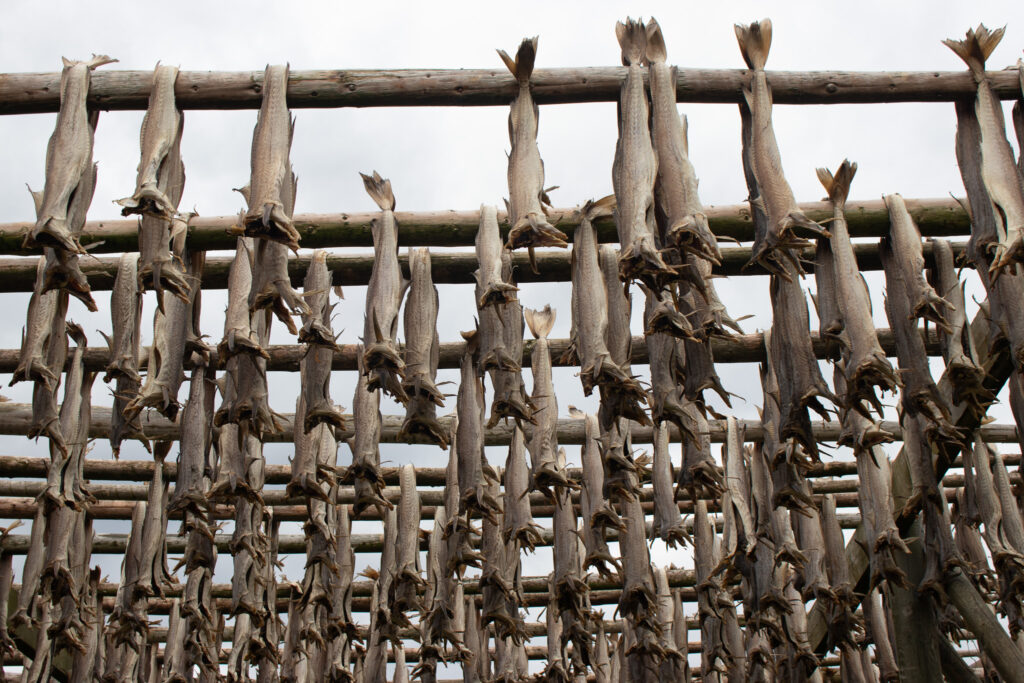
  • Discover Southeast Arizona: Stunning Landscapes, Cooler Summers, and Fewer Crowds

    Discover Southeast Arizona: Stunning Landscapes, Cooler Summers, and Fewer Crowds

    Arizona is known for its brilliant sunsets, colorful rock formations, and warm desert nights. While many travelers head north of Phoenix to visit the iconic Grand Canyon and the tri-state region, one of the most beautiful—and often overlooked—areas of the state lies in Southeast Arizona.

    This region offers the same dramatic landscapes and desert beauty, but with far fewer crowds. If you’re looking for a more relaxed Arizona travel experience filled with scenic views, outdoor adventures, and peaceful desert towns, Southeast Arizona is a perfect destination.

    Why Visit Southeast Arizona?

    Whether you’re planning a quick weekend getaway or a full week of exploring, Southeast Arizona offers plenty to see and do. From scenic drives and hiking trails to wildlife watching and historic towns, the region provides a diverse desert experience.

    One of the best times to visit is summer. While many parts of the country experience humid heat, Southeast Arizona stays noticeably cooler thanks to its higher elevation. When temperatures climb to 112°F in Phoenix and around 102°F in Tucson, towns like Sierra Vista often remain in the low 90s, making outdoor exploration much more comfortable.

    Summer Monsoons and Desert Rainbows

    Rainbow

    Summer also brings one of the region’s most spectacular natural events—the Arizona monsoon season. Afternoon storms roll dramatically across the desert sky, creating incredible lightning shows, cooling rains, and some of the most vibrant rainbows you’ll ever see. For photographers, nature lovers, and anyone who appreciates dramatic skies, Southeast Arizona in the summer is unforgettable.

    A Hidden Gem Worth Exploring

    From cooler mountain towns to wide-open desert vistas, Southeast Arizona offers a side of the state that many travelers miss. With fewer tourists, breathtaking scenery, and unique summer weather, it’s a destination that truly has something for everyone.

    Having lived in Sierra Vista, here are some of my recommendations. 

    From cooler mountain towns to wide-open desert vistas, Southeast Arizona offers a side of the state that many travelers miss. With fewer tourists, breathtaking scenery, and unique summer weather, it’s a destination that truly has something for everyone.

    Having lived in Sierra Vista, here are some of my recommendations. 

    Cave Dwellers

    Between Interstate 10 at Benson and Sierra Vista, you can visit Kartchner Caverns State Park, voted as one of the top 10 caves in the U.S., Kartchner Cavern is an actually living cave.  This means its’ still growing and changing with stalagmites and stalactites.  They have two tours, one of which the highlights is the throne room and Kubla Khan, the largest column formation in Arizona. 

    Check the website  before you go as tours can be limited when the bats are hibernating.  You might also want to buy your tickets on line as they are often sold out.   The Cave was discovered in the 1970’s and is very much protected so you can’t take photos inside.  They also offer camping.

    Wanna be Cowboys and Cowgirls

    Tombstone Cemetery

    Southeast Arizona is home to the OK Corral located in Tombstone.  This is where Wyatt Earp and the Earp brothers had their last shoot out.  Personally, I’m partial to Doc Holliday.  It may just be the blockbuster movie with Val Kilmer, Curt Russ and Sam Elliott but I really appreciate Doc’s attitude toward life.  I digress.  While a little touristy, Tombstone is alive and well with boots, spurs, horses and shootouts every day.  There are shows for the kids and history lessons for the adults.  If you have teenagers, I recommend watching the movie before you go. (It’s R rated.)  My kids loved seeing the buildings they watched on tv the night before and it provided them some context for their visit.  To get the real feel of the town, I recommend going to the Big Nose Kate’s for a sassafras (rootbeer).  They’ll make a float if you ask them. Kate is reported to be the first prostitute in Tombstone and she was Doc’s girlfriend.   Also, the Bird Cage Theatre has a museum.  There are more than 140 bullet holes in the building. 

    The admittance is a little pricey but they give discounts to families.  Skip the graveyard in Tombstone and instead visit Boot Hill on the edge of town.  It’s got a view and its fun to look at all of the old grave stones.  Prices range from $9 to $12.

    Miners

    f you never been in a mine, Bisbee is where you want to go.  The town is built on the side of a mountain and takes you back to the 1880 with gold, copper and silver.  Before entering or while leaving the town, visit the Lavender Pit.  While you wouldn’t think much of a hole in the ground but it has lots of beautifully colored rocks.  It also gives you a sense of how devastating mining was to the environment in the old days. 

    Photo of Lavender Mine

    I

    I Before you go, reserve a tour ticket for the Queen Mine Tour.  You don’t have to pay online but they may be sold out for the day.  The mine tour takes you down 1,500 feet via a mining tram car. My 10-year old nephew loved wearing the hard hat, miners light and jacket.   Beware though it is not for the claustrophobic.    Afterward, head to the town and walk the vintage antique shops. If there your there for breakfast, I’d recommend Ana’s Seasonal Kitchen.  The restaurant is very small but the food is amazing.  I had pancakes with bananas and a sauce that was to die for.  Other good places for lunch or dinner are Café Roka, a little pricy but good and Santiago’s for Mexican food.  I’ve also had burgers at the Copper Queen and they are good for bar food.  You can sit on the patio and watch people walk by.

     Star Gazers

    No matter where you visit, if you’re from the city, get out of town one night and drive toward the darkness. It doesn’t really matter where, there are plenty of places to pull off the side of the road.  I suggest heading east.   Find a place to park before the moon comes up and enjoy the starry, starry night!
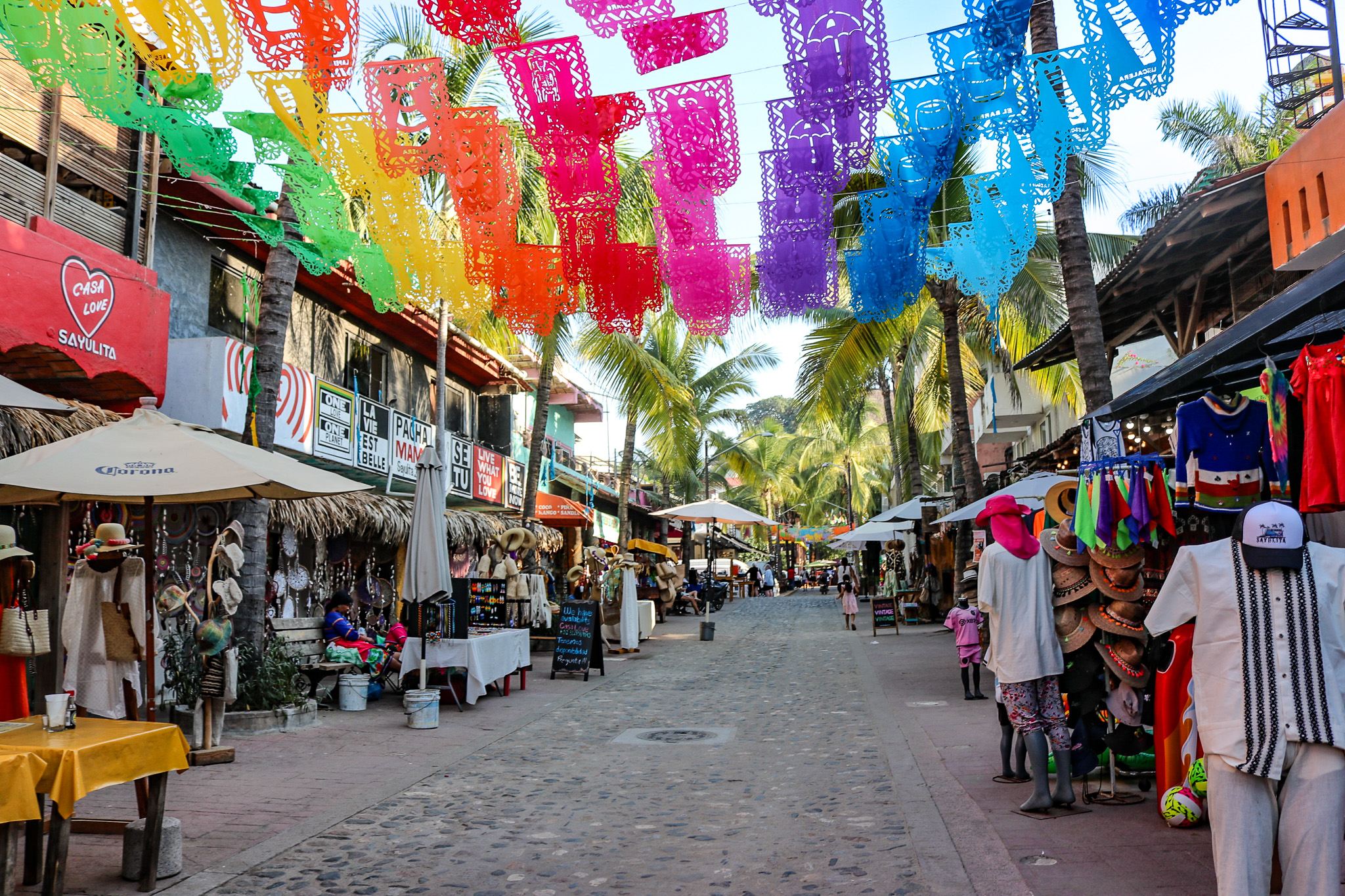
    History Buffs

    Cemetary at Fort Huachua

    Visit Fort Huachuca!  The Fort is an army post and is home to all of the Buffalo Soldier regiments.  The Fort originated in 1877 to stop the Apache raiding parties from Mexico.  Geronimo surrendered in the area and had his last hide out in Southeast Arizona.  Regardless of your political beliefs, the history is fascinating as well as the current missions of the Fort that include:  unmanned aerial systems, intelligence, cybersecurity and electronic warfare.  The Fort has two museums focusing on military intelligence and the Buffalo Soldiers. 
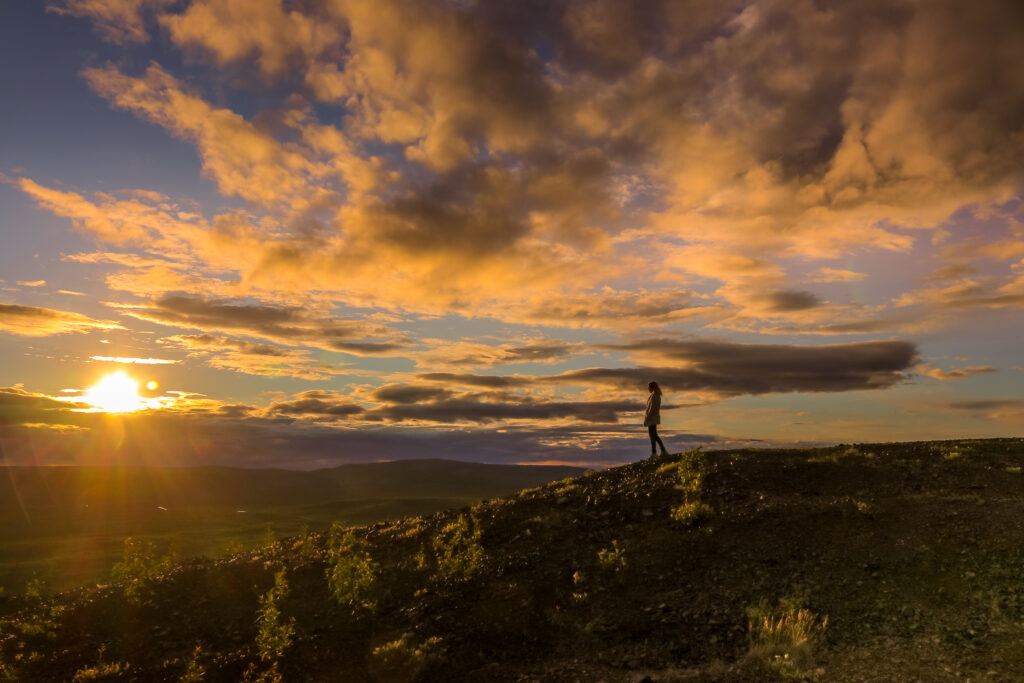
    If you’re a U.S. resident with ID, you can get a day pass to get onto the facility pretty quickly.  Go to the Van Deman gate.  There is a trailer off to the side.  You can tell the guard you are there to visit the museum.  If you’re not a U.S. resident, you should call ahead. For more information, visit:  http://huachuca-www.army.mil/pages/des/accesscontrol.html. Note: Access may have changed since this post was written.

    Where to Stay

    Sierra Vista is the best place to stay. It’s in the middle of everything and you can road trip it from there.  It offers all of the hotel brands but if you want a clean non-brand hotel, try Sierra Suites.   If you’re looking for something more eclectic, stay in Bisbee, there a number of old hotels within the downtown area.  The most famous is the Copper Queen although I’ve never stayed there. It was built in 1880 by the Phelps Dodge Mining Company and like a lot of old hotels is reported to be haunted.   Bisbee is also known for its weekend music scene; you can walk to most places if you stay downtown.

    Bisbee Hotel

    Websites

    www.explorecochise.com

    www.visit.sierravistaaz.gov

    www.bisbeeaz.gov

    www.tombstoneweb.com